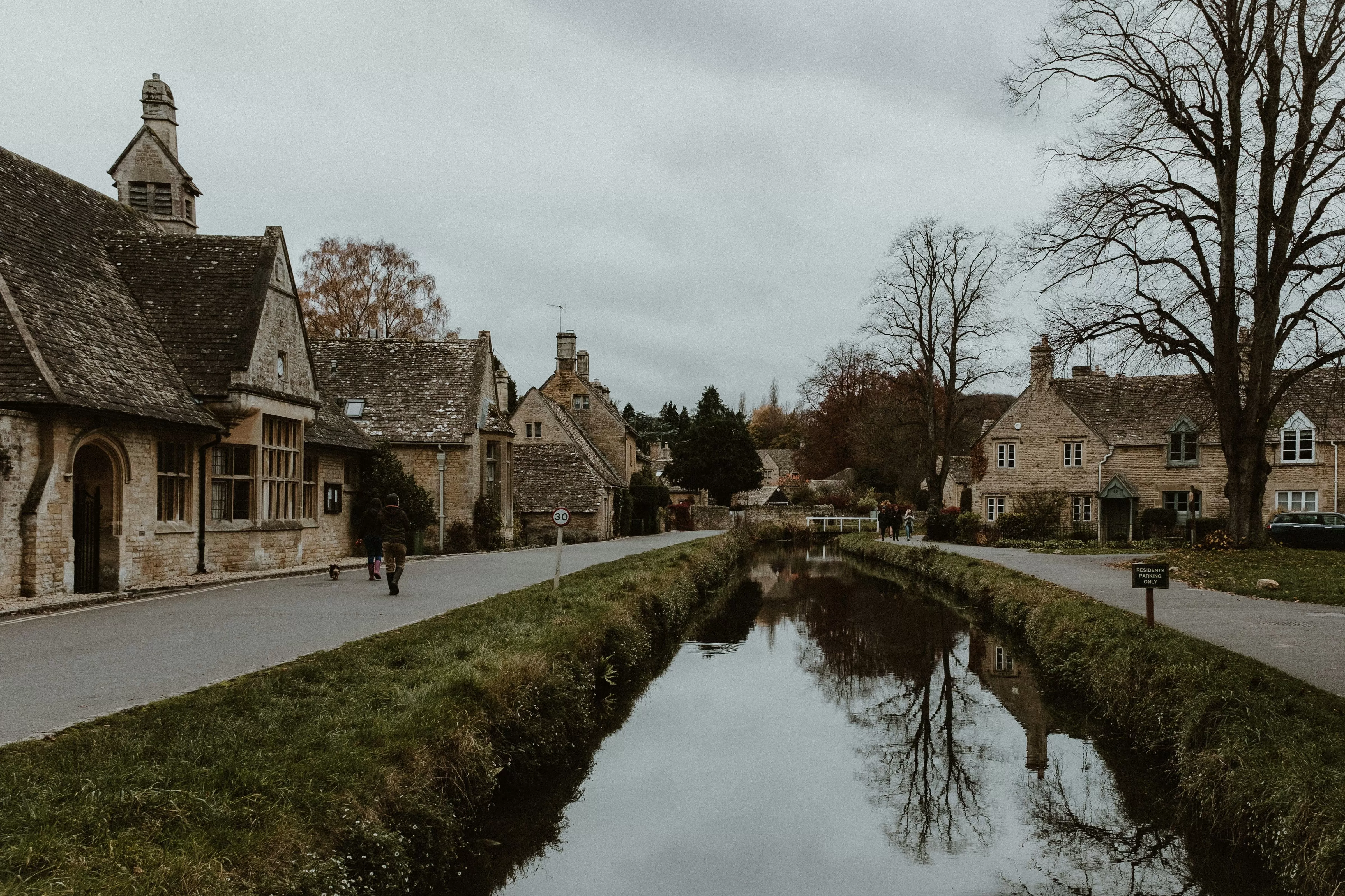
Riverside houses in the Cotswolds are among the UK’s most desirable rural property assets, combining protected natural landscapes, limited housing supply, and strong long-term demand. Buyers can expect premium pricing, often 20% to 50% above comparable inland homes, driven by scarcity, lifestyle appeal, and investment resilience. However, ownership also involves specific considerations, such as flood risk, planning restrictions, maintenance costs, and liquidity timelines, that must be carefully evaluated before purchase.
What defines a riverside house in the Cotswolds?
A riverside house in the Cotswolds is a residential property directly adjoining or overlooking a natural watercourse, typically a river, stream, or mill race within the designated Area of Outstanding Natural Beauty (AONB). These homes are distinguished not only by proximity to water but by planning controls, heritage constraints, and landscape protection policies that govern their development and alteration.
In practical terms, a property is considered “riverside” when it offers direct waterfrontage, private river access, or uninterrupted water views from primary living spaces. This includes period cottages, converted mills, Georgian manor houses, and contemporary architect-designed homes built under strict planning consent.
The defining characteristics typically include:
- Direct frontage: Boundary lines touching a river or stream
- Private access: Fishing rights, mooring, or riverbank ownership
- Visual primacy: Water views from key rooms such as living areas and bedrooms
- Planning sensitivity: Restrictions on extensions, landscaping, and flood mitigation works
- Environmental exposure: Seasonal water level variation and ecological regulations
Not all “water-adjacent” homes qualify as premium riverside assets. Properties near water but without direct frontage or protected views typically command lower valuations and weaker long-term appreciation.
Location within the Cotswolds also matters significantly. Villages and towns along rivers such as the Thames headwaters, the Windrush, the Evenlode, and the Coln tend to command the highest premiums due to established buyer demand and visual appeal.
Why are waterfront homes in the Cotswolds in such high demand?
Demand for riverside property in the Cotswolds is driven by a combination of supply constraints, lifestyle positioning, and investment stability. Unlike urban housing markets, supply is structurally limited by geography and planning law, making waterfront homes a scarce asset class.
The primary drivers of demand include:
1. Structural scarcity and planning restrictions
New riverside developments are extremely limited due to environmental protections and strict planning controls within the AONB. This creates a fixed or slowly expanding supply base, which supports long-term value growth.
2. Lifestyle positioning and second-home demand
The Cotswolds functions as a lifestyle destination for domestic and international buyers seeking rural retreat properties. Riverside homes offer enhanced privacy, scenic value, and experiential living compared to inland equivalents.
3. Proximity to major economic hubs
Many Cotswold locations provide access to London within 90–120 minutes, making them viable for hybrid living. This accessibility significantly broadens the buyer pool, particularly among professionals and high-net-worth individuals.
4. Rental and hospitality potential
Luxury holiday rentals in riverside settings achieve strong occupancy rates and premium nightly pricing. Properties with unique water features, gardens, or historic character often outperform standard rural listings.
5. Wealth preservation and diversification
Riverside homes are often viewed as “trophy assets” that combine lifestyle utility with capital preservation. In uncertain economic cycles, tangible assets in protected locations tend to retain buyer interest.
Importantly, demand is not purely emotional. Transaction data consistently shows that well-positioned waterfront properties sell faster and with lower discounting compared to non-waterfront equivalents in the same village.
How much do riverside houses in the Cotswolds cost?
Riverside property prices in the Cotswolds vary widely based on location, frontage quality, property type, and condition, but they consistently command a premium over comparable inland homes. Entry-level riverside cottages typically start from £500,000–£800,000, while prime properties can exceed £5 million.
The price structure is influenced by several key variables:
- Water frontage quality: Direct, uninterrupted river access commands the highest premium
- Flood risk classification: Properties in lower-risk zones achieve stronger valuations
- Architectural character: Period homes (stone cottages, mills, manor houses) outperform modern builds in many cases
- Plot size and privacy: Larger plots with landscaped riverbanks significantly increase value
- Village reputation: Established prime locations outperform emerging or less connected areas
As a general benchmark:
- Properties with partial or indirect water views may carry a 10–20% premium
- True riverside homes with direct frontage typically command a 20–50% premium
- Exceptional “best-in-class” homes (historic mills, estates) may exceed typical pricing bands entirely
Liquidity should also be considered. While demand is strong, the buyer pool for high-value rural homes is narrower than in urban markets, which can lead to longer sales cycles, particularly during economic slowdowns.
Transaction costs extend beyond the purchase price and include stamp duty, legal fees, surveys, insurance premiums (often higher for waterfront properties), and ongoing maintenance of riverbanks and flood defences.
Understanding pricing in this segment requires local market knowledge rather than relying on national averages. Micro-location down to the specific stretch of river can materially impact value and resale potential.
Is a riverside house in the Cotswolds a good investment?
Yes, riverside homes in the Cotswolds can perform well as long-term investments, but they are best understood as hybrid assets combining lifestyle value with capital preservation rather than purely yield-driven investments. Their performance depends on micro-location, property quality, and risk management, particularly around environmental exposure.
From an investment perspective, riverside properties benefit from three structural advantages: constrained supply, enduring lifestyle demand, and planning protection. These factors tend to support price resilience even during broader market corrections.
Capital appreciation outlook
Historically, prime Cotswold properties with unique features, such as waterfrontage, have demonstrated steady long-term appreciation. While short-term fluctuations occur, especially during interest rate shifts, premium rural assets tend to recover faster due to limited availability.
However, appreciation is highly selective. Properties with compromised flood risk, poor access, or limited privacy may underperform despite being technically “riverside.”
Rental yield potential
Short-term rental income can be attractive, particularly for high-spec homes in popular villages. Riverside positioning enhances booking appeal, especially for:
- Holiday lets targeting weekend and seasonal tourism
- Luxury stays with premium nightly pricing
- Properties offering unique features such as gardens, terraces, or private river access
That said, yields are typically lower than urban buy-to-let investments due to higher purchase prices and seasonal occupancy patterns. Investors should assess net returns after management, maintenance, and compliance costs.
Liquidity and exit strategy
Riverside homes are less liquid than standard residential properties. The buyer pool is narrower, and transactions may take longer, particularly for high-value homes. Pricing strategy and presentation play a critical role in achieving successful sales.
In practical terms, these properties are most suitable for buyers with a medium- to long-term holding horizon rather than short-term speculative investors.
What are the true costs of owning a waterfront home?
Owning a riverside house in the Cotswolds involves higher and more complex costs than inland properties. These extend beyond purchase and include ongoing maintenance, insurance, compliance, and environmental management.
The most significant cost categories include:
1. Insurance premiums
Flood risk directly impacts building insurance costs. Even properties with mitigation measures may face higher premiums or policy exclusions. Buyers should obtain insurance quotes before the exchange to confirm insurability and cost expectations.
2. Maintenance and riverbank management
Properties with private river frontage often require ongoing maintenance, including:
- Bank stabilization and erosion control
- Vegetation management and clearance
- Upkeep of walls, embankments, or moorings
These costs can be irregular but significant, particularly after extreme weather events.
3. Flood mitigation measures
Some properties require investment in flood resilience, such as:
- Raised electrical systems
- Flood barriers or gates
- Drainage improvements
While these measures can reduce risk, they may not eliminate it entirely and often require planning approval.
4. Utilities and infrastructure
Challenges of Rural Living: Rural riverside homes may rely on non-standard utilities such as septic tanks, private drainage systems, or boreholes. Maintenance and compliance costs for these systems should be factored into ownership budgets.
5. Transaction and holding costs
In addition to stamp duty and legal fees, owners should account for:
- Survey costs, including specialist flood or structural surveys
- Ongoing property management if used as a second home
- Potential vacancy periods if used as a rental investment
Overall, buyers should budget a higher annual cost of ownership compared to equivalent inland properties, particularly for older or period homes.
What legal and planning issues should buyers understand?
Riverside properties in the Cotswolds are subject to a layered legal and regulatory framework. Buyers must understand ownership rights, environmental obligations, and planning restrictions before committing to purchase.
Riparian ownership rights and responsibilities
In many cases, property owners with riverfrontage are considered riparian owners. This typically means they:
- Own the riverbank up to the midpoint of the watercourse
- Are responsible for maintaining the riverbed and flow
- Must prevent obstructions that could increase flood risk
These responsibilities can carry legal and financial implications if not properly managed.
Planning restrictions in protected landscapes
The Cotswolds is designated as an Area of Outstanding Natural Beauty, which imposes strict planning controls. These may limit:
- Extensions or structural alterations
- Changes to external materials or appearance
- Landscaping near waterways
Listed buildings face additional constraints, often requiring specialist approvals for even minor works.
Flood risk and environmental compliance
Buyers must review flood risk assessments, Environment Agency data, and historical flooding records. Mortgage lenders may impose conditions or decline lending on higher-risk properties.
Environmental regulations may also apply to works affecting riverbanks, trees, or wildlife habitats. Non-compliance can result in enforcement action or fines.
Access rights and easements
Some riverside properties are subject to rights of way, drainage easements, or shared access agreements. These can affect privacy, usage, and long-term value.
Legal due diligence should include a detailed review of title documents, boundary definitions, and any third-party rights affecting the property.
What mistakes do buyers make with riverside properties?
Buyers are often drawn to the visual and lifestyle appeal of riverside homes, but underestimate the practical and financial complexities. Avoiding common mistakes can significantly improve both ownership experience and investment outcomes.
1. Underestimating flood risk
Many buyers rely on general assumptions rather than detailed flood data. Even properties that have not flooded recently may still carry significant risk under changing weather patterns.
2. Ignoring insurance constraints
Failing to confirm insurability before purchase can lead to unexpected costs or difficulty securing coverage.
3. Overpaying for marginal water views
Properties with limited or indirect water access are sometimes priced aggressively. Buyers should assess whether the premium is justified by actual frontage and usability.
4. Overlooking maintenance obligations
Riverbank ownership brings ongoing responsibilities that are often not fully understood at the point of purchase.
5. Assuming strong rental performance
While demand for holiday lets is strong, not all properties perform equally. Location, accessibility, and specification play a critical role in occupancy and pricing.
A disciplined approach combining professional surveys, legal due diligence, and realistic financial modelling can mitigate these risks and support informed decision-making.
Where are the best riverside locations in the Cotswolds?
The strongest-performing riverside locations in the Cotswolds are those that combine visual appeal, established demand, and practical accessibility. Not all waterfront settings offer equal investment or lifestyle value, micro-location is critical.
Prime riverside areas typically share the following attributes:
- Established market reputation: Consistent demand from domestic and international buyers
- Architectural integrity: Presence of period stone properties and protected streetscapes
- Transport connectivity: Reasonable access to rail links and major road networks
- Balanced tourism exposure: Strong visitor appeal without excessive seasonal disruption
Examples of high-performing locations include villages and towns along rivers such as the Windrush, Coln, and Evenlode. Areas like Bourton-on-the-Water, Lower Slaughter, and Bibury are often cited due to their distinctive waterways and established desirability.
However, buyers should approach well-known villages with a clear strategy. Premium pricing in these locations reflects both demand and limited availability, meaning value is often tied to specific property characteristics rather than the village alone.
Less prominent villages can offer stronger value if they provide comparable river frontage with fewer pricing pressures. For investors, identifying emerging micro-markets with improving connectivity or growing tourism appeal can present opportunities for above-average long-term growth.
Who should consider buying a riverside home?
Riverside properties in the Cotswolds are best suited to buyers who value a combination of lifestyle, long-term asset stability, and uniqueness rather than purely financial returns. They are not universally suitable for all buyer types.
Ideal buyer profiles
- Second-home buyers: Individuals seeking a rural retreat with strong visual and experiential appeal
- Long-term investors: Buyers focused on capital preservation over short-term yield
- Lifestyle movers: Households transitioning from urban to rural living with flexible work arrangements
- Hospitality operators: Investors targeting high-end short-term rental markets
Less suitable for
- Short-term speculators: Due to lower liquidity and longer transaction cycles
- Yield-focused investors: Urban assets may offer higher and more predictable returns
- Buyers with low risk tolerance: Particularly regarding environmental exposure and maintenance variability
Understanding alignment between buyer objectives and property characteristics is essential. A riverside home can be a high-quality asset when matched correctly to the owner’s financial and lifestyle priorities.
Frequently Asked Questions
Do riverside homes in the Cotswolds flood frequently?
Not all riverside homes flood frequently, but flood risk varies significantly by location and elevation. Buyers should review flood zone data, historical records, and property-specific surveys before purchase.
Are riverside properties harder to insure?
Yes, insurance can be more complex and expensive. Some insurers impose higher premiums or exclusions, particularly for properties in higher-risk flood zones.
Do riverside homes hold their value better than other properties?
Well-located riverside homes often retain value due to scarcity and demand, but performance depends on factors such as flood risk, accessibility, and property condition.
Can you extend or renovate a riverside property?
Extensions and renovations are possible but subject to strict planning controls, especially within protected landscapes and for listed buildings.
Is buying a riverside home suitable for first-time buyers?
It is generally less suitable due to higher costs, complexity, and risk factors. First-time buyers may benefit from starting with less complex property types.
Key Takeaways
- Premium asset class: Riverside homes command significant price premiums due to scarcity and demand.
- Complex ownership: Costs, maintenance, and legal responsibilities are higher than standard properties.
- Selective investment: Performance depends heavily on micro-location and risk management.
- Long-term focus: Best suited to buyers with a medium- to long-term horizon.
- Due diligence critical: Flood risk, planning restrictions, and insurance must be carefully assessed.
References
- UK Environment Agency flood risk guidance and mapping resources
- Cotswolds Area of Outstanding Natural Beauty planning policies
- UK property transaction data and rural housing market reports
- Royal Institution of Chartered Surveyors (RICS) residential guidance
- UK government stamp duty and property ownership regulations