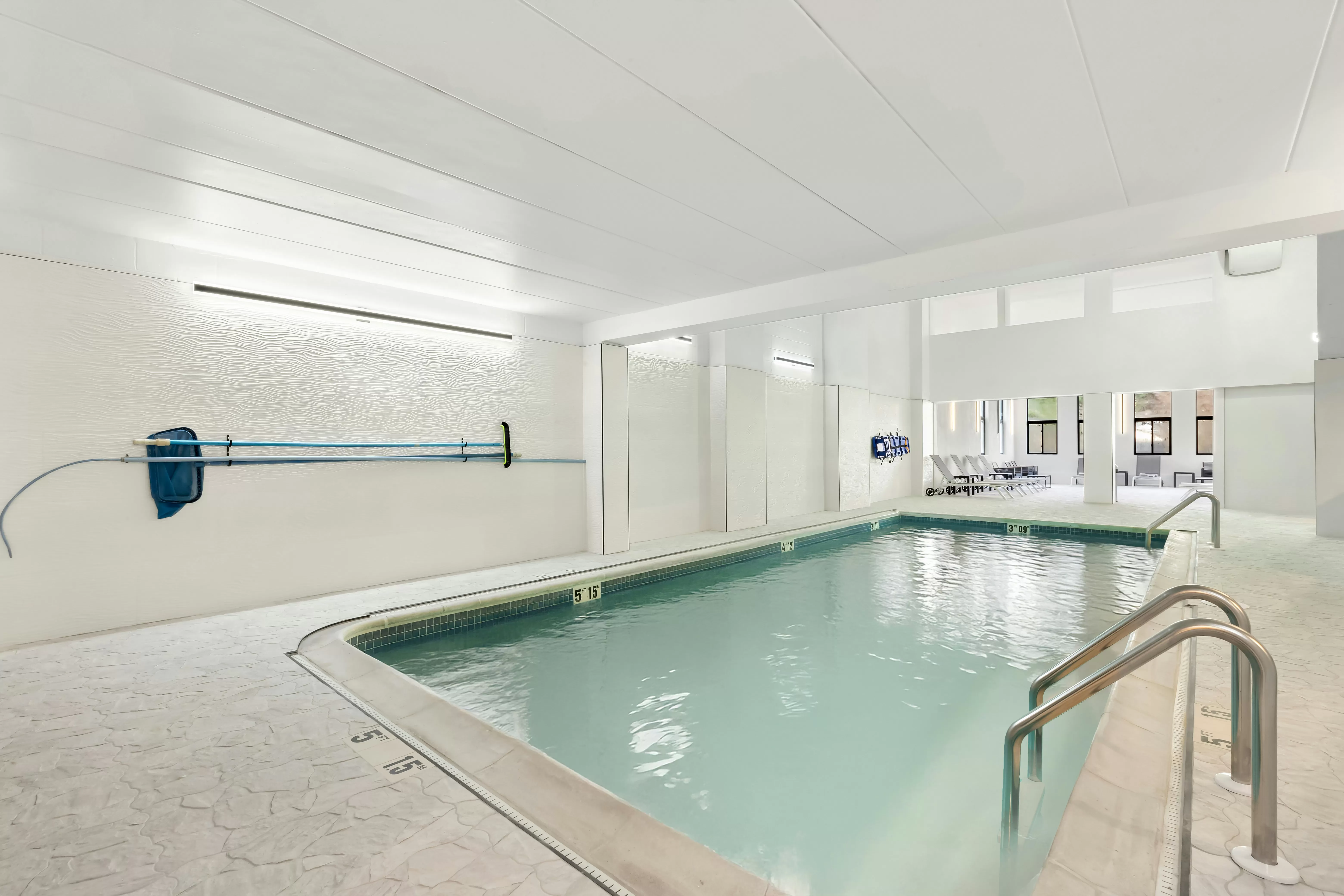
Homes with indoor pools in the UK offer private, year-round swimming unaffected by weather, privacy concerns, or seasonal closures, making them a niche but enduring segment of the luxury and high-value residential market. They appeal to buyers seeking controlled wellness spaces, family recreation, rehabilitation use, or long-term lifestyle assets rather than seasonal leisure features.
What qualifies as a home with an indoor pool in the UK?
In the UK property market, a home with an indoor pool is defined as a residential dwelling where the swimming pool is fully enclosed within the building envelope and usable independently of external weather conditions. This typically means the pool sits within a structurally integrated pool hall, basement, or dedicated leisure wing rather than beneath a temporary enclosure or retractable roof.
Unlike outdoor or hybrid pools, UK indoor pools are designed to operate year-round with controlled air temperature, humidity management, and water heating systems. Most are constructed as permanent features with specialist mechanical ventilation and dehumidification to protect the building fabric from condensation, mould, and heat loss.
From a valuation and survey perspective, an indoor pool is treated as a high-spec ancillary facility rather than standard habitable space. It is rarely counted toward conventional bedroom or reception room totals, but it materially affects running costs, insurance considerations, and long-term maintenance planning.
Importantly for buyers and investors, UK indoor pools are not uniform in quality. Older properties may contain legacy pools installed in the 1970s–1990s with limited insulation or outdated plant rooms, while modern luxury homes often integrate pools alongside gyms, spas, and wellness suites designed to current building and energy standards.
Why indoor pools enable year-round luxury living in the UK
Indoor pools enable genuine year-round use in the UK because they remove dependence on seasonal weather patterns, daylight hours, and temperature fluctuations. With average outdoor temperatures unsuitable for swimming for much of the year, indoor pools provide consistent access that outdoor pools cannot realistically match without significant compromise.
For homeowners, this translates into predictable daily or weekly use rather than occasional summer activity. Families with children, retirees, and health-focused buyers often prioritise indoor pools for low-impact exercise, physiotherapy, or routine fitness without the need to travel to public leisure facilities.
Privacy is another defining factor. Indoor pools allow swimming without overlooking neighbours or planning around public opening hours. In rural or high-value suburban locations, this privacy aligns closely with buyer expectations of exclusivity and personal space.
From a lifestyle standpoint, indoor pools are increasingly positioned as part of a broader home-based wellness environment. UK buyers accustomed to spa hotels, private members’ clubs, or high-end gyms often view indoor pools as an extension of that experience rather than a novelty feature.
However, year-round use also brings year-round operational responsibility. Heating, ventilation, and water treatment systems must run consistently, which affects energy consumption and ongoing costs. Understanding this balance is essential for buyers evaluating whether the lifestyle benefits align with their long-term expectations.
Property types and UK locations where indoor pools are found
Homes with indoor pools in the UK are concentrated within specific property types and geographic markets rather than evenly distributed across the housing stock. They are most commonly found in high-value detached homes, country estates, converted manor houses, and bespoke new-build properties.
In London and the South East, indoor pools are frequently located in basements beneath prime residential properties, particularly in boroughs such as Kensington and Chelsea, Westminster, Richmond, and Hampstead. Here, space constraints and planning sensitivities make below-ground pool halls a practical solution.
Outside major cities, indoor pools are more often integrated at ground level or within annexes of large homes in counties such as Surrey, Berkshire, Oxfordshire, Hertfordshire, and parts of the Cotswolds. These properties typically offer the footprint needed for dedicated leisure wings without extensive excavation.
In rural and coastal regions, including parts of Devon, Cornwall, and North Wales, indoor pools appear in high-end holiday homes and lifestyle estates designed for multi-season use. In these markets, indoor pools support both private enjoyment and, in some cases, premium rental appeal where permitted.
Across all locations, indoor pools remain a minority feature. Their presence usually signals a property positioned toward the upper end of its local market, appealing to a narrower but more deliberate buyer audience with specific lifestyle priorities.
How much do indoor pools cost to run in the UK?
Indoor pool running costs in the UK typically range from £2,000 to £6,000 per year for efficient modern systems, and can exceed £10,000 annually in older or poorly insulated installations. Costs are driven by water heating, air temperature control, dehumidification, electricity usage, and routine maintenance.
Unlike outdoor pools, indoor pools require the surrounding air to be kept warmer than the water to prevent evaporation and condensation. This means heating systems often run continuously, particularly during autumn and winter months. Energy efficiency depends heavily on insulation quality, pool covers, heat recovery ventilation, and the choice of heating source.
| Cost Category | Estimated Annual Range | Key Influencing Factors |
|---|---|---|
| Water & air heating | £1,200 – £4,000 | Pool size, insulation, energy tariffs |
| Electricity & ventilation | £500 – £2,000 | Dehumidifier efficiency, usage hours |
| Maintenance & chemicals | £300 – £1,200 | Water treatment system, servicing frequency |
| Repairs & contingency | £200 – £1,000+ | Age of plant equipment |
Buyers should request historic utility data and servicing records during due diligence. This provides a more accurate picture than generic estimates and helps identify whether upgrades, such as modern heat pumps or improved covers, could materially reduce long-term costs.
Do indoor pools add value to UK homes?
Indoor pools do not add uniform or guaranteed value to UK homes; their impact depends on location, property price band, buyer profile, and build quality. In prime and super-prime markets, they can enhance desirability and shorten marketing periods, while in mid-market areas they may narrow buyer appeal.
Valuers typically treat indoor pools as a specialist feature rather than a direct square-footage uplift. In areas where comparable properties also offer leisure facilities, a well-designed indoor pool can support price expectations. Where comparables lack such features, valuers may apply only a modest premium or none at all.
For sellers, presentation and condition are critical. Modern, well-maintained pools with efficient systems are seen as assets, while outdated or visibly costly installations can be perceived as liabilities. In some cases, buyers factor in future removal or conversion costs when making offers.
Investors considering rental or resale strategies should note that indoor pools rarely improve yields in standard buy-to-let models. Their value is more closely tied to lifestyle-driven purchases or niche high-end rentals where year-round amenities justify higher pricing.
Planning permission, building regulations, and compliance
Planning requirements for indoor pools in the UK depend on whether the pool is part of a new build, an extension, or a basement conversion. Internal alterations within an existing building may not require planning permission, but structural changes almost always trigger building regulation approval.
Basement pools in particular face heightened scrutiny due to excavation, drainage, and structural integrity concerns. Local authorities often require detailed engineering reports, flood risk assessments, and construction management plans before approval.
Building regulations apply regardless of planning status and cover structural safety, ventilation, electrical systems, moisture control, and energy efficiency. Non-compliant pools can complicate sales, refinancing, or insurance, making certification and documentation essential.
Buyers should confirm that all approvals, completion certificates, and warranties are in place. Retrospective regularisation can be complex and costly, especially for older pools installed before current standards were introduced.
Design, construction, and technical systems explained
Indoor pool performance is defined less by visual design and more by the quality of its technical systems. Effective pools balance water temperature, air temperature, humidity, and airflow to protect both users and the building fabric.
Modern UK indoor pools typically use dedicated mechanical ventilation with heat recovery to control condensation and reduce energy waste. Pool covers play a significant role by limiting evaporation when the pool is not in use, often cutting heating demand substantially.
Construction materials also matter. Glazing, wall finishes, and structural elements must tolerate constant moisture exposure. Poor material choices are a common cause of long-term defects, including corrosion, mould growth, and structural decay.
Buyers assessing an existing pool should commission specialist surveys rather than relying solely on standard home reports. These surveys focus on plant condition, remaining lifespan, and upgrade potential, which directly affect ownership costs and usability.
Who should buy a home with an indoor pool?
Homes with indoor pools are best suited to UK buyers whose lifestyle, health needs, or long-term ownership plans justify year-round use rather than occasional leisure. They appeal most strongly to owner-occupiers rather than short-horizon investors.
Buyers who gain the most value include families with children who swim regularly, individuals requiring low-impact exercise or rehabilitation, and households prioritising private wellness amenities. Retirees and remote workers also feature prominently, as daily access increases perceived value.
By contrast, buyers seeking low-maintenance ownership, short-term resale gains, or conventional rental yields often find indoor pools misaligned with their objectives. The feature adds operational complexity that only delivers value when actively used and properly maintained.
A practical rule applied by experienced agents is frequency of use: if a buyer realistically expects to use the pool multiple times per week, the lifestyle return often outweighs the costs. If usage is likely to be sporadic, alternative property features may deliver better value.
Common buyer mistakes and expert insights
The most common mistake UK buyers make with indoor pools is underestimating technical complexity. Unlike kitchens or bathrooms, pool systems involve specialist plant, ventilation, and structural considerations that general contractors may not fully understand.
Another frequent issue is relying on visual condition alone. A pool that appears clean and functional can still conceal failing dehumidifiers, inefficient heating systems, or end-of-life liners. These components are costly to replace and should be assessed independently.
Buyers also sometimes overestimate resale appeal. While indoor pools attract attention, they can reduce buyer pools in certain markets. Expert advice typically recommends treating the pool as a personal lifestyle asset rather than a guaranteed value enhancer.
Finally, overlooking documentation is a recurring risk. Missing building regulation approvals, commissioning certificates, or service records can delay transactions and weaken negotiating positions. Experienced buyers treat paperwork as critically as physical inspection.
Frequently Asked Questions
Are indoor pools expensive to maintain in the UK?
Indoor pools are more expensive to maintain than outdoor pools due to heating, ventilation, and continuous operation. Well-designed modern systems can keep costs predictable, but older pools may require significant upgrades.
Can an indoor pool be removed or converted?
Yes, indoor pools can be removed or converted into gyms, studios, or additional living space, subject to structural considerations and building regulations. Conversion costs vary widely depending on construction method and location.
Do lenders treat homes with indoor pools differently?
Most UK mortgage lenders do not object to indoor pools, but valuations may be conservative. Specialist or high-value lenders are more accustomed to properties with leisure facilities.
Are indoor pools suitable for rental properties?
Indoor pools are rarely suitable for standard rental models due to liability, maintenance, and insurance considerations. They may work in niche, high-end, or holiday rental contexts with professional management.
Is planning permission always required for an indoor pool?
Planning permission is not always required, but building regulations approval almost always applies. Basements and extensions are more likely to need formal planning consent.
Key Takeaways
- Year-round usability: Indoor pools offer consistent, private swimming regardless of UK weather.
- Costs vary widely: Running and maintenance costs depend heavily on system age and efficiency.
- Value is market-specific: Indoor pools enhance desirability in prime markets but can narrow appeal elsewhere.
- Technical due diligence is essential: Specialist surveys and full documentation protect buyers.
- Lifestyle-driven feature: Best suited to owners who expect frequent, long-term use.
References
- UK Building Regulations Approved Documents
- Royal Institution of Chartered Surveyors (RICS) valuation guidance
- Chartered Institute of Building (CIOB) technical resources
- Energy Saving Trust guidance on domestic heating systems