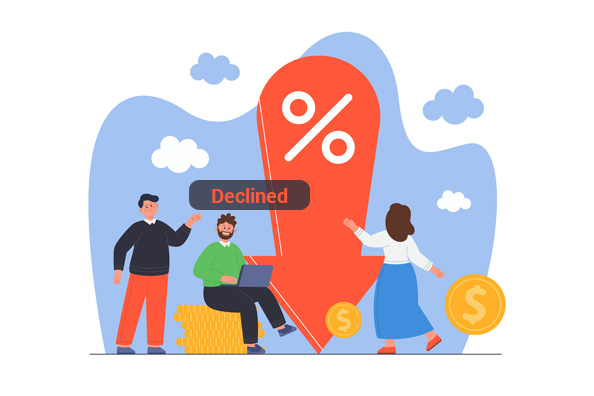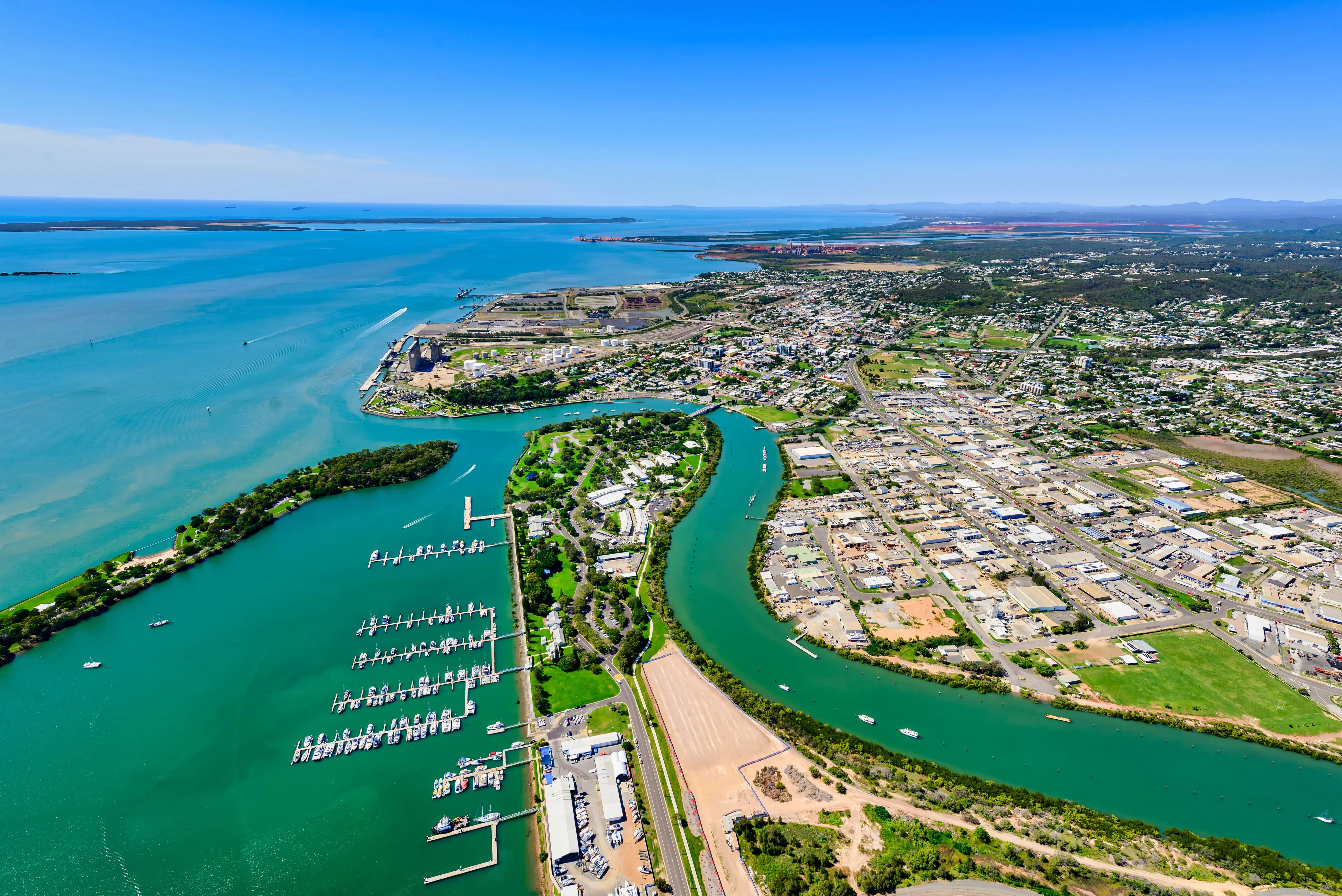
Gladstone is considered a high-variance property market rather than a consistently stable one, meaning it can deliver strong rental yields and capital growth during economic upswings, but also sharp corrections during downturns. For investors, the key question is not simply whether Gladstone is “good,” but whether its cyclical nature aligns with your risk tolerance, holding strategy, and timing. Historically, returns have been closely tied to industrial expansion, particularly in energy and resources, making Gladstone a market where timing and local economic insight matter more than in metropolitan areas.
What Makes Gladstone Unique as a Property Market?
Gladstone is fundamentally different from most residential property markets because it is heavily influenced by industrial activity rather than population-driven demand alone. The local economy is anchored by sectors such as liquefied natural gas (LNG), mining exports, port logistics, and large-scale infrastructure. This creates a direct link between employment cycles and housing demand, especially in the rental sector.
Unlike capital cities, where demand is diversified across multiple industries, Gladstone’s property performance tends to accelerate rapidly during periods of industrial expansion and contract just as quickly when projects conclude. This results in a “boom-and-correction” pattern that experienced investors often anticipate and plan around.
From a structural perspective, Gladstone offers three defining characteristics:
1. Economic Concentration: A significant portion of employment is tied to large industrial projects. When new developments are announced, housing demand can spike almost immediately.
2. Supply Sensitivity: During boom periods, developers often respond with rapid construction. If demand drops, this additional supply can suppress prices and rents.
3. Investor-Dominated Segments: Certain suburbs have high investor ownership, which can amplify price volatility when sentiment changes.
For buyers, this means Gladstone should not be approached as a passive, long-term “set and forget” market without understanding its economic drivers. Instead, it suits investors who actively monitor regional developments and adjust their strategies accordingly.
Are Rental Returns in Gladstone Worth It?
Rental returns in Gladstone are often above national averages, particularly during periods of economic growth. Gross rental yields can be significantly higher than those in major cities, making the region attractive for income-focused investors. However, these returns are not stable year-round and can fluctuate based on workforce demand tied to industrial activity.
During peak project phases, rental demand increases sharply as contractors, engineers, and temporary workers enter the region. This can lead to:
- Rapid increases in weekly rents
- Low vacancy rates
- Competitive leasing conditions
Conversely, when major projects conclude or slow down, the rental market can soften quickly. This may result in:
- Rising vacancy rates
- Downward pressure on rents
- Longer leasing periods
For investors evaluating rental performance, the critical insight is that Gladstone’s yields are “event-driven” rather than purely demand-driven. This means returns are strongest when aligned with infrastructure and industrial expansion cycles.
Another important factor is property type. Detached houses often perform more consistently than high-density units, particularly during downturns. Units may experience sharper declines in both rental income and capital value due to oversupply risk.
Investors seeking reliable cash flow should assess:
- Current vacancy trends
- Upcoming infrastructure or energy projects
- Population growth versus housing supply
- Tenant demographics (permanent residents vs. transient workforce)
In practical terms, Gladstone can deliver high rental income, but only when entered at the right point in the cycle and managed with realistic expectations about volatility.
How Do Market Cycles Affect Property Investment in Gladstone?
Market cycles are the single most important factor influencing property performance in Gladstone. Unlike stable metropolitan markets, where growth tends to be gradual, Gladstone experiences pronounced cycles tied to economic activity. Understanding these cycles is essential for both capital growth and income stability.
A typical Gladstone property cycle can be broken into four phases:
1. Expansion Phase:
Triggered by major industrial announcements or construction projects. Employment rises, rental demand surges, and property prices begin to climb. Investor interest increases rapidly during this phase.
2. Peak Phase:
Demand reaches its highest point. Rents and prices may spike sharply, sometimes beyond sustainable levels. New developments are often approved and constructed during this period.
3. Contraction Phase:
Once major projects are completed, temporary workers leave the region. Rental demand drops, vacancy rates increase, and prices begin to decline.
4. Stabilisation Phase:
The market finds a new equilibrium. Prices and rents stabilise at lower levels, creating potential entry opportunities for long-term investors.
The key risk for investors is entering during the peak phase, when prices are inflated, and future demand may already be declining. Conversely, the most strategic entry points tend to occur during early expansion or late contraction phases, when prices are more aligned with long-term fundamentals.
Timing is not about predicting exact market peaks or troughs, but about recognising indicators such as:
- Government approvals for major projects
- Infrastructure investment announcements
- Employment growth data
- Housing supply pipeline
Investors who treat Gladstone as a cyclical market rather than a linear growth market are better positioned to capture both rental income and capital appreciation while managing downside risk.
What Do Gladstone Property Price Trends Reveal?
Gladstone’s property price trends reflect a pattern of sharp growth followed by noticeable corrections, rather than steady long-term appreciation. This pattern is closely tied to the timing of major industrial developments and infrastructure investment cycles. Investors reviewing historical performance will observe that price surges often coincide with project announcements and workforce inflows, while declines follow project completion phases.
Unlike capital city markets where price growth is supported by population expansion, education hubs, and diversified employment, Gladstone’s growth is more concentrated and therefore less predictable. This results in shorter growth cycles but often stronger percentage increases during peak periods.
In practical terms, price trends in Gladstone are best understood through three key drivers:
1. Industrial Investment Pipeline: When new energy or export projects are announced, buyer confidence rises, and prices can move quickly upward.
2. Housing Supply Response: Developers tend to react aggressively during booms, which can lead to oversupply and price stagnation or decline once demand normalises.
3. Investor Sentiment Cycles: External investor activity amplifies both growth and downturns, especially when markets attract attention for high yields.
For long-term investors, the key takeaway is that capital growth in Gladstone is not linear. Entry timing plays a larger role in overall returns than in most metropolitan markets. Buying during stabilisation or early expansion phases has historically provided more favourable outcomes than entering during peak demand.
Which Areas in Gladstone Perform Best for Investment?
Not all areas within Gladstone perform equally, and micro-location selection can significantly influence both rental returns and capital stability. Suburbs with established infrastructure, proximity to employment hubs, and owner-occupier appeal tend to show more resilience during downturns.
Areas closer to the CBD and major industrial zones often benefit from strong rental demand, particularly from workers seeking convenience. However, these same areas may also experience higher volatility due to their reliance on short-term workforce accommodation.
Suburbs with a higher proportion of owner-occupiers typically demonstrate more stable price performance. These locations are less sensitive to rapid investor sell-offs and tend to maintain consistent demand even during softer market conditions.
When assessing suburb performance, investors should prioritise:
- Proximity to employment centres and transport routes
- School access and local amenities
- Balance between owner-occupiers and investors
- Future development plans and zoning changes
Rather than focusing solely on yield, a balanced approach that considers tenant quality, long-term demand, and resale liquidity is more likely to produce consistent outcomes.
Houses vs Units: Which Property Type Performs Better?
In Gladstone, houses have historically outperformed units in terms of both capital stability and rental resilience. While units may offer higher initial yields, they are also more exposed to oversupply, particularly during construction booms.
Detached houses benefit from a broader appeal, including families and long-term residents. This creates a more stable tenant base and reduces vacancy risk during downturns. Land value also plays a significant role in supporting long-term price stability for houses.
Units, on the other hand, are often developed in clusters during high-demand periods. When market conditions shift, these properties can experience:
- Faster rent declines
- Higher vacancy rates
- Greater price volatility
However, units may still suit certain investor strategies, particularly those focused on short-term yield during expansion phases. The key is to understand that units require more precise timing and active management compared to houses.
A practical strategy for many investors is to prioritise well-located houses while approaching unit investments selectively and with clear exit planning.
What Costs and Risks Should Investors Expect?
Investing in Gladstone involves standard property acquisition costs, but the primary financial considerations relate to income volatility and market timing rather than transaction expenses alone.
Typical upfront costs include stamp duty, legal fees, inspections, and financing charges. Ongoing expenses consist of property management fees, maintenance, insurance, and council rates. These are broadly comparable to other Australian markets.
The more significant risks are market-specific:
Income Volatility: Rental income can fluctuate depending on workforce demand and vacancy rates.
Capital Value Swings: Property values may decline during contraction phases, particularly if purchased at peak prices.
Oversupply Risk: Rapid construction during boom periods can lead to excess housing stock.
Liquidity Constraints: Selling property during downturns may take longer due to reduced buyer activity.
Mitigating these risks requires:
- Conservative financial planning with buffer capacity
- Careful property selection
- Awareness of local economic indicators
- Long-term holding capability where possible
Investors who treat Gladstone as a high-yield but higher-risk market are better positioned to make informed decisions.
What Mistakes Should Investors Avoid in Gladstone?
The most common mistakes in Gladstone property investment stem from misunderstanding its cyclical nature and treating it like a stable metropolitan market. Avoiding these errors can significantly improve investment outcomes.
Buying at Market Peak:
Entering the market during peak demand often results in overpaying, with limited short-term growth potential.
Overestimating Rental Stability:
Assuming consistent rental income without accounting for vacancy fluctuations can lead to financial strain.
Ignoring Supply Pipelines:
Failing to monitor new developments may result in investing in oversupplied areas.
Focusing Solely on Yield:
High yields can be attractive, but they should not outweigh considerations such as location quality and long-term demand.
Lack of Exit Strategy:
Investors who do not plan when and how to sell may find themselves holding underperforming assets during downturns.
A disciplined approach grounded in research, timing awareness, and realistic expectations is essential when investing in Gladstone.
What Investment Strategies Work Best in Gladstone?
The most effective investment strategies in Gladstone are those that align with its cyclical nature rather than relying on long-term passive growth assumptions. Investors who succeed in this market typically adopt timing-focused or income-buffered approaches.
A common strategy is the cycle-entry approach, where investors purchase during stabilisation or early expansion phases. This allows them to benefit from both rising rental demand and potential capital appreciation as the market strengthens.
Another approach is yield-driven investing with buffers. In this strategy, investors prioritise high rental income but maintain financial reserves to manage vacancy periods or rent reductions. This reduces exposure to income volatility.
Some experienced investors also use a medium-term hold strategy, aiming to enter before growth accelerates and exit before or during peak conditions. This requires active monitoring of economic indicators and market sentiment.
Regardless of strategy, the following principles consistently apply:
- Prioritise property quality over short-term yield spikes
- Maintain financial buffers for downturn periods
- Monitor industrial and infrastructure developments closely
- Be prepared to act based on market signals rather than assumptions
Gladstone rewards disciplined investors who treat property as part of a broader economic cycle rather than a static asset class.
When Is the Best Time to Invest in Gladstone Property?
The most favourable time to invest in Gladstone is typically during late contraction or early recovery phases, when prices have stabilised, and there are early signs of renewed economic activity. This stage offers a balance between value and future growth potential.
Early indicators of a favourable entry point include:
- Announcements of new industrial or infrastructure projects
- Gradual decline in vacancy rates
- Stabilisation of property prices after a downturn
- Increasing local employment activity
Investing too early during a downturn can result in extended holding periods with limited returns, while entering too late during rapid growth can expose investors to price corrections once demand peaks.
Timing in Gladstone is less about predicting exact market movements and more about recognising directional shifts in economic activity. Investors who base decisions on data rather than sentiment tend to achieve more consistent outcomes.
What Is the Long-Term Outlook for Gladstone?
Gladstone’s long-term outlook is closely tied to its role as an industrial and export hub. Continued investment in energy, port infrastructure, and resource-related industries supports the region’s economic relevance, which in turn underpins housing demand over time.
However, this outlook should not be interpreted as linear growth. The same factors that drive expansion also contribute to cyclical volatility. As global demand for resources and energy shifts, so too does local economic activity.
From a long-term perspective, Gladstone can remain a viable investment location under certain conditions:
- The investor has a clear understanding of market cycles
- The property is selected in a resilient location
- Financial buffers are in place to manage fluctuations
- The holding strategy aligns with economic timelines
Rather than viewing Gladstone as a purely growth-driven market, it is more accurately positioned as a strategic, cycle-dependent investment opportunity. This distinction is critical for setting realistic expectations and achieving sustainable results.
Frequently Asked Questions
Is Gladstone a good place for first-time property investors?
Gladstone may not be ideal for first-time investors seeking stability, as its market is cyclical and can experience significant fluctuations. It is better suited to those who understand market timing and risk management.
What rental yield can investors expect in Gladstone?
Rental yield values are often higher than in major cities, but they vary depending on economic conditions. Strong yields typically occur during industrial expansion phases.
Are property prices in Gladstone stable?
No, property prices in Gladstone are not consistently stable. They tend to rise and fall in line with economic and industrial cycles.
Is it better to invest in houses or units in Gladstone?
Houses generally offer more stability and broader tenant appeal, while units may provide higher yields but carry a greater risk of oversupply and volatility.
What is the biggest risk of investing in Gladstone?
The primary risk is market timing. Buying during peak conditions can lead to reduced returns and potential value declines during downturns.
Key Takeaways
- Cycle-Driven Market: Gladstone’s property performance is closely tied to industrial and economic cycles rather than steady population growth.
- High Yield Potential: Rental returns can exceed national averages, particularly during expansion phases.
- Timing Matters Most: Entry and exit timing significantly influence both rental income and capital growth outcomes.
- Property Selection Is Critical: Houses generally provide more stability than units in volatile conditions.
- Risk Management Is Essential: Financial buffers and market awareness are necessary to navigate downturns.
References
- Regional property market reports and housing data analyses
- Economic and infrastructure development announcements
- Rental market performance insights and vacancy trend reports
- Property investment research and market cycle studies