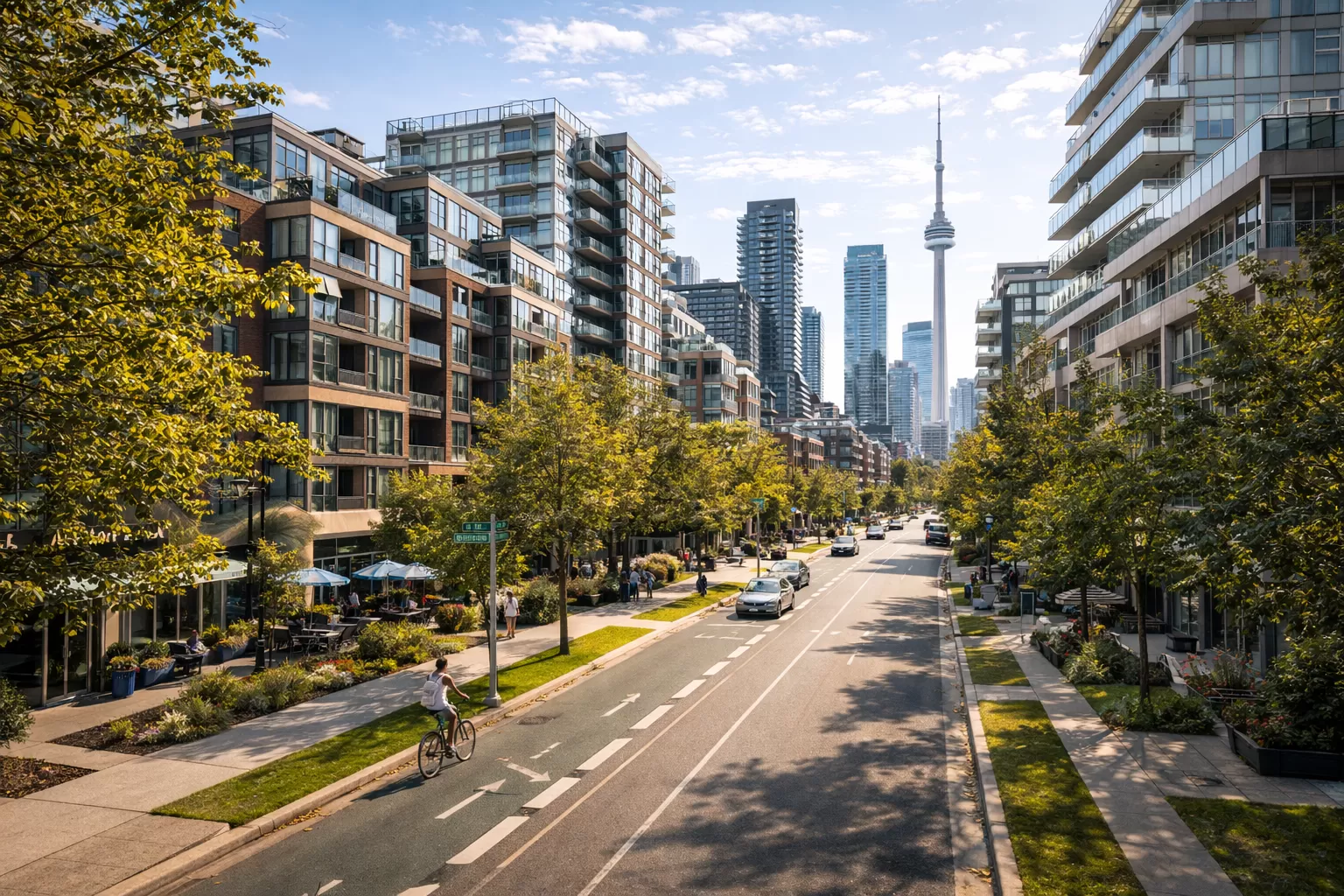
Up-and-coming neighbourhoods in Toronto are areas experiencing rising housing demand, new infrastructure investment, demographic shifts, and increasing property values. Buyers and investors typically focus on districts where redevelopment projects, improved transit access, and new housing developments signal long-term growth potential. In Toronto, neighbourhoods such as East Harbour, Regent Park, Weston, and Mimico are gaining attention because they combine relatively lower entry prices with urban renewal projects and strong connectivity to employment hubs.
What Makes A Toronto Neighbourhood Up And Coming?
A Toronto neighbourhood is considered “up and coming” when it shows measurable indicators of future property demand and economic development. These indicators typically include new transit infrastructure, large-scale residential development, rising buyer interest, and increasing property renovation activity. Buyers and investors monitor these signals to identify areas where property values may appreciate faster than the broader market.
Urban redevelopment projects often serve as the strongest signal that a neighbourhood is entering a growth phase. When former industrial land, underused commercial space, or aging housing stock begins redevelopment, new residential units, retail spaces, and public amenities typically follow.
In Toronto, municipal planning initiatives frequently drive these transformations. The city’s long-term growth strategy encourages higher-density housing near transit corridors and employment zones, which creates opportunities for neighbourhood revitalisation.
| Indicator | What It Signals | Why It Matters For Buyers |
|---|---|---|
| Transit Expansion | New subway or LRT access | Higher future property demand |
| Redevelopment Projects | Conversion of industrial or commercial land | Potential price appreciation |
| Population Growth | Increase in residents and housing demand | Stronger rental markets |
| New Amenities | Parks, schools, retail districts | Improved livability and resale value |
| Rising Renovation Activity | Older homes being modernized | Neighbourhood revitalisation |
Transit access is particularly important in Toronto because commuting efficiency significantly influences housing demand. Neighbourhoods that gain new subway stations or LRT lines often experience increased interest from both homeowners and investors seeking improved accessibility to downtown employment centres.
Demographic changes also play a role. Younger professionals, students, and creative industries often move into emerging districts where housing costs are lower than established neighbourhoods. Over time, increased demand leads to new restaurants, retail stores, and cultural spaces, which further strengthens the neighbourhood’s desirability.
Why Buyers And Investors Target Emerging Toronto Neighbourhoods
Buyers and investors often prioritise emerging neighbourhoods because they offer a balance between affordability and long-term growth potential. Established Toronto districts such as Yorkville, Rosedale, and The Annex command high property prices, which can limit entry opportunities for first-time buyers and new investors.
Up-and-coming neighbourhoods provide an alternative entry point into the Toronto housing market. These areas typically have lower average property prices compared with prime downtown locations while still offering proximity to transit, employment centres, and urban amenities.
Investors focus on neighbourhoods where both property values and rental demand are expected to increase. When a neighbourhood begins attracting new businesses, infrastructure investment, and residential development, the combination can lead to stronger long-term market performance.
| Buyer Motivation | Explanation | Typical Buyer Type |
|---|---|---|
| Lower Entry Prices | More affordable than established districts | First-time buyers |
| Future Value Growth | Potential for appreciation as neighbourhood improves | Long-term investors |
| Rental Demand | Growing population increases tenant demand | Buy-to-let investors |
| Urban Revitalisation | New developments improve amenities | Young professionals |
Another advantage is the opportunity to purchase larger homes or properties with renovation potential. In some emerging Toronto neighbourhoods, older houses or underused properties can be upgraded or redeveloped, increasing both rental income and resale value.
However, buyers should conduct detailed research before purchasing in emerging areas. Growth potential depends on factors such as city planning policies, infrastructure investment timelines, and economic conditions affecting the broader housing market.
Toronto Market Trends Driving Neighbourhood Growth
Several structural trends are shaping which neighbourhoods in Toronto are gaining attention from buyers and property investors. Population growth, transit expansion, and urban redevelopment are among the most influential factors.
Toronto remains one of the fastest-growing cities in North America, supported by immigration and strong employment opportunities in sectors such as finance, technology, healthcare, and education. Population growth increases housing demand, particularly in neighbourhoods offering relatively affordable entry points compared with central downtown areas.
Transit expansion projects are another major driver of neighbourhood transformation. New infrastructure such as the Ontario Line, Eglinton Crosstown LRT, and GO Transit upgrades are improving connectivity across the city. Areas that previously lacked efficient transit access are becoming more attractive to buyers and renters.
| Trend | Impact On Neighbourhoods | Buyer Opportunity |
|---|---|---|
| Population Growth | Increased housing demand | Strong rental markets |
| Transit Expansion | Improved accessibility | Higher property interest |
| Urban Redevelopment | Transformation of older districts | Value appreciation potential |
| Condo Development | Increased housing supply in key corridors | Entry-level investment opportunities |
Toronto’s planning policies also encourage mixed-use communities that integrate residential buildings, retail spaces, and public amenities. These developments can significantly improve neighbourhood livability and attract long-term residents.
For buyers and investors, understanding these market forces is essential for identifying neighbourhoods that may experience sustained growth rather than short-term price spikes.
East Harbour: Major Transit And Commercial Expansion
East Harbour is widely considered one of Toronto’s most significant emerging neighbourhoods due to its large-scale commercial development and future transit hub. Located east of the Don River near downtown, the district is undergoing a transformation from former industrial land into a major mixed-use urban centre.
The East Harbour project includes millions of square feet of office space, retail areas, and public infrastructure. It is also planned as a major transit interchange connecting GO Transit, the Ontario Line subway, and other regional rail services. This level of connectivity can dramatically increase residential demand in surrounding neighbourhoods.
For property investors, the appeal of East Harbour lies in its proximity to downtown Toronto combined with redevelopment potential. Areas surrounding the project are expected to experience increased housing demand as the employment district expands.
| Factor | Description | Investor Impact |
|---|---|---|
| Major Transit Hub | Ontario Line and GO Transit connections | Higher commuter demand |
| Commercial Development | Large office and retail district | Job creation and rental demand |
| Proximity To Downtown | Minutes from the financial district | Strong property appreciation potential |
| Mixed-Use Planning | Integrated residential and commercial spaces | Long-term neighbourhood growth |
Buyers seeking early entry into areas near East Harbour often focus on neighbouring districts such as Riverside, Leslieville, and parts of the Port Lands redevelopment area. These locations provide access to the future transit hub while still offering established residential communities.
Regent Park: Large-Scale Urban Revitalisation
Regent Park has undergone one of the largest urban revitalisation projects in Canada. The neighbourhood, located just east of downtown Toronto, is being redeveloped through a multi-phase initiative that replaces older public housing with mixed-income residential buildings, new parks, schools, and community facilities.
This transformation has significantly improved the neighbourhood’s infrastructure, public spaces, and housing quality. Modern condominiums, townhouses, and retail spaces have replaced many of the original buildings, creating a more diverse residential environment.
For investors and first-time buyers, Regent Park offers proximity to downtown employment centres combined with relatively more accessible pricing compared with established central neighbourhoods.
| Feature | Impact On Neighbourhood | Buyer Opportunity |
|---|---|---|
| Mixed-Income Housing | New residential buildings replacing older units | Diverse housing options |
| Community Facilities | Aquatic centre, schools, and parks | Improved livability |
| Retail Development | New shops and restaurants | Increased neighbourhood appeal |
| Downtown Access | Close to financial and business districts | Strong rental demand |
As redevelopment phases continue, Regent Park is attracting young professionals, students, and families seeking modern housing close to the city centre. The neighbourhood’s growth trajectory illustrates how long-term urban planning initiatives can reshape property markets.
Weston: Transit Growth And Affordable Entry Prices
Weston is gaining attention among buyers and investors because it offers comparatively affordable property prices within Toronto while benefiting from improved regional transit connections. Located in the northwest part of the city, the neighbourhood has historically been overlooked but is now experiencing gradual revitalisation.
The expansion of GO Transit services and the Union Pearson Express rail line has improved connectivity between Weston, downtown Toronto, and Pearson International Airport. Better transit access often increases housing demand, especially among commuters seeking lower housing costs outside central districts.
Weston also contains a mix of older detached homes, townhouses, and newer condominium developments. This variety provides multiple entry points for buyers depending on budget and investment strategy.
| Indicator | Description | Buyer Advantage |
|---|---|---|
| Transit Connectivity | GO Transit and airport rail link | Improved commuting options |
| Lower Property Prices | More affordable than central Toronto | Accessible entry point |
| Revitalisation Efforts | Local development and infrastructure upgrades | Long-term appreciation potential |
| Housing Variety | Detached homes, townhouses, condos | Diverse investment opportunities |
For long-term investors, Weston represents a neighbourhood where gradual improvements in infrastructure and housing stock could support property value growth over time.
Mimico: Waterfront Redevelopment And Condo Growth
Mimico is an emerging waterfront neighbourhood in Toronto’s west end that has experienced significant condominium development along the Lake Ontario shoreline. Its appeal lies in combining waterfront living with relatively easy access to downtown Toronto through GO Transit and streetcar connections.
The Humber Bay Shores area within Mimico has become a focal point for residential development. High-rise condominium buildings now line the waterfront, offering lake views, modern amenities, and proximity to parks and walking trails.
Buyers and investors often consider Mimico because it offers lifestyle advantages similar to downtown waterfront districts but with slightly more accessible pricing compared with central Toronto neighbourhoods.
| Feature | Description | Buyer Benefit |
|---|---|---|
| Waterfront Location | Access to Lake Ontario parks and trails | High lifestyle appeal |
| Condo Development | Modern residential towers | Investment opportunities |
| Transit Access | GO Transit and TTC streetcars | Easy commuting to downtown |
| Recreation Amenities | Marinas, cycling paths, waterfront parks | Attractive to young professionals |
As Toronto continues expanding westward along the waterfront, neighbourhoods such as Mimico are expected to remain important residential hubs for buyers seeking a balance between urban living and outdoor space.
How Buyers Can Identify Future Growth Neighbourhoods In Toronto
Identifying emerging neighbourhoods in Toronto requires analyzing planning policies, infrastructure investments, housing development activity, and demographic shifts. Buyers and investors often look for early indicators that signal long-term growth rather than short-term price increases.
One of the most reliable indicators is transit development. When new subway stations, light rail lines, or regional rail connections are introduced, surrounding neighbourhoods typically experience increased housing demand because commuting becomes easier. Improved transit accessibility often attracts both residents and businesses.
Municipal planning documents and redevelopment proposals also provide important signals. Toronto’s planning department regularly outlines areas targeted for intensification, including mixed-use developments and higher-density housing near transit corridors.
| Indicator | Why It Matters | Buyer Action |
|---|---|---|
| Transit Expansion | Improves connectivity and commuting times | Research upcoming transit projects |
| Redevelopment Zones | City planning encourages new housing | Review municipal planning documents |
| Commercial Investment | New businesses attract residents | Monitor local development proposals |
| Population Growth | Increases housing demand | Review demographic trends |
| Housing Renovation Activity | Signals neighbourhood revitalisation | Observe local property improvements |
Buyers can also assess neighbourhood transformation by examining new condominium developments and residential building permits. When multiple projects are approved within a district, it often indicates confidence from developers and investors.
Another practical approach is monitoring rental demand. Areas where rental listings are consistently absorbed quickly often signal increasing population inflows and housing demand.
Risks To Consider When Investing In Emerging Toronto Neighbourhoods
While emerging neighbourhoods can offer strong growth potential, property investors should carefully evaluate associated risks before purchasing. Not every neighbourhood undergoing change will experience sustained appreciation, and redevelopment timelines can vary significantly.
One common risk is delayed infrastructure development. Transit projects and urban redevelopment initiatives may take years or even decades to complete. Buyers who rely on projected infrastructure improvements should consider the possibility of construction delays or policy changes.
Market cycles also affect emerging neighbourhoods. Economic conditions, interest rate changes, and housing supply fluctuations can influence property values and rental demand across Toronto.
| Risk | Explanation | Investor Consideration |
|---|---|---|
| Infrastructure Delays | Transit or redevelopment projects may take longer than planned | Evaluate realistic timelines |
| Market Volatility | Housing prices can fluctuate during economic cycles | Plan for long-term holding periods |
| Oversupply Of Condos | Large development pipelines may increase housing supply | Assess local inventory levels |
| Rental Market Changes | Tenant demand may shift due to economic conditions | Analyze rental vacancy rates |
Another factor to consider is zoning and planning regulation changes. Municipal policies can affect building density, short-term rental rules, and development approvals, all of which may influence investment outcomes.
Conducting detailed due diligence—including reviewing neighbourhood planning documents, local rental data, and infrastructure timelines—can help buyers make more informed decisions.
Frequently Asked Questions
What Are The Best Up And Coming Neighbourhoods In Toronto?
Neighbourhoods frequently identified as emerging growth areas include East Harbour, Regent Park, Weston, and Mimico. These areas are experiencing redevelopment, transit improvements, and increasing residential demand.
Why Do Investors Buy Property In Up-And-Coming Areas?
Investors often focus on emerging neighbourhoods because property prices may be lower than established districts while offering potential for long-term appreciation and growing rental demand.
How Can Buyers Identify A Growing Toronto Neighbourhood?
Indicators include new transit projects, redevelopment activity, increasing housing construction, population growth, and rising commercial investment within the area.
Are Up-And-Coming Neighbourhoods Risky Investments?
Emerging neighbourhoods can involve higher uncertainty compared with established areas. Growth often depends on infrastructure projects, economic conditions, and successful redevelopment initiatives.
Is Toronto Still A Strong Market For Property Investment?
Toronto remains one of Canada’s largest economic centres with sustained housing demand driven by population growth, immigration, and employment opportunities across multiple industries.
Key Takeaways
- Growth Indicators: Transit expansion, redevelopment projects, and population growth are major signals of emerging neighbourhood potential.
- Key Toronto Areas: East Harbour, Regent Park, Weston, and Mimico are frequently highlighted for redevelopment and infrastructure investment.
- Investment Potential: Up-and-coming neighbourhoods often offer lower entry prices and long-term appreciation opportunities.
- Risk Awareness: Infrastructure delays, market cycles, and housing supply changes can influence property investment outcomes.
- Research Importance: Buyers should review planning documents, transit projects, and rental market data before investing.
References
- City of Toronto Urban Planning and Development Reports.
- Canadian Real Estate Association Housing Market Statistics.
- Toronto Regional Real Estate Board Market Data.
- Infrastructure project announcements and municipal redevelopment plans.