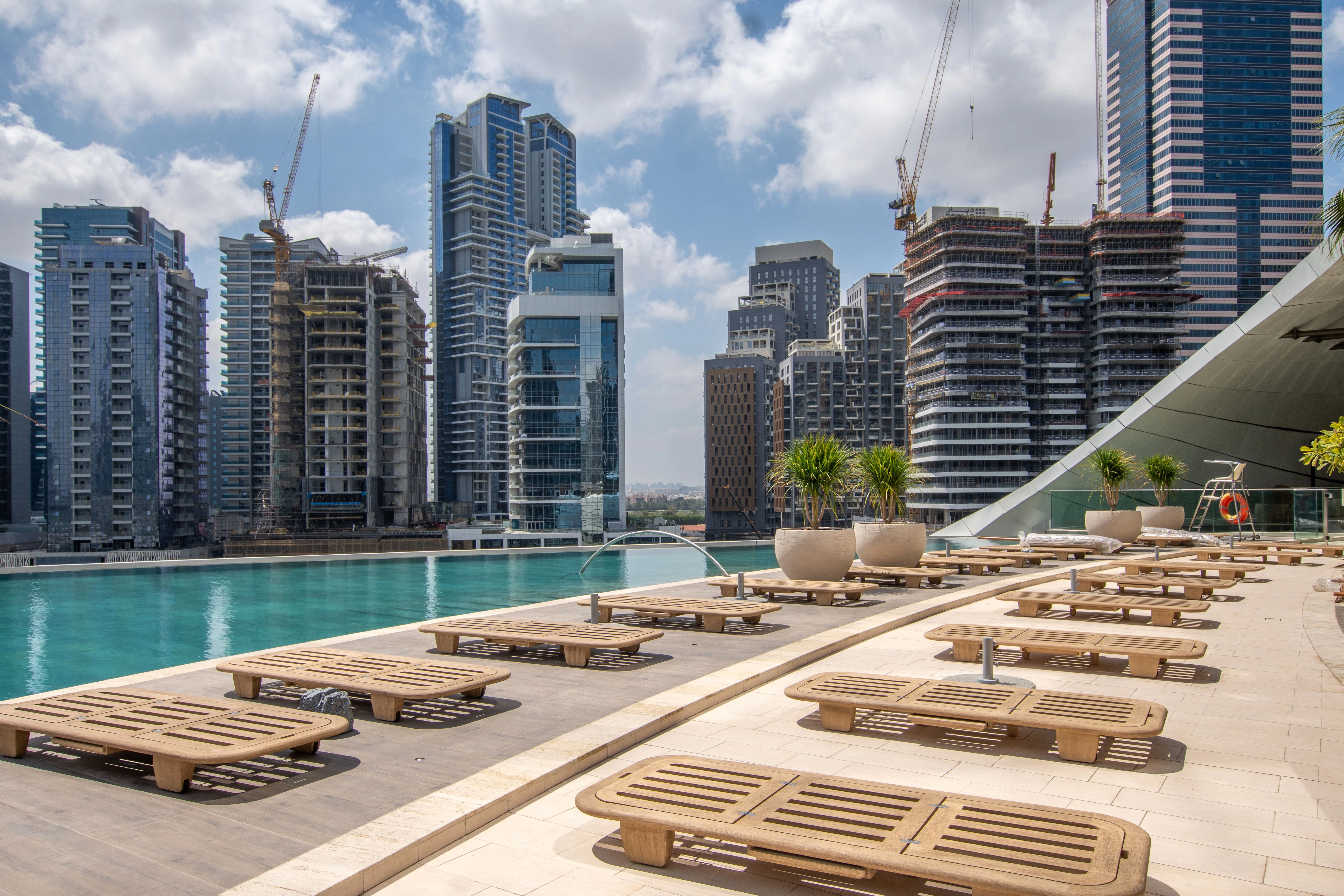
Luxury property ROI in Dubai is driven by a combination of comparatively lower entry prices than global peer cities, strong rental demand from high-income expatriates, a tax-efficient ownership structure, and sustained capital appreciation in prime districts. Net rental yields for luxury assets typically range from mid-single digits to high-single digits depending on location and asset quality, while long-term price growth is closely linked to supply discipline, global wealth inflows, and infrastructure expansion.
What counts as luxury property ROI in Dubai?
Luxury property ROI in Dubai refers to the combined financial return generated by high-end residential assets through rental income and capital appreciation, measured against total acquisition and holding costs. In practical terms, this includes net rental yield after service charges and maintenance, plus price appreciation over the holding period.
In Dubai, “luxury” typically describes properties in prime waterfront or master-planned communities, branded residences, large villas, and high-spec apartments with premium views, amenities, and developer reputations. These assets behave differently from mid-market housing because demand is driven by global wealth, lifestyle migration, and corporate leasing rather than purely local income levels.
ROI calculations must account for Dubai-specific factors that materially alter outcomes compared to other global cities. These include the absence of annual property taxes, relatively transparent transaction costs, regulated service charges, and a buyer base that includes both end users and yield-focused international investors. As a result, headline yields can appear high, but net returns depend heavily on asset selection and cost control.
For investors, the most relevant ROI metrics are annual net rental yield, total return over five to ten years, and downside protection during market corrections. Luxury assets in established districts tend to show lower volatility and faster recovery than speculative or peripheral developments.
How Dubai’s luxury property market works
Dubai’s luxury real estate market operates as a globally accessible, freehold ownership system with high liquidity in prime areas. Foreign buyers can own property outright in designated zones, with transactions governed by a centralized land registry and standardized sales contracts.
Demand is primarily international. High-net-worth individuals from Europe, Asia, the Middle East, and increasingly North America view Dubai luxury property as both a lifestyle asset and a capital preservation tool. This global demand base reduces reliance on domestic economic cycles and supports consistent transaction volumes in prime segments.
Rental demand for luxury properties is underpinned by senior executives, entrepreneurs, and long-term residents seeking high-quality housing near business districts, schools, and leisure infrastructure. Short-term and holiday letting also plays a role in specific locations, but long-term leasing remains the stabilizing factor for predictable ROI.
Supply dynamics are a critical determinant of returns. While Dubai is known for large-scale development, true luxury supply is more constrained due to land scarcity in waterfront and central districts, planning restrictions, and the long lead times required for high-end construction. This limits oversupply risk in the most established luxury neighborhoods.
Price discovery in the luxury segment is relatively transparent, with public transaction data and professional valuation standards. However, off-plan launches and bespoke villas can introduce pricing dispersion, making due diligence essential for accurate ROI forecasting.
Current luxury property prices and trends
Luxury property prices in Dubai vary widely by location, view, building quality, and developer track record. Prime waterfront apartments and signature villas command a premium, while secondary luxury stock in less central areas trades at a discount despite similar specifications.
Recent pricing trends show that top-tier assets in established districts have outperformed the wider market in both appreciation and transaction velocity. This reflects buyer preference for completed or near-completion properties with proven rental demand and minimal delivery risk.
Price growth in the luxury segment has been supported by population growth in high-income brackets, corporate relocation, and Dubai’s positioning as a regional business and lifestyle hub. Unlike purely speculative cycles, recent demand has been characterized by higher cash equity and longer intended holding periods, which reduces forced selling risk.
From an ROI perspective, entry price discipline remains essential. Paying a premium for views, floor height, or branding can be justified when these attributes translate into higher rents and lower vacancy. Overpaying for novelty or unproven concepts, however, can compress yields even in a rising market.
Investors assessing current prices should focus on replacement cost, historical transaction ranges, and realistic rental assumptions rather than short-term headline growth figures. Sustainable ROI in Dubai luxury property is achieved through alignment with long-term demand drivers, not short-term price momentum.
What rental returns do luxury properties generate in Dubai?
Luxury rental yields in Dubai are generally higher than those achieved in most mature global cities, but they vary significantly by location, property type, and tenant profile. Prime apartments and villas typically deliver mid-single-digit net yields, while select assets with strong executive or corporate demand can achieve higher net performance when vacancy is tightly controlled.
Long-term leasing is the foundation of stable income for luxury assets. Senior professionals and families prioritize proximity to business districts, international schools, and lifestyle amenities, supporting consistent demand even during broader market slowdowns. Properties aligned with these priorities tend to maintain occupancy and rental pricing power.
Short-term and furnished rentals can enhance gross income in certain locations, but they introduce higher management intensity, regulatory compliance requirements, and income volatility. For investors focused on predictable ROI, professionally managed long-term rentals remain the more reliable strategy.
Net yield calculations must deduct service charges, maintenance, management fees, and realistic vacancy allowances. In luxury buildings with extensive amenities, service charges can materially affect net returns, making building-level analysis as important as headline rental rates.
How capital appreciation shapes long-term ROI
Capital appreciation is a critical component of luxury property ROI in Dubai, particularly for investors with medium- to long-term horizons. Historically, prime assets have shown stronger price resilience and faster recovery after market corrections compared to secondary or speculative stock.
Appreciation is closely linked to land scarcity, infrastructure investment, and the global perception of Dubai as a safe, business-friendly destination. Waterfront locations, established master communities, and low-density villa districts benefit most from these structural drivers.
Developer reputation and build quality also influence long-term value. Properties delivered by developers with consistent design standards, timely handover, and professional asset management tend to outperform over full market cycles, as buyers and tenants place a premium on reliability.
Investors should view appreciation as cumulative rather than linear. Periods of rapid growth are often followed by consolidation, making entry timing and holding power more important than attempting to capture short-term price movements.
What costs reduce luxury property ROI in Dubai?
The absence of annual property taxes in Dubai significantly improves net ROI, but investors must still account for several recurring and one-time costs that affect overall returns. These costs are transparent but can materially alter performance if underestimated.
Upfront costs include transfer fees, registration charges, and professional fees associated with conveyancing and mortgage arrangement if applicable. While these are generally lower than in many global markets, they directly impact effective entry yield.
Ongoing costs are dominated by service charges, which fund building maintenance, security, and shared amenities. Luxury developments with extensive facilities command higher charges, and inefficient building management can erode net income over time.
Maintenance and refurbishment are also relevant for preserving rental competitiveness and resale value. High-end tenants expect properties to remain in premium condition, making proactive upkeep a necessity rather than an optional expense.
Legal and financial considerations investors must understand
Dubai’s property ownership framework is designed to be accessible to international investors, but legal and financial clarity is essential for protecting ROI. Freehold ownership in designated areas grants full title rights, supported by a centralized land registry and standardized contracts.
Financing is available to non-residents, but loan-to-value ratios, interest rates, and eligibility criteria differ from those applied to residents. Leverage can enhance ROI in stable market conditions, but it also increases exposure to interest rate movements and vacancy risk.
Rental regulation provides a degree of stability, with structured processes for rent adjustments and dispute resolution. While this limits excessive rent increases, it also reduces downside risk during market corrections by discouraging abrupt tenant turnover.
Investors should ensure compliance with licensing and registration requirements, particularly when using property management companies or engaging in short-term leasing. Non-compliance can result in fines that directly impact net returns.
Common mistakes that undermine luxury property ROI
The most common ROI error in Dubai’s luxury segment is prioritizing aesthetics or brand names over fundamentals such as location, tenant demand, and operating costs. Visual appeal alone does not guarantee rental performance or resale liquidity.
Overestimating rental income is another frequent issue. Investors who base projections on peak asking rents rather than achieved market rents often experience yield compression once realistic vacancy and incentives are applied.
Ignoring service charge efficiency can also erode returns. Two similar properties with identical rents can deliver materially different net yields due to variations in building management quality.
Finally, short holding periods expose investors to transaction costs and market timing risk. Luxury property ROI in Dubai is optimized through disciplined entry, professional management, and sufficient holding duration to absorb market cycles.
Which luxury property types deliver the strongest ROI?
In Dubai’s luxury segment, ROI performance varies materially by property type due to differences in tenant demand, maintenance intensity, and liquidity. High-quality apartments in established prime districts generally offer the most balanced return profile, combining stable rental income with relatively predictable resale demand.
Luxury villas tend to deliver lower initial rental yields but stronger long-term capital appreciation, particularly in low-density communities where land scarcity is a defining feature. These assets are favored by end users and long-term residents, which supports price stability during market downturns.
Branded residences occupy a more specialized segment. When associated with globally recognized brands and reputable developers, they can command rental and resale premiums. However, ROI is sensitive to brand longevity, service charge structures, and the depth of secondary market demand.
Penthouses and ultra-prime bespoke properties offer the highest absolute values but the narrowest buyer pool. While they can outperform during strong market cycles, liquidity risk is higher, making them more suitable for investors prioritizing capital preservation and exclusivity over income yield.
How investors can manage downside risk
Downside risk management in Dubai luxury real estate begins with asset selection. Properties in established locations with proven rental histories demonstrate lower volatility and faster recovery than speculative developments or emerging districts.
Conservative financial assumptions are essential. Stress-testing ROI projections against higher vacancy, lower rents, and rising service charges provides a more realistic view of potential outcomes across market cycles.
Professional property management reduces operational risk by ensuring tenant retention, regulatory compliance, and timely maintenance. This is particularly important for overseas investors who cannot actively oversee day-to-day operations.
Portfolio diversification within Dubai, across property types or locations, can further mitigate concentration risk. Investors with multiple assets are better positioned to absorb localized market fluctuations without compromising overall returns.
Optimal holding periods and exit strategies
Luxury property ROI in Dubai is optimized through medium- to long-term holding strategies rather than short-term trading. Holding periods of five to ten years allow investors to benefit from rental income while smoothing out cyclical price movements.
Exit strategy planning should begin at acquisition. Properties with broad appeal, such as well-sized apartments in prime districts, offer greater flexibility when market conditions change or capital needs arise.
Monitoring transaction volumes and comparable sales provides early indicators of liquidity conditions. Exiting during periods of strong demand rather than peak pricing expectations improves the likelihood of timely sales without excessive negotiation.
Investors approaching exit should also consider targeted refurbishment to enhance presentation and justify pricing within the prevailing market context, particularly in competitive luxury segments.
Frequently Asked Questions
Is luxury property in Dubai a good investment for income?
Luxury property in Dubai can generate stable income when located in prime districts with strong long-term tenant demand. Net yields are typically moderate but supported by low taxation and consistent occupancy in well-managed assets.
How does Dubai luxury ROI compare to other global cities?
Compared to cities such as London, New York, or Hong Kong, Dubai luxury property often offers higher net rental yields and lower transaction friction, while price volatility is more closely linked to global capital flows.
Are service charges a major risk for luxury property investors?
Service charges are a significant factor in net ROI calculations. Efficient building management and transparent budgeting are critical, as high or poorly controlled charges can materially reduce net returns.
Can non-residents safely invest in Dubai luxury real estate?
Non-residents can legally own freehold property in designated areas and benefit from a centralized land registry. Professional legal and property management support is recommended to ensure compliance and protect returns.
What is the biggest mistake luxury property investors make in Dubai?
The most common mistake is overpaying based on short-term market sentiment rather than focusing on sustainable rental demand, operating costs, and long-term liquidity.
Key Takeaways
- Balanced ROI: Dubai luxury property returns combine moderate yields with long-term appreciation.
- Location Matters: Prime, established districts deliver more resilient performance.
- Cost Control: Service charges and maintenance directly shape net returns.
- Long-Term Focus: Five- to ten-year holding periods align best with market cycles.
- Risk Management: Conservative assumptions and professional management protect downside.
References
- Dubai Land Department – Residential Transaction Data
- RERA – Rental Market Regulations and Guidelines
- Global Property Guide – Dubai Market Reports
- International Valuation Standards Council – Real Estate Valuation Frameworks