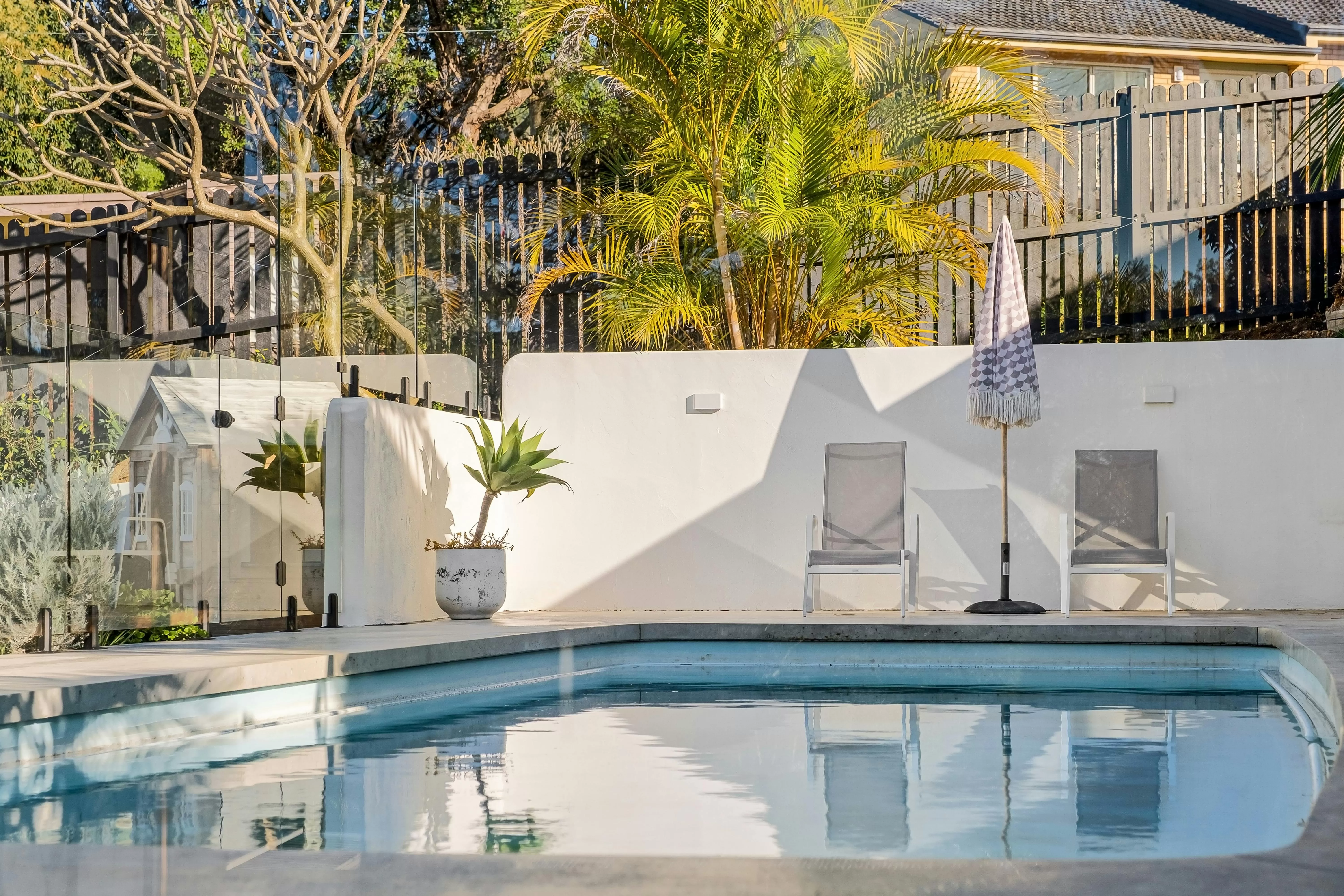
Homes with a private pool in the UK are typically high-value detached properties located in prime London districts, affluent commuter belts, and select coastal or countryside markets. Entry prices generally start around £800,000 outside London and £2.5 million in prime central areas. While a private pool can enhance lifestyle appeal and support pricing in established luxury markets, its investment performance depends heavily on location, build quality, energy efficiency, and resale demand.
What Qualifies as a Home with a Private Pool in the UK?
A home with a private pool in the UK is a residential property where the swimming pool is exclusively owned and accessed by the homeowner, rather than shared within a development. These properties are usually detached houses or large estates, although some high-value townhouses in London include private indoor pools within basement leisure levels.
Indoor vs Outdoor Private Pools
Indoor pools dominate the UK’s private pool market due to climate limitations. Outdoor pools exist primarily in large rural plots or premium coastal homes, where seasonal use is more viable.
- Indoor Pools: Integrated within the house or a dedicated leisure wing; usable year-round.
- Outdoor Pools: Located within private gardens; typically heated and covered during colder months.
- Hybrid or Retractable Designs: Structures that allow seasonal conversion between indoor and outdoor use.
Property Type Profile
Most UK homes with private pools share common characteristics:
- Detached freehold ownership
- Plot sizes exceeding 0.3 acres (for outdoor pools)
- High-specification interiors
- Energy infrastructure supporting ventilation and humidity control
Flats with private pools are rare. Shared pools are more common in luxury apartment developments, but those do not qualify as private pool homes.
Who Typically Buys These Homes?
Buyer profiles commonly include:
- High-income professionals seeking private leisure facilities
- International buyers accustomed to pool ownership
- Families prioritising at-home recreation
- Investors targeting premium holiday let markets
It remains a niche segment within the broader UK residential market.
Where Are Homes with Private Pools Most Common?
Private pool homes are concentrated in prime residential markets with strong upper-quartile demand and larger plot availability. They are uncommon in high-density urban zones outside central London.
Prime London Boroughs
Private indoor pools are frequently found in large townhouses and detached villas in areas such as Kensington, Hampstead, and St John’s Wood. These pools are typically part of basement leisure complexes incorporating gyms, spas, and cinema rooms.
Surrey and the Home Counties
Virginia Water, Weybridge, Cobham, and Wentworth Estate are known for detached executive homes featuring indoor pools or pool houses. Proximity to London combined with generous plot sizes supports demand.
Cheshire’s “Golden Triangle”
Prestbury, Alderley Edge, and Wilmslow contain a notable concentration of custom-built properties from the 1990s onward that include dedicated leisure wings.
South West and Coastal England
Devon and Cornwall feature outdoor pools in high-value coastal and countryside homes. These are often used in premium holiday lettings where seasonal rental demand offsets running costs.
Scotland’s Prime Residential Pockets
In select parts of Edinburgh and rural estates, indoor pools appear in substantial detached properties. Outdoor pools are uncommon due to climate constraints.
In most mid-market towns and cities, private pool homes represent a very small percentage of listings.
How Much Do Homes with Private Pools Cost in the UK?
Homes with private pools typically sit within the top 10–15% of their local market by value. The pool itself does not determine price alone; it is usually part of a broader high-specification property.
| Location | Entry-Level Pool Property | Upper Prime Range | Typical Pool Type |
|---|---|---|---|
| Prime Central London | £2.5m–£4m | £10m+ | Indoor basement pool |
| Surrey & Home Counties | £1.2m–£1.8m | £5m+ | Indoor leisure suite |
| Cheshire | £900k–£1.5m | £3m+ | Indoor pool wing |
| South West | £800k–£1.2m | £4m+ | Outdoor heated pool |
| Prime Scotland | £850k–£1.3m | £3m+ | Indoor pool |
What Drives the Pricing Premium?
The pool itself can cost £80,000 to £250,000+ to install, but the broader pricing premium reflects:
- Large plot size
- Detached freehold status
- High-end finishes throughout
- Energy and ventilation systems
- Prime postcode demand
In some mid-market regions, the pool contributes little measurable additional value and may instead narrow the buyer pool.
What Are Typical Annual Running Costs?
Annual costs vary significantly:
- Indoor pools: £5,000–£15,000 annually depending on heating and humidity control efficiency
- Outdoor heated pools: £3,000–£8,000 annually
- Maintenance contracts: £1,000–£3,000 annually
Energy efficiency plays a decisive role in overall ownership cost. Older gas-heated systems are considerably more expensive to operate than modern heat pump installations.
Scope of This Guide: The following sections will examine the investment potential of private pool homes, legal and planning considerations, detailed cost structures, rental strategies, resale dynamics, and common buyer mistakes.
Are Homes with Private Pools a Good Investment?
Homes with private pools can be strong investments in established prime markets, but they carry higher liquidity risk in average-price areas. Performance depends more on postcode strength and buyer demographics than on the presence of the pool itself.
Where Investment Performance Is Strongest
- Prime London above £3 million
- Executive commuter belts with established upper-quartile demand
- High-end coastal holiday markets
- Established prestige estates with comparable pool homes
In these markets, a private pool aligns with buyer expectations. The feature supports positioning at the top end of the local price range rather than distorting it.
Where Risk Increases
- Mid-market suburban areas
- Locations with limited comparable sales
- Regions where energy costs significantly impact buyer affordability
In weaker markets, the pool may reduce the number of potential buyers rather than expand it.
Financial Analysis: Returns, Liquidity, and Risk
The financial viability of a private pool home should be assessed using three criteria: capital appreciation, rental potential, and resale liquidity.
Capital Appreciation
Historical performance shows that prime-location properties outperform secondary areas regardless of amenities. The pool contributes value only if the underlying location already commands premium pricing.
Liquidity Considerations
| Factor | Impact on Resale |
|---|---|
| Prime postcode | Improves liquidity |
| Energy-efficient systems | Improves buyer confidence |
| Outdated indoor ventilation | Reduces buyer interest |
| Small plot size | Limits market appeal |
Rental Yield Potential
Private pools can increase short-term rental rates in coastal or countryside holiday destinations. However, higher cleaning, maintenance, and insurance costs reduce net yield. For long-term residential lets, pools rarely justify significant rent premiums outside executive housing markets.
Planning Permission, Regulations, and Compliance
Most outdoor private pools fall under permitted development rules if they remain within the residential curtilage and meet height and coverage limits. Indoor pools, detached leisure buildings, or properties in conservation areas may require full planning approval.
When Planning Approval Is Required
- Construction of detached pool houses
- Listed building status
- Location within conservation areas
- Significant structural alterations
Building Regulation Requirements
- Structural stability compliance
- Electrical safety certification
- Ventilation and humidity control standards
- Energy efficiency standards
Absence of completion certificates or sign-off documentation can complicate resale or mortgage approval.
Complete Cost Structure: Purchase to Long-Term Ownership
The total financial commitment extends well beyond the purchase price. Buyers must factor capital costs, operating expenses, refurbishment cycles, and insurance adjustments.
| Cost Category | Estimated Range | Frequency |
|---|---|---|
| Pool Installation (if new) | £80,000–£250,000+ | One-off |
| Annual Energy | £3,000–£12,000+ | Annual |
| Maintenance Contract | £1,000–£3,000 | Annual |
| Major Refurbishment | £15,000–£40,000 | Every 10–15 years |
Hidden Ownership Costs
- Replacement of dehumidification systems
- Structural damp remediation
- Upgraded heating infrastructure
- Higher insurance premiums
Energy efficiency directly influences long-term affordability. Buyers should prioritise modern heat pumps, automated covers, and insulated construction.
Technical Due Diligence Before Exchange
Standard home surveys do not comprehensively assess pool systems. A specialist inspection is strongly recommended, particularly for indoor installations.
Key Inspection Areas
- Humidity and ventilation system performance
- Plant room condition
- Structural moisture penetration
- Pool lining and tiling integrity
- Heating efficiency
Remediation of moisture-related structural damage can exceed £50,000. Thorough technical assessment protects both capital value and safety.
Next Section Preview: The final part will cover resale strategies, long-term market outlook, frequently asked questions, and key takeaways for buyers and investors.
How Should You Position a Home with a Private Pool When Selling?
A home with a private pool should be positioned according to its local market tier. In prime and upper-quartile areas, the pool is presented as an expected lifestyle feature. In mid-market locations, it should be framed as a well-maintained optional amenity rather than a cost-heavy obligation.
Pre-Listing Preparation Checklist
- Obtain a recent professional pool service report
- Prepare annual energy cost summaries
- Provide building regulation certificates and planning approvals
- Address visible condensation, cracking, or tiling defects
- Ensure plant room access is clean and documented
Buyers in this segment conduct detailed due diligence. Transparent documentation strengthens negotiating position and reduces price reductions linked to uncertainty.
Pricing Strategy
Pricing must reflect comparable sales of similar properties with pools. Overpricing based solely on installation cost is a common seller error. The pool adds value only if aligned with established buyer demand in that postcode.
What Is the Long-Term Market Outlook for Private Pool Homes?
The long-term outlook for private pool homes in the UK remains stable within prime residential markets, with moderate growth linked to energy efficiency improvements and lifestyle-driven demand.
Key Market Drivers
- Increased focus on at-home wellness facilities
- Growth in executive commuter markets
- Demand from international buyers in prime London
- Holiday letting growth in coastal and countryside locations
Constraints on Growth
- Rising energy costs
- Planning restrictions in conservation zones
- Environmental scrutiny of water and energy use
- Limited appeal in average-price suburban markets
Energy-efficient systems, solar integration, and automated covers are likely to influence buyer decisions more heavily over the next decade.
What Mistakes Do Buyers and Investors Commonly Make?
The most frequent errors involve underestimating operational complexity and overestimating resale premiums.
- Skipping specialist inspections: Structural moisture damage may go undetected.
- Ignoring energy performance: Older systems significantly increase annual costs.
- Buying outside prime markets: Limited resale demand increases liquidity risk.
- Failing to review compliance documents: Missing approvals can delay resale.
- Overestimating rental uplift: Higher gross rent does not always translate to higher net yield.
Disciplined due diligence and realistic financial modelling reduce exposure to avoidable losses.
Frequently Asked Questions
Do homes with private pools sell faster in the UK?
In prime markets, they typically sell within standard timeframes for comparable high-value homes. In mid-market areas, they may take longer due to a narrower buyer pool.
Is an indoor pool better for resale value than an outdoor pool?
Indoor pools are generally more attractive in the UK climate because they allow year-round use and controlled maintenance. Outdoor pools are more seasonal and location-dependent.
How much does it cost to maintain a private indoor pool annually?
Annual maintenance and energy costs usually range between £5,000 and £15,000 depending on size, insulation quality, and heating system efficiency.
Can a private pool increase rental income?
Yes, particularly in high-end holiday let markets. However, increased insurance, cleaning, and compliance costs must be factored into net yield calculations.
Are private pools common in the UK?
No. They represent a small percentage of total housing stock and are concentrated in prime or executive residential areas.
Key Takeaways
- Prime Location Is Critical: Investment performance depends more on postcode than on the pool itself.
- Indoor Pools Dominate: Climate makes indoor installations more practical and desirable.
- Running Costs Are Significant: Budget £3,000–£15,000 annually depending on efficiency.
- Due Diligence Protects Capital: Specialist inspections reduce structural and moisture risk.
- Liquidity Varies by Market Tier: Pools enhance value in established upper-quartile markets but may narrow demand elsewhere.
References
- UK Planning Portal – Permitted Development Guidance
- RICS Residential Property Standards
- UK Building Regulations Approved Documents