Holiday homes with swimming pools in the UK consistently attract higher booking demand, longer stays, and stronger peak-season pricing than comparable properties without pools, particularly in family-focused and staycation-driven destinations. Their performance depends on location, pool type, seasonality, operating costs, and compliance with short-term letting regulations.
What qualifies as a UK holiday home with a swimming pool?
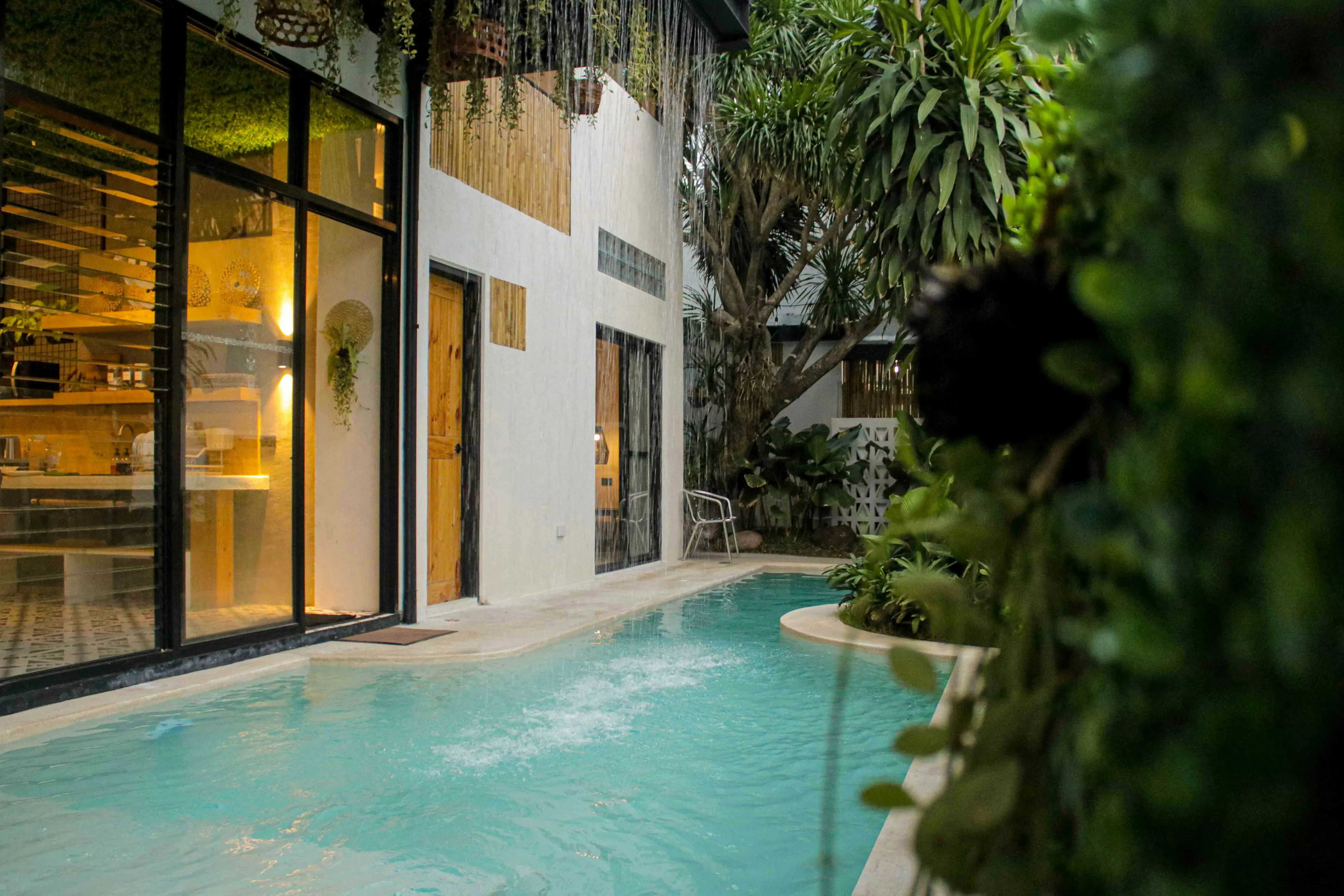
In the UK holiday rental market, a holiday home with a swimming pool is defined as a furnished residential property let on a short-term basis where private pool access is included within the booking and not shared with unrelated guests. The pool may be indoor or outdoor, but it must be marketed as a core amenity rather than an optional add-on.
From an operational perspective, these properties sit at the upper end of the self-catering market. They are typically larger detached homes, converted farmhouses, coastal villas, or countryside lodges designed to accommodate families or groups. Pools are most common in properties sleeping six or more guests, where the amenity materially influences booking decisions.
Unlike residential homes, holiday properties with pools are subject to additional safety, insurance, and management considerations. These include water hygiene standards, pool access controls, and clear guest usage guidelines, all of which directly affect running costs and compliance obligations.
Importantly, a pool alone does not define a successful holiday rental. Market performance is shaped by how well the pool aligns with guest expectations, local climate, season length, and competing accommodation within the same destination.
How swimming pools affect UK holiday rental returns
Holiday homes with swimming pools in the UK generally achieve higher average nightly rates and stronger peak-season occupancy than similar properties without pools, particularly during school holidays and summer months. The pool acts as a differentiating feature that supports premium pricing rather than guaranteeing year-round demand.
Data from letting agents and booking platforms consistently shows that families with children prioritise private pools when comparing larger holiday homes. This often results in faster booking lead times and reduced reliance on last-minute discounts during high season.
However, rental returns are highly seasonal. Outdoor pools primarily enhance income between late spring and early autumn, while indoor or heated pools can extend demand into shoulder seasons. Properties that rely solely on summer bookings must generate sufficient peak income to offset quieter winter periods.
For investors, the key financial consideration is margin rather than headline revenue. Pools increase gross income potential, but they also raise cleaning, maintenance, utilities, and management costs. Net returns depend on careful pricing strategy and realistic assumptions about occupancy outside peak weeks.
Indoor vs outdoor pools for UK holiday lets
Indoor and outdoor pools deliver different commercial outcomes in the UK holiday market. Outdoor pools are more common, less expensive to install and maintain, and strongly associated with summer family holidays, particularly in coastal and rural destinations.
Outdoor pools typically perform best where properties can command high weekly rates during school holidays, allowing owners to recover annual operating costs over a relatively short booking window. Weather dependency remains a limiting factor, especially in northern regions or cooler summers.
Indoor pools, while rarer, offer broader seasonal appeal. They support bookings in spring, autumn, and occasionally winter, making them attractive in areas with strong year-round tourism or poor weather reliability. This extended season can stabilise cash flow but comes with significantly higher build and running costs.
From a guest perspective, indoor pools are often perceived as a premium or luxury feature, particularly when combined with saunas, hot tubs, or games rooms. For owners, the choice between indoor and outdoor pools should be driven by location-specific demand rather than perceived status alone.
Top UK destinations for holiday homes with pools
The strongest-performing UK holiday homes with swimming pools are located in destinations where family tourism, longer stays, and self-catered accommodation dominate. Demand is driven less by prestige and more by predictable seasonal occupancy and pricing resilience.
Cornwall consistently ranks among the most reliable regions for pool-equipped holiday homes. Coastal villages and countryside locations benefit from long summer seasons, high domestic tourism, and strong repeat bookings from families seeking private amenities.
Devon, particularly South Devon and parts of North Devon, performs similarly, with larger properties near beaches or national parks achieving premium weekly rates when pools are present. Accessibility from the Midlands and South East further supports demand.
The Cotswolds attract a different profile: multi-generational groups, celebrations, and off-peak breaks. Here, indoor or heated pools are more effective than outdoor pools due to year-round visitor demand and higher average booking values.
North Wales, the Lake District, and parts of the Scottish Highlands show selective success. In these regions, pools tend to perform best in large group properties where the amenity compensates for less predictable weather and limited alternative attractions.
Typical rental income and operating costs by region
Rental income for UK holiday homes with pools varies significantly by location, property size, and season length. Gross figures can appear attractive, but operating costs must be assessed alongside achievable occupancy to determine realistic net returns.
| Region | Typical Weekly Peak Rate | Annual Gross Income Range | Pool-Related Annual Costs |
|---|---|---|---|
| Cornwall | £2,500 – £4,500 | £45,000 – £85,000 | £3,000 – £6,000 |
| Devon | £2,200 – £4,000 | £40,000 – £75,000 | £2,800 – £5,500 |
| Cotswolds | £3,000 – £6,000 | £50,000 – £95,000 | £4,000 – £8,000 |
| North Wales | £1,800 – £3,200 | £30,000 – £60,000 | £2,500 – £5,000 |
These figures are indicative and assume professional marketing and management. Properties that rely on owner-managed bookings or have limited off-season appeal may fall below these ranges.
Legal, safety, and regulatory requirements
Holiday homes with swimming pools in the UK are subject to stricter safety and compliance expectations than standard residential properties. Owners must ensure pools are safe for short-term guests who may be unfamiliar with the property.
Key requirements include appropriate fencing or secure covers for outdoor pools, clear depth markings, non-slip surfaces, and visible safety signage. Indoor pools require controlled access, adequate ventilation, and compliant electrical installations.
Water hygiene management is a critical risk area. Regular testing, documented treatment regimes, and professional servicing reduce the risk of waterborne illness and are often required by insurers and managing agents.
Local authority rules on short-term lets vary, particularly in high-pressure tourism areas. Owners should confirm registration, licensing, or planning requirements before purchase, as non-compliance can restrict or prevent lawful holiday letting.
Common investor mistakes and risk factors
A frequent investor mistake is overestimating demand outside peak holiday periods. Pools enhance competitiveness but do not eliminate seasonality, particularly for outdoor-only installations.
Another common issue is under-budgeting for maintenance. Pool-related costs are ongoing and non-optional, and deferred maintenance can quickly affect guest satisfaction and review scores.
Some buyers also assume that adding a pool will automatically transform an underperforming property. In practice, location, layout, and overall guest experience remain more important than any single amenity.
Experienced investors stress the importance of conservative financial modelling, realistic occupancy assumptions, and professional advice before committing to pool-equipped holiday properties.
Who should invest in a UK holiday home with a pool?
UK holiday homes with swimming pools are best suited to investors targeting lifestyle-led income rather than purely yield-driven returns. They align most closely with buyers seeking a combination of personal use, capital preservation, and enhanced short-term rental performance during peak seasons.
Investors with longer holding periods benefit most, as pools tend to improve booking resilience over time rather than delivering immediate uplift. Owners who can absorb seasonal fluctuations and reinvest in maintenance are better positioned to protect guest satisfaction and pricing power.
These properties are also well matched to buyers comfortable with professional management. Letting agents experienced in pool-equipped homes can manage safety compliance, servicing schedules, and guest communication, reducing operational risk.
By contrast, highly leveraged investors or those seeking passive income with minimal oversight may find pool-equipped holiday homes less suitable. The asset performs best when actively managed and strategically positioned within its local market.
Long-term outlook for pool-equipped holiday lets
The long-term outlook for UK holiday homes with swimming pools remains closely tied to domestic tourism trends, flexible working patterns, and sustained demand for private accommodation. Staycation growth has normalised since peak years but remains structurally higher than pre-pandemic levels.
Pools are likely to remain a differentiating feature rather than a standard expectation. As operating costs rise, owners who invest in energy-efficient heating, covers, and modern filtration systems will be better placed to maintain margins.
Environmental considerations are becoming more relevant. Buyers increasingly assess energy usage and sustainability alongside income potential, particularly for indoor or heated pools. Properties that fail to adapt may face higher costs and reduced appeal over time.
Overall, pool-equipped holiday homes are expected to retain niche appeal rather than mass-market dominance. Their success will continue to depend on disciplined management, realistic financial planning, and alignment with evolving guest expectations.
Frequently Asked Questions
Do holiday homes with pools achieve higher rental returns in the UK?
Yes, they often achieve higher peak-season rates and stronger family demand, but higher operating costs mean net returns depend on location, occupancy, and management efficiency.
Are indoor pools better than outdoor pools for UK holiday lets?
Indoor pools extend the booking season and reduce weather risk, but they are significantly more expensive to install and run. Outdoor pools perform well in strong summer destinations.
Is special insurance required for holiday homes with swimming pools?
Yes, specialist holiday let insurance is usually required, including public liability cover and pool-specific risk provisions.
Can local councils restrict holiday letting of homes with pools?
Councils can impose licensing, registration, or planning controls on short-term lets regardless of pool presence. Compliance must be confirmed before purchase.
Do pools increase resale value of UK holiday homes?
Pools can improve marketability in established holiday areas, but resale value gains are not guaranteed and depend on buyer demand and operating condition.
Key Takeaways
- Higher demand, higher complexity: Pools support premium pricing but increase operational responsibility.
- Location is decisive: Coastal and family-focused destinations deliver the strongest returns.
- Seasonality remains: Pools enhance competitiveness but do not remove off-peak risk.
- Compliance is essential: Safety, insurance, and local letting rules must be addressed early.
- Long-term mindset required: Best suited to investors with realistic expectations and active management.
References
- UK Government guidance on short-term holiday lets
- Royal Institution of Chartered Surveyors (RICS) property insights
- Association of Residential Letting Agents (ARLA) resources
- Health and Safety Executive guidance on swimming pool safety