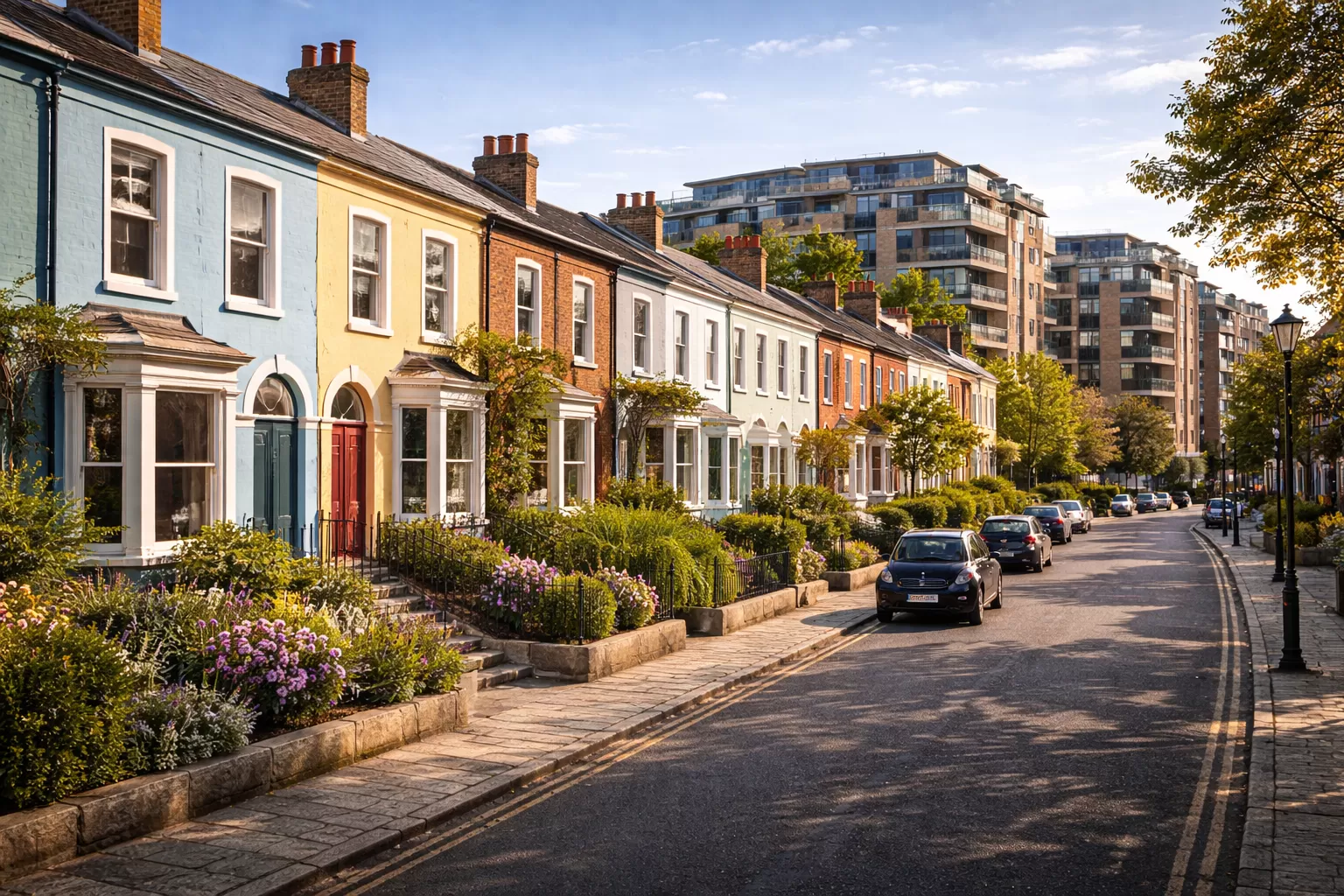
The best areas to buy a house in Denver with strong appreciation potential include neighbourhoods experiencing population growth, infrastructure investment, and limited housing supply. Districts such as Highland, Sloan’s Lake, RiNo (River North Art District), and parts of East Colfax have shown consistent demand from buyers, renters, and investors. These areas benefit from proximity to downtown employment hubs, transit access, redevelopment activity, and lifestyle amenities, factors that historically support long-term property value growth. Buyers seeking appreciation in Denver should focus on neighbourhoods undergoing redevelopment while still offering relative price accessibility compared with established luxury districts.
Why Denver Real Estate Continues to Appreciate
Denver has remained one of the most resilient housing markets in the United States because of a combination of economic expansion, population inflows, and constrained housing supply. These conditions create consistent demand pressure, which tends to support property price growth even during national market slowdowns.
The city functions as a major economic hub for technology, healthcare, aerospace, and renewable energy industries. Major employers and startups continue to expand in the metro area, attracting a highly educated workforce. As job creation grows, housing demand rises, particularly in neighbourhoods close to employment centres and transit corridors.
Another key driver of appreciation is geographic constraint. Denver is located between the Rocky Mountains and protected open spaces, limiting outward expansion. This naturally restricts supply in desirable urban districts and pushes buyers toward redeveloping neighbourhoods where older housing stock is being replaced or renovated.
Infrastructure investment also plays a critical role in appreciation potential. Expansion of light rail, bike networks, mixed-use developments, and urban revitalisation projects can dramatically increase property demand in previously overlooked neighbourhoods. Buyers who identify these areas early often experience stronger equity growth over time.
Finally, lifestyle demand continues to influence property values. Walkable districts with restaurants, parks, cultural venues, and outdoor recreation access tend to outperform suburban areas in appreciation rates because they attract both homeowners and renters seeking urban convenience.
Understanding these structural forces helps buyers recognise why certain Denver neighbourhoods consistently outperform the broader housing market.
How to Identify High-Appreciation Neighborhoods in Denver
Identifying neighbourhoods with strong appreciation potential requires analysing several indicators rather than relying solely on current home prices. The most promising districts often show early signs of economic and demographic change before property values rise significantly.
Population and Job Growth
Areas attracting new residents, particularly young professionals and high-income households, tend to experience stronger housing demand. In Denver, neighbourhoods close to downtown offices, tech campuses, and transit lines often see the fastest influx of new buyers and renters.
Population growth increases competition for available housing, which gradually pushes prices upward. Investors frequently monitor census trends, migration patterns, and rental demand to identify emerging neighbourhoods before they become widely recognised.
Redevelopment and Urban Revitalization
One of the clearest signals of future appreciation is large-scale redevelopment. When former industrial areas, warehouses, or underused commercial corridors begin attracting new construction, property values typically follow.
Developers often target locations where land is relatively affordable but close to downtown. As new apartment buildings, retail spaces, and restaurants open, neighbourhood perception improves and demand increases. Early homebuyers in these districts often benefit from substantial equity growth as the area evolves.
Transit Access and Infrastructure Investment
Public transportation expansion can significantly influence real estate values. In Denver, proximity to light rail stations, bus rapid transit routes, and major commuting corridors improves accessibility and attracts both residents and investors.
Neighbourhoods located within walking distance of transit stations frequently command higher long-term demand because they provide convenient access to downtown employment centres while reducing reliance on cars.
Relative Price Gap Compared with Prime Areas
High-appreciation neighbourhoods often sit next to already established, expensive districts. Buyers priced out of premium neighbourhoods frequently shift toward adjacent areas that offer similar location benefits at lower entry prices.
Over time, this spillover demand can raise property values as the surrounding district becomes more desirable.
Local Amenities and Lifestyle Appeal
Walkability, parks, restaurants, and cultural attractions are increasingly important to modern homebuyers. Denver neighbourhoods with access to outdoor recreation, vibrant dining scenes, and entertainment venues tend to maintain strong housing demand.
Lifestyle factors also support rental demand, which is important for investors seeking long-term appreciation alongside income potential.
When multiple indicators, such as redevelopment, transit investment, population growth, and lifestyle amenities, appear together, the likelihood of sustained appreciation increases significantly.
Overview of Denver Neighborhoods with Strong Appreciation Signals
Several Denver neighbourhoods currently show strong indicators of long-term property value growth. These districts combine redevelopment activity, proximity to downtown, and increasing demand from both homeowners and renters.
Highland (LoHi)
Highland, particularly the Lower Highlands area, has transformed over the past decade from a quiet residential district into one of Denver’s most desirable urban neighbourhoods. Its proximity to downtown, strong restaurant scene, and walkable streets attract professionals seeking city living without high-rise density.
Historic homes, modern townhouses, and new infill developments coexist throughout the area, creating diverse housing options. Limited land availability and consistent demand have supported steady price appreciation, making Highland a frequent target for long-term investors.
Sloan’s Lake
Sloan’s Lake has emerged as one of the most dynamic redevelopment areas in Denver. Centred around the city’s second-largest park and lake, the neighbourhood offers outdoor recreation alongside rapid residential development.
New townhome communities, apartment buildings, and retail spaces have replaced former industrial parcels in recent years. Buyers are attracted by the combination of lakefront views, proximity to downtown, and increasing amenities, all of which contribute to rising property values.
RiNo (River North Art District)
The River North Art District, commonly known as RiNo, illustrates how creative redevelopment can reshape an entire neighbourhood. Once dominated by warehouses and industrial buildings, RiNo now features art galleries, breweries, co-working spaces, and modern residential developments.
This transformation has significantly increased housing demand, particularly among young professionals working in nearby tech and creative industries. Continued commercial investment and new residential construction suggest ongoing growth potential, although prices have already risen substantially.
Buyers considering RiNo should carefully evaluate specific blocks, as property values can vary depending on proximity to nightlife, transit access, and redevelopment projects.
While these neighbourhoods already demonstrate strong appreciation trends, several emerging areas across Denver may offer earlier-stage investment opportunities. Understanding where redevelopment is just beginning can help buyers enter the market before prices accelerate.
Emerging Denver Neighborhoods with Rising Appreciation Potential
While established districts such as Highland and Sloan’s Lake already command premium prices, several emerging neighbourhoods in Denver are attracting attention from investors seeking earlier-stage appreciation opportunities. These areas often combine lower entry prices with signs of redevelopment, infrastructure investment, and increasing buyer interest.
East Colfax
East Colfax has long been one of Denver’s most diverse and historically significant corridors, but recent redevelopment initiatives have significantly changed its trajectory. The corridor is benefiting from city-supported revitalisation projects, improved transit planning, and growing commercial investment.
Developers are renovating older properties, converting commercial spaces into residential units, and introducing mixed-use developments that include retail and dining options. These changes are gradually improving neighbourhood perception and attracting new buyers who previously focused on more established districts.
East Colfax also benefits from proximity to downtown Denver, the Anschutz Medical Campus, and major transit routes. As infrastructure improvements continue, property demand in the area is expected to increase.
Globeville
Globeville sits just north of downtown Denver and has historically been an industrial neighbourhood. However, its location near the South Platte River redevelopment corridor and its proximity to the River North Art District have placed it on the radar of investors.
Urban redevelopment projects, riverfront improvements, and increasing residential construction are gradually reshaping the neighbourhood. Buyers seeking long-term appreciation are particularly interested in Globeville because it remains relatively affordable compared with nearby districts.
The combination of location, infrastructure upgrades, and growing redevelopment activity makes Globeville one of the more closely watched emerging neighbourhoods in Denver.
Sun Valley
Sun Valley is currently undergoing one of Denver’s most significant urban redevelopment initiatives. Located immediately west of downtown, the neighbourhood is the focus of a multi-phase revitalisation project that includes new housing, parks, and commercial development.
Large-scale public and private investment aims to transform the district into a mixed-income residential community connected to downtown and nearby cultural institutions. As redevelopment progresses, housing demand is likely to increase, particularly among buyers seeking proximity to downtown employment and entertainment districts.
Because much of the redevelopment is still underway, Sun Valley represents a longer-term appreciation opportunity rather than an immediate high-demand market.
Property Types Driving Appreciation in Denver
Not all housing types appreciate at the same rate. In Denver, certain property categories tend to perform better because they align with buyer demand, urban density trends, and redevelopment patterns.
Townhomes and Urban Infill Housing
Townhomes have become one of the fastest-growing housing segments in Denver. As land prices increase and opportunity zoning encourages higher density, developers frequently replace older single-family houses with modern townhome clusters.
These properties appeal to buyers seeking newer construction with urban amenities while remaining within relatively central neighbourhoods. Because townhomes typically require less land than detached houses, they can be built in areas where new single-family development would be difficult.
Renovated Historic Homes
Many Denver neighbourhoods contain early 20th-century housing stock that investors purchase, renovate, and resell. Restored historic homes often attract buyers who value architectural character combined with modern interior upgrades.
When entire streets undergo renovation, the surrounding property values can increase significantly. Buyers who purchase homes requiring moderate renovation sometimes capture appreciation as neighbourhood revitalisation accelerates.
Small Multifamily Properties
Duplexes, triplexes, and four-unit properties continue to attract investor interest in Denver. These properties allow buyers to generate rental income while benefiting from long-term appreciation.
In neighbourhoods experiencing population growth and limited rental supply, small multifamily housing often maintains strong occupancy levels. This combination of income and equity growth can make these properties particularly attractive to long-term investors.
Strategies Buyers Use to Capture Appreciation in Denver
Experienced buyers often approach Denver’s real estate market strategically, focusing not only on current property values but also on future neighbourhood trajectories. Several common strategies are used to increase the likelihood of strong appreciation.
Buying Near Redevelopment Corridors
Redevelopment corridors such as former industrial zones transitioning into residential and mixed-use districts often produce the most dramatic appreciation over time. Buyers who purchase properties early in the redevelopment cycle frequently benefit as infrastructure, restaurants, and retail establishments begin to appear.
Monitoring city planning announcements, zoning changes, and redevelopment proposals can help identify these opportunities before they become widely recognised.
Targeting Transit-Connected Neighborhoods
Access to public transit increasingly influences housing demand in Denver. Properties located near light rail stations or major bus corridors often attract both homeowners and renters seeking convenient commuting options.
Transit-oriented development can significantly increase neighbourhood desirability, particularly when new residential buildings, offices, and retail spaces cluster around stations.
Looking for Price Gaps Between Adjacent Neighbourhoods
Another strategy involves identifying neighbourhoods that border already expensive districts but remain relatively affordable. As demand spills over from high-priced areas, adjacent neighbourhoods frequently experience accelerated price growth.
Buyers who understand these price dynamics sometimes gain exposure to appreciating markets before they reach peak demand.
Risks That Can Affect Property Appreciation
Although Denver has historically demonstrated strong real estate growth, appreciation is never guaranteed. Buyers should carefully consider factors that may influence future property values.
Market Cycles
Real estate markets move through cycles that include expansion, stabilisation, and temporary slowdowns. Economic changes, interest rate increases, or reduced population growth can moderate housing demand in the short term.
Buyers focused on appreciation should adopt a long-term perspective rather than expecting rapid price growth immediately after purchase.
Overdevelopment
In some neighbourhoods, rapid construction can temporarily increase housing supply faster than demand grows. When this occurs, price appreciation may slow as buyers gain more purchasing options.
Evaluating building permits and planned developments can help buyers understand whether a neighbourhood is approaching oversupply conditions.
Infrastructure Delays
Many appreciation forecasts rely on infrastructure improvements such as transit expansion, parks, and commercial development. However, these projects sometimes face delays or funding challenges.
Buyers should evaluate whether redevelopment projects are already underway or still in the early planning stages.
Common Mistakes Buyers Make When Chasing Appreciation
Pursuing appreciation potential can be profitable, but buyers often make strategic errors when focusing exclusively on future price growth. Understanding these common mistakes helps investors make more balanced decisions.
Ignoring Neighborhood Fundamentals
Some buyers purchase in emerging neighbourhoods based solely on speculation without evaluating schools, safety, transit access, or local amenities. These fundamentals strongly influence long-term demand and should not be overlooked.
Overpaying During Competitive Markets
In rapidly growing markets like Denver, competitive bidding can push buyers to pay significantly above market value. Overpaying reduces the margin for future appreciation and increases financial risk if the market slows.
Focusing Only on New Construction
While new homes attract many buyers, older properties in redevelopment zones sometimes offer stronger appreciation potential. Renovation opportunities can allow buyers to build equity while neighbourhood improvements increase surrounding property values.
Underestimating Ownership Costs
Property taxes, insurance, maintenance, and renovation expenses can affect investment returns. Buyers pursuing appreciation should calculate long-term costs rather than focusing solely on potential resale value.
Understanding these strategies, risks, and neighbourhood dynamics allows buyers to approach Denver’s housing market with realistic expectations and informed decision-making.
The final section of this guide addresses frequently asked questions about buying property in Denver for appreciation and summarises the most important insights buyers should consider.
Long-Term Appreciation Outlook for Denver Housing
Denver’s long-term real estate outlook remains closely tied to population growth, economic diversification, and housing supply constraints. Over the past two decades, the city has experienced sustained migration from other U.S. regions, particularly from higher-cost coastal markets. Many relocating residents bring higher purchasing power, which contributes to upward pressure on home prices.
Employment diversification also strengthens Denver’s housing resilience. The metropolitan area hosts major employers in technology, aerospace, energy, healthcare, and finance. This diversified economic base helps stabilise housing demand even when one industry experiences a slowdown.
Housing supply remains a structural challenge. Geographic limitations, zoning constraints, and rising construction costs slow the pace of new development. As a result, demand often exceeds available inventory, particularly in central neighbourhoods close to downtown and major employment centres.
Another factor shaping the future of Denver housing is lifestyle migration. Buyers increasingly prioritise outdoor recreation, walkable communities, and access to nature. Denver’s proximity to the Rocky Mountains, combined with an expanding network of parks and trails, continues to attract residents seeking these lifestyle benefits.
Although short-term price fluctuations may occur due to economic cycles or interest rate changes, many analysts view Denver as a market with stable long-term housing demand. Buyers who purchase in neighbourhoods benefiting from redevelopment, infrastructure investment, and demographic growth may experience stronger appreciation compared with areas lacking these drivers.
How Buyers Can Evaluate Appreciation Potential Before Purchasing
Evaluating appreciation potential requires a systematic approach rather than relying on speculation or market hype. Buyers who conduct careful research before purchasing a home are more likely to identify neighbourhoods positioned for sustainable growth.
Analyze Local Development Activity
Municipal planning departments publish zoning updates, redevelopment plans, and infrastructure projects that can significantly influence neighbourhood demand. Monitoring these announcements helps buyers identify areas where public and private investment is increasing.
When developers begin building mixed-use projects that combine housing, offices, and retail, the surrounding residential market often becomes more attractive to buyers and renters.
Evaluate Housing Inventory Trends
Limited housing inventory typically supports stronger price appreciation because buyers compete for fewer available properties. Monitoring listing volumes, average days on market, and price reductions can provide insight into supply-demand dynamics within specific neighbourhoods.
Areas experiencing declining inventory alongside increasing buyer interest may indicate tightening supply conditions that support future price growth.
Consider Transportation and Accessibility
Transportation access remains one of the most reliable drivers of long-term property demand. Neighbourhoods located near major transit routes, highways, and commuter corridors often attract residents seeking shorter travel times to employment centres.
Infrastructure improvements—such as expanded transit networks or new bike corridors—can further enhance accessibility and increase neighbourhood desirability.
Assess Lifestyle and Amenity Growth
Restaurants, entertainment venues, parks, and cultural attractions contribute to neighbourhood desirability. When new amenities begin appearing in an area, they often attract additional residential development and buyer demand.
Observing changes in local retail activity can therefore provide early signals of neighbourhood transformation.
Review Historical Price Trends
Past performance does not guarantee future results, but historical price trends can help buyers understand how a neighbourhood has evolved. Districts that have experienced steady growth over multiple market cycles often demonstrate structural demand drivers rather than short-term speculation.
Comparing historical price growth between adjacent neighbourhoods can also reveal districts where appreciation momentum is beginning to shift.
Frequently Asked Questions
Which Denver neighbourhoods have the highest appreciation potential?
Neighbourhoods experiencing redevelopment, infrastructure investment, and increasing demand typically show the strongest appreciation potential. In Denver, districts such as Highland, Sloan’s Lake, RiNo, East Colfax, and Globeville have attracted attention due to their proximity to downtown, growing amenities, and ongoing urban development.
Is Denver still a good city for real estate investment?
Denver remains a widely studied housing market because of consistent population growth, economic diversification, and strong lifestyle demand. These factors continue to support housing demand, although investors should evaluate specific neighbourhoods carefully rather than assuming uniform appreciation across the entire city.
What factors influence home appreciation the most?
Location, housing supply constraints, population growth, employment opportunities, transportation access, and neighbourhood amenities are among the most influential factors affecting long-term property appreciation. Areas undergoing redevelopment or infrastructure upgrades often experience stronger price growth.
Should buyers prioritise appreciation or affordability?
A balanced approach is usually most effective. Buyers should consider both affordability and appreciation potential to ensure sustainable ownership costs while still benefiting from long-term property value growth. Purchasing within financial comfort while selecting a neighbourhood with strong fundamentals can reduce risk.
How long does it typically take for property appreciation to occur?
Real estate appreciation generally occurs over extended periods rather than immediately after purchase. In many cases, significant equity growth develops over five to ten years as neighbourhoods evolve and housing demand increases.
Key Takeaways
- Strategic Neighbourhood Selection: Areas undergoing redevelopment or infrastructure improvements often provide stronger appreciation potential than already fully developed districts.
- Economic and Population Growth: Denver’s expanding job market and continued migration support long-term housing demand across many urban neighbourhoods.
- Supply Constraints: Limited housing inventory and geographic boundaries contribute to sustained upward pressure on home prices.
- Transit and Lifestyle Amenities: Walkability, transportation access, and entertainment districts frequently influence long-term property desirability.
- Long-Term Investment Horizon: Appreciation typically occurs over several years, making patience and neighbourhood research critical for buyers seeking equity growth.
References
- Denver Regional Council of Governments – Regional Housing Market Reports
- City and County of Denver – Community Planning and Development Department
- U.S. Census Bureau – Population and Housing Growth Data
- Federal Housing Finance Agency – House Price Index Reports
- Colorado Association of Realtors – Market Trend Publications