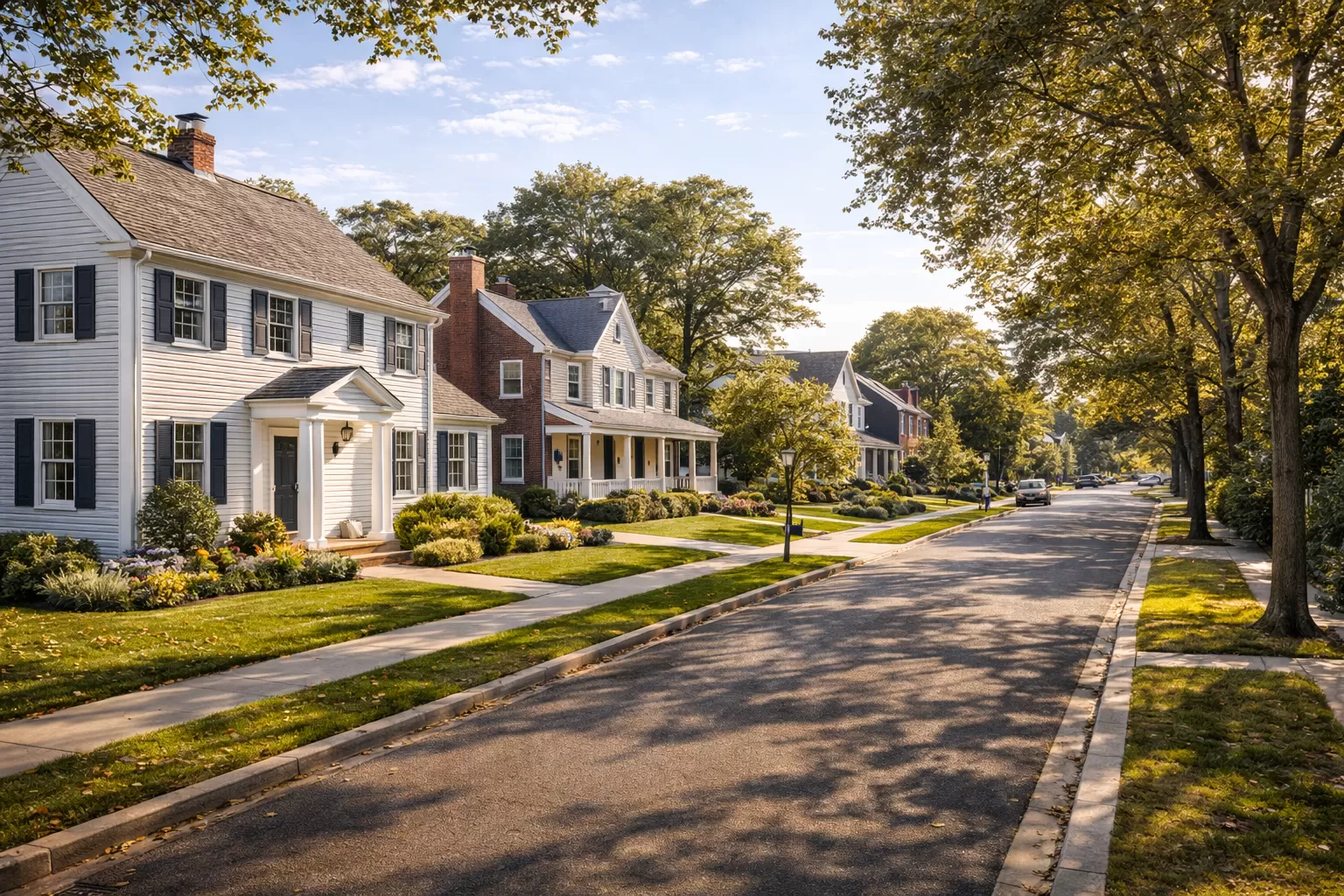
Delaware is widely considered one of the most stable housing markets on the U.S. East Coast for long-term real estate investment. The state offers relatively low property taxes, proximity to major employment hubs such as Philadelphia, Washington D.C., and Baltimore, and consistent population growth in key counties. Investors looking to purchase a house for long-term appreciation typically focus on a small group of locations where economic fundamentals, housing demand, infrastructure, and rental potential align. Understanding which areas in Delaware offer the strongest combination of price stability, growth potential, and livability is essential before committing capital to a property purchase.
Why Delaware Is Attractive for Long-Term Property Investment
Delaware attracts long-term real estate investors because it combines economic stability, tax advantages, and strategic geographic positioning within the Mid-Atlantic region. While the state is small, several of its housing markets benefit from spillover demand from larger metropolitan areas where housing costs are significantly higher.
One of the most important advantages for investors is Delaware’s property tax structure. Property taxes are among the lowest in the United States, which reduces the long-term carrying costs of owning residential property. Lower taxes can improve net rental yield and make long-term holding strategies more financially sustainable.
Another factor that supports property demand is the state’s proximity to major job markets. Many Delaware residents commute to employment centres in Pennsylvania, Maryland, and New Jersey. Cities such as Wilmington and Newark function as part of a larger regional economy that includes finance, healthcare, education, and technology sectors.
Population growth has also been steady in several Delaware counties, particularly New Castle County and Sussex County. Population expansion tends to support housing demand over time, which is a key driver of long-term property value appreciation.
In addition, Delaware is attractive to retirees and remote workers who want lower living costs while remaining within driving distance of major East Coast cities. This demographic shift has strengthened housing demand in both suburban and coastal markets.
For investors focused on long-term appreciation rather than short-term speculation, Delaware offers several advantages:
- Relatively affordable home prices compared with neighbouring states
- Low property tax burden for homeowners and landlords
- Access to major metropolitan job markets
- Stable population growth in key counties
- Consistent demand for both owner-occupied and rental housing
These structural factors create a stable foundation for residential real estate investment when properties are purchased in the right locations.
How to Identify the Best Long-Term Investment Areas in Delaware
Choosing the right location within Delaware is the most important decision in a long-term real estate investment strategy. Even within a small state, property performance can vary significantly depending on local economic conditions, infrastructure, and housing supply.
Professional investors typically evaluate several factors before purchasing property in a specific town or city.
1. Employment and Economic Stability
Areas with diversified employment bases tend to produce more stable housing demand. Cities with universities, hospitals, corporate headquarters, or government offices typically experience less volatility during economic downturns.
In Delaware, markets tied to financial services, healthcare, higher education, and logistics have historically demonstrated stronger housing demand.
2. Population Growth and Migration Trends
Population growth is one of the clearest indicators of future housing demand. Areas experiencing inbound migration often see stronger long-term property appreciation because demand for housing increases while supply takes time to catch up.
Suburban communities experiencing residential development or new infrastructure investment often fall into this category.
3. Rental Demand and Occupancy Rates
Even investors who plan to hold property for appreciation should evaluate rental demand. Strong rental markets create flexibility: the property can generate income if the owner decides to rent it rather than sell.
University towns, employment centres, and growing suburbs often maintain higher occupancy rates and more stable rental pricing.
4. Infrastructure and Transportation Access
Transportation access is another major driver of property value. Communities located near major highways, commuter rail lines, or employment corridors typically maintain stronger housing demand.
In Delaware, areas with convenient access to Interstate 95 or major commuter routes toward Philadelphia tend to attract both homeowners and renters.
5. Housing Supply Constraints
Markets with limited land for new construction or zoning restrictions often experience stronger long-term appreciation because housing supply cannot increase rapidly.
Investors often favour established communities where housing demand consistently exceeds available inventory.
Applying these criteria helps narrow down the most promising real estate markets within Delaware.
Newark: A Consistent Growth Market Near Major Employment Hubs
Newark is one of the most reliable long-term investment locations in Delaware due to its strong economic base, university presence, and proximity to major regional job centres. The city sits in New Castle County near the Maryland border and within commuting distance of Philadelphia.
A key factor supporting Newark’s housing market is the presence of the University of Delaware. Large universities tend to create stable housing demand because they attract students, faculty, staff, and research professionals. This demand supports both owner-occupied housing and rental properties.
The university also contributes significantly to the local economy, supporting research, technology development, and startup activity. Areas surrounding major universities often experience steady property demand over time because of continuous population turnover.
Newark’s transportation connectivity is another major advantage. Interstate 95 runs directly through the region, allowing residents to commute to major employment centres in Pennsylvania and Maryland. This accessibility increases the number of potential buyers and renters in the housing market.
Housing demand in Newark comes from several groups:
- University faculty and staff
- Students seeking off-campus housing
- Professionals commuting to nearby cities
- Families seeking suburban neighbourhoods with strong schools
These overlapping demand sources create a diversified housing market, which tends to reduce volatility during economic downturns.
Investors often focus on neighbourhoods close to the university or near commuter routes, where rental demand remains strong throughout the year. Properties in these areas can generate consistent rental income while still benefiting from long-term appreciation driven by regional population growth.
Wilmington: Delaware’s Primary Urban Investment Opportunity
Wilmington is the largest city in Delaware and serves as the state’s financial and corporate centre. The city hosts major banking institutions, legal firms, healthcare providers, and corporate headquarters, which together create a large employment base.
For investors seeking urban real estate opportunities, Wilmington offers one of the most diverse housing markets in the state. Property types range from historic townhouses and renovated row homes to modern condominium developments and suburban single-family neighbourhoods.
The city’s economic importance within the region helps sustain long-term housing demand. Many professionals working in the financial services industry prefer to live close to the downtown business district or along commuter corridors that provide easy access to Philadelphia.
Wilmington also benefits from its role as a transportation hub. Amtrak and regional rail services connect the city to major East Coast destinations, including Philadelphia, New York, and Washington, D.C. This accessibility increases the attractiveness of Wilmington as a residential location.
Urban revitalisation efforts in several neighbourhoods have also improved the city’s long-term investment outlook. Redevelopment projects, infrastructure improvements, and mixed-use developments have helped attract new residents and businesses.
For long-term investors, Wilmington presents several potential advantages:
- Higher rental demand due to urban employment concentration
- Access to regional commuter transportation
- Ongoing neighborhood redevelopment initiatives
- Diverse housing stock across multiple price ranges
However, investors should evaluate individual neighbourhoods carefully because market conditions can vary significantly across different parts of the city.
Middletown: One of the Fastest-Growing Housing Markets in the State
Middletown has emerged as one of Delaware’s fastest-growing residential markets over the past two decades. Located in southern New Castle County, the town has experienced rapid population growth as families move away from higher-priced metropolitan areas.
The area offers newer housing developments, larger suburban neighbourhoods, and access to regional highways connecting residents to employment centres throughout the Mid-Atlantic region.
Middletown’s growth has been supported by expanding infrastructure, new schools, retail development, and healthcare facilities. These investments have helped transform the town into a self-sustaining suburban community rather than simply a commuter town.
For investors, rapidly growing suburbs often present strong long-term appreciation potential. Population growth increases demand for housing, while new construction and infrastructure improvements gradually raise property values across the area.
Another advantage is the availability of newer housing stock compared with older cities. Modern homes often require fewer major repairs in the early years of ownership, which can reduce maintenance costs for investors.
Because of its continued expansion and increasing popularity among families, Middletown is frequently identified as one of the most promising long-term real estate investment markets in Delaware.
Dover: Government and Education Driven Housing Demand
Dover, the capital of Delaware, offers a different type of long-term real estate investment opportunity compared with larger economic centres like Wilmington or Newark. The city benefits from stable employment generated by government institutions, education facilities, and military infrastructure.
The presence of state government offices ensures a consistent workforce that requires year-round housing. Public sector employment is typically less volatile during economic downturns, which can help stabilise housing demand in the surrounding neighbourhoods.
Dover Air Force Base is another significant driver of local housing demand. Military installations often support a steady housing market because personnel rotations create ongoing rental demand. Many service members prefer to live off-base in nearby residential communities, supporting both rental properties and entry-level home purchases.
Delaware State University and nearby colleges also contribute to housing demand in the city. Universities generate demand from students, faculty members, administrative staff, and support services, which can help sustain the local rental market.
For investors seeking relatively affordable housing markets with steady occupancy potential, Dover presents several advantages:
- Consistent employment from state government institutions
- Stable rental demand linked to military personnel
- Additional housing demand from higher education institutions
- Lower entry prices compared with northern Delaware markets
Although property appreciation may occur more gradually than in rapidly expanding suburbs, Dover’s economic stability can make it a practical choice for investors focused on long-term income generation and predictable occupancy.
Lewes: Coastal Stability and Retirement Migration
Lewes is one of Delaware’s most attractive coastal communities for long-term real estate investment. Located in Sussex County near the Atlantic coast, the town benefits from both tourism and a growing retirement population relocating from other states.
Many retirees from the Northeast choose Delaware because of its favourable tax policies, moderate climate, and relatively lower cost of living compared with neighbouring coastal markets. Lewes has become particularly popular because it offers coastal access while maintaining a quieter residential character than nearby beach resort towns.
Housing demand in Lewes is supported by multiple demographic groups. Retirees often purchase primary residences, while vacation buyers and seasonal residents contribute additional demand for second homes. This diversified buyer base helps sustain long-term property values.
The area also benefits from limited land availability near the coast. When housing supply is constrained by geography or zoning restrictions, property values tend to appreciate more steadily over time because new development cannot expand rapidly.
Investors interested in Lewes should understand that coastal markets behave differently from urban or suburban markets. Property prices are generally higher, but long-term appreciation is often supported by strong lifestyle demand and limited supply.
Typical investment strategies in Lewes include:
- Long-term residential ownership targeting retiree buyers
- Seasonal rental properties near coastal amenities
- Second-home investments with appreciation potential
Because of its reputation as a desirable coastal community with a growing retiree population, Lewes has maintained strong long-term housing demand.
Rehoboth Beach: High-Value Coastal Investment Market
Rehoboth Beach is one of the most recognised coastal destinations in Delaware and represents a premium real estate market within the state. While property prices are higher than in most inland communities, the area attracts strong demand from both tourists and long-term second-home buyers.
The city’s beachfront location and vibrant boardwalk district have made it a major tourism destination along the Mid-Atlantic coast. Seasonal visitors support a large short-term rental market, which can create income opportunities for property owners.
However, long-term investors typically focus on the area’s appreciation potential rather than relying exclusively on seasonal rental income. Beachfront and near-coastal properties are limited in supply, which tends to support long-term price stability.
Rehoboth Beach also attracts affluent buyers from nearby metropolitan regions such as Washington, D.C., Baltimore, and Philadelphia. These buyers often seek vacation properties that can eventually transition into retirement homes, creating consistent demand for high-quality housing.
Key factors supporting long-term investment potential in Rehoboth Beach include:
- Limited beachfront housing supply
- Strong tourism economy
- High demand from second-home buyers
- Desirability as a retirement destination
Although the entry cost for property ownership is higher, the scarcity of coastal real estate often contributes to long-term value preservation.
Comparing Delaware Investment Locations
Each Delaware housing market offers different advantages depending on an investor’s strategy, risk tolerance, and financial objectives. Some areas provide strong rental demand, while others offer long-term appreciation driven by population growth or lifestyle demand.
Urban markets such as Wilmington typically attract investors interested in rental income and employment-driven housing demand. These markets often provide higher tenant turnover but may also generate consistent occupancy due to proximity to job centres.
University towns like Newark create stable rental markets supported by students and faculty members. These areas can be particularly attractive for investors interested in predictable leasing cycles tied to the academic calendar.
Rapidly growing suburbs such as Middletown often appeal to long-term investors focused on property appreciation. Population growth, new infrastructure, and residential development can gradually increase property values over time.
Coastal communities such as Lewes and Rehoboth Beach present a different investment profile. Property prices are typically higher, but the scarcity of coastal real estate and continued demand from retirees and vacation home buyers can support long-term value growth.
Choosing the best location depends largely on the investor’s priorities:
- Income-focused investors may prioritise strong rental markets
- Long-term appreciation investors may prefer high-growth suburbs
- Lifestyle-driven buyers may focus on coastal communities
Understanding how each market functions allows investors to align property purchases with their long-term financial objectives.
Financial Considerations When Buying Investment Property in Delaware
Before purchasing real estate for long-term investment, buyers should evaluate several financial factors that influence the overall performance of the property.
Property taxes are a significant advantage in Delaware. The state consistently ranks among the lowest in the country for property tax rates. Lower annual tax obligations can significantly improve long-term profitability compared with similar investments in neighbouring states.
Insurance costs should also be considered, particularly in coastal areas where homeowners may require additional wind or flood coverage. These costs can affect long-term operating expenses and should be factored into investment calculations.
Maintenance expenses are another important consideration. Older homes in established neighbourhoods may require renovations or structural upgrades, while newer suburban properties often have lower maintenance costs during the early years of ownership.
Investors should also evaluate financing terms carefully. Mortgage interest rates, loan structures, and down payment requirements can significantly influence the overall return on investment.
A comprehensive financial evaluation should typically include:
- Purchase price and closing costs
- Annual property tax obligations
- Insurance coverage and premiums
- Maintenance and repair budgets
- Financing costs and loan terms
Understanding these financial factors allows investors to estimate long-term ownership costs and potential returns before committing to a property purchase.
Legal and Regulatory Considerations for Property Investors
Tips for Delaware Real Estate Investors: Real estate investors in Delaware must understand the legal framework governing property ownership, rental regulations, and local zoning rules. Compliance with these regulations is essential to avoid legal disputes and financial penalties.
Landlord-tenant laws in Delaware define the rights and responsibilities of both property owners and renters. These laws address lease agreements, security deposits, eviction procedures, and property maintenance standards.
Investors planning to operate rental properties should review the Delaware Residential Landlord-Tenant Code, which establishes the legal requirements for rental housing within the state.
Zoning regulations are another important consideration. Local municipalities control how properties may be used, including whether short-term rentals are permitted in specific neighbourhoods.
Coastal communities may also impose additional restrictions related to environmental protection, construction standards, and floodplain management.
Before purchasing property, investors often consult real estate attorneys or local professionals to verify zoning classifications and ensure compliance with all applicable regulations.
Common Mistakes Real Estate Investors Make in Delaware
Even experienced investors can make costly mistakes when entering a new real estate market. Understanding the most common errors can help buyers avoid financial setbacks and improve long-term investment performance.
One frequent mistake is focusing exclusively on purchase price without considering long-term market trends. A property may appear affordable initially, but may not appreciate significantly if it is located in an area with limited population growth or declining economic activity.
Another common issue is underestimating maintenance costs. Older homes in historic neighbourhoods can require significant renovation or ongoing repair work, which may reduce overall investment returns.
Investors sometimes overlook neighbourhood-level differences within cities. Housing demand can vary significantly between districts, even within the same municipality.
Failing to analyse rental demand is another risk. Investors who plan to hold property long-term should still evaluate whether the home could generate rental income if market conditions change.
Additional mistakes often include:
- Ignoring zoning restrictions or short-term rental regulations
- Underestimating insurance costs in coastal areas
- Overpaying during highly competitive housing markets
- Purchasing property without conducting thorough inspections
A disciplined research process and careful financial analysis can help investors avoid these mistakes and identify properties with strong long-term potential.
Long-Term Investment Strategies for Delaware Housing Markets
Long-term real estate investment in Delaware typically succeeds when buyers align their property selection with stable economic drivers and predictable housing demand. While market conditions change over time, several investment strategies have historically produced reliable results across the state’s primary housing markets.
One of the most widely used strategies is the buy-and-hold approach. Investors purchase residential property in areas with strong economic fundamentals and hold the asset for extended periods while property values appreciate. Delaware’s relatively low property tax structure supports this strategy because long-term holding costs remain manageable.
Another strategy involves acquiring property in growing suburban communities where population growth is expected to continue. Towns such as Middletown have expanded significantly in recent decades as buyers move away from higher-cost metropolitan areas. Investors who purchase property during early development phases in these areas may benefit from gradual appreciation as infrastructure, schools, and commercial services expand.
Rental-focused strategies are also common in university towns and employment centres. Locations such as Newark provide steady tenant demand from students, university staff, and professionals commuting to nearby cities. Investors using this strategy often prioritise properties close to campuses, transportation routes, or employment hubs.
Coastal investment strategies differ slightly from urban or suburban markets. In places like Lewes or Rehoboth Beach, investors may focus on properties that can serve both as long-term assets and vacation homes. Coastal real estate tends to maintain strong demand due to lifestyle appeal and limited land availability.
Regardless of the strategy, successful long-term investors typically focus on:
- Location fundamentals such as employment access and infrastructure
- Housing demand supported by population growth
- Properties with manageable maintenance costs
- Markets with consistent buyer interest across economic cycles
Careful property selection and a long-term investment horizon are often more important than attempting to time short-term market fluctuations.
Future Real Estate Trends in Delaware
Several economic and demographic trends are likely to influence Delaware’s housing market over the coming years. Investors evaluating long-term opportunities should consider how these trends may affect housing demand and property values.
One notable trend is continued migration from larger metropolitan areas. Many buyers relocating from cities such as Philadelphia, New York, and Washington, D.C. are seeking lower housing costs, suburban living environments, and reduced property taxes. Delaware’s location within driving distance of these major cities makes it an attractive destination.
Another factor is the growth of remote and hybrid work. As more professionals gain flexibility in where they live, smaller states with lower costs of living have become increasingly appealing. Delaware offers access to coastal amenities and suburban neighbourhoods while remaining connected to major East Coast employment markets.
The retirement population is also expected to expand in Delaware. Favourable tax policies and moderate climate conditions have made the state a preferred destination for retirees relocating from higher-cost regions in the Northeast. This demographic shift is likely to sustain housing demand in coastal communities and quiet suburban towns.
Infrastructure improvements and transportation development may also influence housing markets. Communities located near major highways, rail lines, and employment corridors tend to experience stronger housing demand over time.
Although real estate markets naturally experience cycles, these long-term structural trends suggest that several Delaware housing markets may continue to attract buyers and investors seeking stable residential environments.
How to Choose the Right Delaware Location for Your Investment Strategy
Selecting the best area to buy a house in Delaware ultimately depends on the investor’s financial goals, time horizon, and risk tolerance. Different locations offer different advantages, and no single market is ideal for every investment strategy.
Investors prioritising rental income often focus on cities with strong employment bases or university populations. Newark and Wilmington frequently attract this type of investment because consistent tenant demand can support stable occupancy levels.
Those seeking long-term appreciation may look toward growing suburban areas. Middletown is an example of a town where population growth and residential development have gradually increased property values.
Coastal markets may appeal to buyers interested in lifestyle-driven investments. Lewes and Rehoboth Beach often attract investors seeking property that can serve as both a long-term asset and a vacation residence.
Before purchasing property, investors generally evaluate several key considerations:
- Local employment trends and economic stability
- Population growth and migration patterns
- Infrastructure and transportation access
- Housing supply and development constraints
- Rental demand and tenant demographics
Combining these factors with careful financial analysis can help investors identify properties with sustainable long-term value.
Frequently Asked Questions
Is Delaware a good state for long-term real estate investment?
Delaware is often considered attractive for long-term real estate investment because of its low property taxes, stable housing demand, and proximity to major employment markets in the Mid-Atlantic region. Several cities in the state benefit from population growth and commuter demand.
Which Delaware city has the strongest housing demand?
Housing demand is typically strongest in areas with large employment centres or universities. Cities such as Wilmington and Newark often experience steady demand due to job opportunities, transportation access, and higher education institutions.
Are coastal Delaware properties good investments?
Coastal properties in towns such as Lewes and Rehoboth Beach can offer long-term value because beachfront real estate is limited in supply. Demand from retirees, vacation home buyers, and seasonal visitors often supports property values in these areas.
What factors influence property appreciation in Delaware?
Key factors include population growth, access to employment centres, transportation infrastructure, local economic development, and housing supply limitations. Areas experiencing residential growth or strong migration trends often see gradual price appreciation.
Do investors buy Delaware homes mainly for rentals or appreciation?
Both strategies are common. Some investors purchase property in university towns or employment centres for rental income, while others focus on suburban or coastal areas where long-term property appreciation may occur.
Key Takeaways
- Strategic Location: Delaware’s proximity to major East Coast cities and its low property tax structure make it attractive for long-term residential real estate investment.
- Diverse Investment Markets: Cities such as Newark, Wilmington, Middletown, Dover, Lewes, and Rehoboth Beach offer different investment opportunities depending on rental demand, population growth, and lifestyle appeal.
- Economic Stability: Government institutions, universities, financial services, and tourism help sustain housing demand across multiple regions of the state.
- Long-Term Trends: Migration from larger metropolitan areas and a growing retiree population are expected to support housing demand in several Delaware communities.
- Research and Planning: Successful property investment depends on evaluating local market conditions, financial costs, legal regulations, and long-term growth factors before purchasing.
References
- U.S. Census Bureau – Population Trends and Migration Data
- Delaware State Housing Authority – Housing Market Reports
- National Association of Realtors – Regional Housing Statistics
- Delaware Office of State Planning – Demographic and Infrastructure Reports
- Federal Housing Finance Agency – Home Price Index Data