Foreigners can legally buy investment property in Dubai in designated freehold areas with full ownership rights. The process typically involves selecting a property, signing a sale agreement, paying a deposit, conducting due diligence, obtaining a No Objection Certificate (NOC), and completing title registration with the Dubai Land Department (DLD). While the legal framework is relatively straightforward compared with many global markets, successful investment depends on understanding ownership rules, transaction costs, rental yield expectations, and the regulatory steps required for non-resident buyers. This guide explains the legal process, ownership structure, and key considerations that influence return on investment for foreign property investors in Dubai.
Why Foreign Investors Buy Property in Dubai
Dubai has become one of the most internationally accessible real estate markets because foreign nationals can purchase property with full ownership rights in specific freehold zones. Unlike many global cities where foreign buyers face heavy taxation or ownership restrictions, Dubai allows non-residents to purchase, lease, sell, or rent out property with relatively few regulatory barriers.
Several structural factors explain why Dubai attracts global real estate investors. The emirate has no annual property tax, no capital gains tax on real estate, and no tax on rental income for individuals. This tax structure can significantly improve net investment returns compared with many established property markets in Europe, North America or Asia.
Dubai’s population growth also supports long-term housing demand. The city’s role as a global commercial hub continues to attract expatriate professionals, entrepreneurs, and multinational companies. This steady inflow of residents drives demand for both long-term rental housing and short-term accommodation.
Infrastructure development further strengthens the investment case. Major projects such as new metro expansions, business districts, waterfront developments, and tourism infrastructure continuously reshape demand patterns across the city’s residential areas.
For foreign buyers, the market also offers relatively high rental yields compared with many global cities. While prime real estate markets in London, Paris, or Hong Kong often deliver yields below 4 per cent, Many Dubai residential communities historically generate higher returns depending on location, property type, and rental strategy.
However, investment success depends on careful property selection and a clear understanding of the legal process involved in buying real estate as a foreign national.
Foreign Ownership Laws and Freehold Zones
Foreigners cannot purchase property anywhere in Dubai, but they can legally buy in designated freehold areas approved by the government. These zones allow non-UAE nationals to acquire full ownership rights over both the property and the land on which it sits.
Dubai introduced freehold ownership for foreign investors in the early 2000s to attract international capital and stimulate real estate development. Since then, numerous residential districts have been opened to overseas buyers.
In freehold zones, foreign owners can:
- Purchase property with full ownership rights
- Sell the property at any time
- Lease the property to tenants
- Transfer ownership to heirs
- Use the property as a long-term investment asset
These rights are recorded through official title registration with the Dubai Land Department, which acts as the central authority responsible for real estate ownership documentation and transaction registration.
In addition to freehold ownership, some developments offer leasehold structures. Leasehold property typically allows foreigners to use the property for a fixed period, commonly up to 99 years, without owning the land itself.
Most international investors focus on freehold properties because they provide stronger ownership rights and greater long-term resale flexibility.
Freehold communities often include a mix of apartments, villas, and townhouses, with varying investment profiles. Some districts cater primarily to luxury buyers, while others attract mid-market investors seeking stable rental demand.
Before purchasing property, foreign buyers must confirm that the property is located within an approved freehold area and that the developer has proper registration with the Dubai Land Department.
Investment Property Types Foreign Buyers Can Purchase
Foreign investors in Dubai can purchase several categories of residential and commercial real estate depending on their investment objectives, budget, and risk tolerance. Each property type offers different rental income potential, maintenance responsibilities, and resale dynamics.
Apartments are the most common entry point for international investors. These properties typically require lower initial capital compared with villas or townhouses, and are widely available in central districts. Apartments also benefit from strong rental demand among expatriate professionals and young residents who prefer urban living near business hubs and public transportation.
Townhouses represent a middle ground between apartments and villas. These properties often attract families seeking more space while remaining within managed residential communities. Rental yields for townhouses may vary depending on community amenities and proximity to schools, retail centres, and transportation links.
Villas tend to attract higher purchase prices but may generate strong rental demand in family-oriented communities. Investors targeting longer-term tenants often consider villa properties in suburban master-planned developments.
Short-term rental properties have also become an important investment segment. Many investors purchase apartments specifically to operate them as holiday homes through licensed short-term rental platforms. Dubai’s tourism industry supports this strategy, but it requires compliance with licensing regulations and property management rules.
Commercial properties such as office units or retail spaces are another investment category, though they require greater market expertise and typically involve higher capital commitments. Commercial real estate investors must carefully evaluate business district demand and long-term economic trends before purchasing.
Regardless of property type, foreign investors should evaluate factors such as location, developer reputation, construction quality, service charges, and projected rental demand before making a purchase decision.
Step-by-Step Legal Process for Foreign Buyers
Buying an investment property in Dubai as a foreigner follows a clearly defined legal process overseen by the Dubai Land Department. While the steps are generally straightforward, careful documentation and due diligence remain essential to avoid delays or contractual disputes.
The process usually begins with property selection. Investors typically work with a licensed real estate broker to identify properties that meet their budget, location preferences, and rental investment strategy.
Once a property is selected, the buyer and seller sign a Memorandum of Understanding, often referred to as Form F in Dubai real estate transactions. This agreement outlines the key terms of the purchase, including price, payment structure, and transaction timeline.
At this stage, the buyer normally pays a deposit, commonly around ten per cent of the purchase price. The deposit demonstrates commitment to the transaction while both parties proceed with the next steps in the transfer process.
If the property is located within a managed development, the seller must obtain a No Objection Certificate from the developer. The NOC confirms that all service charges and obligations associated with the property have been settled and that the developer approves the ownership transfer.
After the NOC is issued, both parties proceed to the Dubai Land Department or an authorised real estate registration trustee office to complete the official ownership transfer. The buyer pays the required registration fees, and the title deed is issued in the buyer’s name.
For foreign investors purchasing property without UAE residency, the transaction can typically be completed using passport identification and relevant financial documentation. Residency is not required to own property in designated freehold zones.
Once the title deed is issued, the buyer becomes the legal property owner and may lease, resell, or occupy the property according to the ownership terms.
Typical Costs When Buying Property in Dubai
Foreign investors should account for several transaction costs when purchasing property in Dubai. These costs extend beyond the purchase price and can affect overall investment returns if not included in the initial financial planning.
The highest mandatory cost is the Dubai Land Department transfer fee, which is calculated as a percentage of the property value and paid at the time of ownership registration. Buyers must also consider registration trustee fees associated with completing the property transfer process.
Real estate brokerage commissions are another common expense. Licensed brokers typically charge a percentage of the property purchase price for facilitating the transaction and coordinating documentation between buyers, sellers, and developers.
In addition to transaction costs, investors must also plan for ongoing expenses such as annual service charges. These charges fund building maintenance, security, landscaping, and community facilities in residential developments.
Understanding these cost components is essential when evaluating the true investment performance of a property. Net rental yield depends not only on rental income but also on the ongoing expenses associated with owning and managing the property.
Understanding Rental Yield and ROI in Dubai
Return on investment in Dubai real estate is primarily driven by rental income and potential property value appreciation. Investors typically evaluate rental yield as the first indicator of investment performance.
Gross rental yield represents the annual rental income divided by the property purchase price. However, experienced investors focus more closely on net rental yield, which accounts for expenses such as service charges, maintenance costs, property management fees, and vacancy periods.
Location plays a major role in determining rental yield. Properties located near business districts, public transport links, and commercial centres often maintain stronger occupancy rates and stable rental demand.
Property size and configuration also influence rental performance. Smaller units, such as studio apartments or one-bedroom properties, often generate higher yield percentages because their purchase prices are lower relative to rental income.
Short-term rental strategies may generate higher gross income but typically involve higher management costs and operational requirements. Long-term leasing offers more predictable occupancy and lower day-to-day management involvement.
Foreign investors should evaluate both strategies carefully and consider local licensing requirements before committing to short-term rental operations.
Risks and Considerations for Foreign Investors
Although Dubai offers an accessible property market for international investors, it is not free from risk. Real estate prices can fluctuate depending on global economic conditions, interest rate trends, and supply cycles within the local property market.
New development supply is an important factor to monitor. Large construction pipelines can increase housing availability and affect rental prices in certain districts. Investors should review future development plans in their chosen area to understand how supply may evolve.
Developer reputation also matters. Off-plan property purchases, where buyers invest before construction is completed, can offer lower entry prices but carry higher completion risk compared with ready properties.
Service charges represent another long-term consideration. Buildings with extensive amenities such as pools, gyms, and landscaped areas may have higher annual maintenance costs that affect net rental returns.
Currency exchange rates can also influence investment performance for international buyers whose income or financing originates outside the United Arab Emirates.
Thorough due diligence, professional legal review, and realistic financial projections help mitigate these risks and support informed investment decisions.
Financing Options for Foreign Buyers in Dubai
Foreign investors can purchase property in Dubai using cash or mortgage financing from UAE banks. While cash purchases are common among international buyers, several local banks provide mortgages to non-resident investors under specific lending conditions.
Mortgage eligibility typically depends on factors such as income stability, nationality, credit history, and the bank’s internal lending policies. Non-resident buyers usually face stricter loan-to-value ratios than UAE residents. In many cases, banks require a larger down payment and additional documentation verifying overseas income sources.
The loan-to-value ratio represents the portion of the property price that a bank is willing to finance. For non-residents, the maximum financing percentage is generally lower than for residents, meaning buyers must contribute a higher portion of the purchase price upfront.
Mortgage terms vary by lender but often include fixed or variable interest rates, repayment periods extending up to several decades, and administrative fees associated with loan processing and valuation. Buyers should review repayment obligations carefully because interest costs directly affect overall investment returns.
Some international investors prefer cash purchases to simplify the transaction process and reduce financial risk. However, mortgage financing may allow investors to diversify capital across multiple properties rather than allocating the entire investment budget to a single purchase.
Regardless of the financing method, buyers must ensure that funds used for property purchases comply with UAE financial regulations and international anti-money laundering standards. Proper documentation of income sources and bank transfers is essential during the transaction process.
Best Areas in Dubai for Foreign Property Investment
Location remains the most important factor influencing rental demand, occupancy rates, and long-term resale value. Dubai offers a wide range of freehold communities that appeal to different types of investors and tenant demographics.
Downtown Dubai represents one of the most internationally recognised districts. The area includes luxury apartments located near major landmarks, commercial centres, and entertainment venues. Properties here often attract corporate tenants and short-term visitors, though purchase prices are typically higher than in other areas.
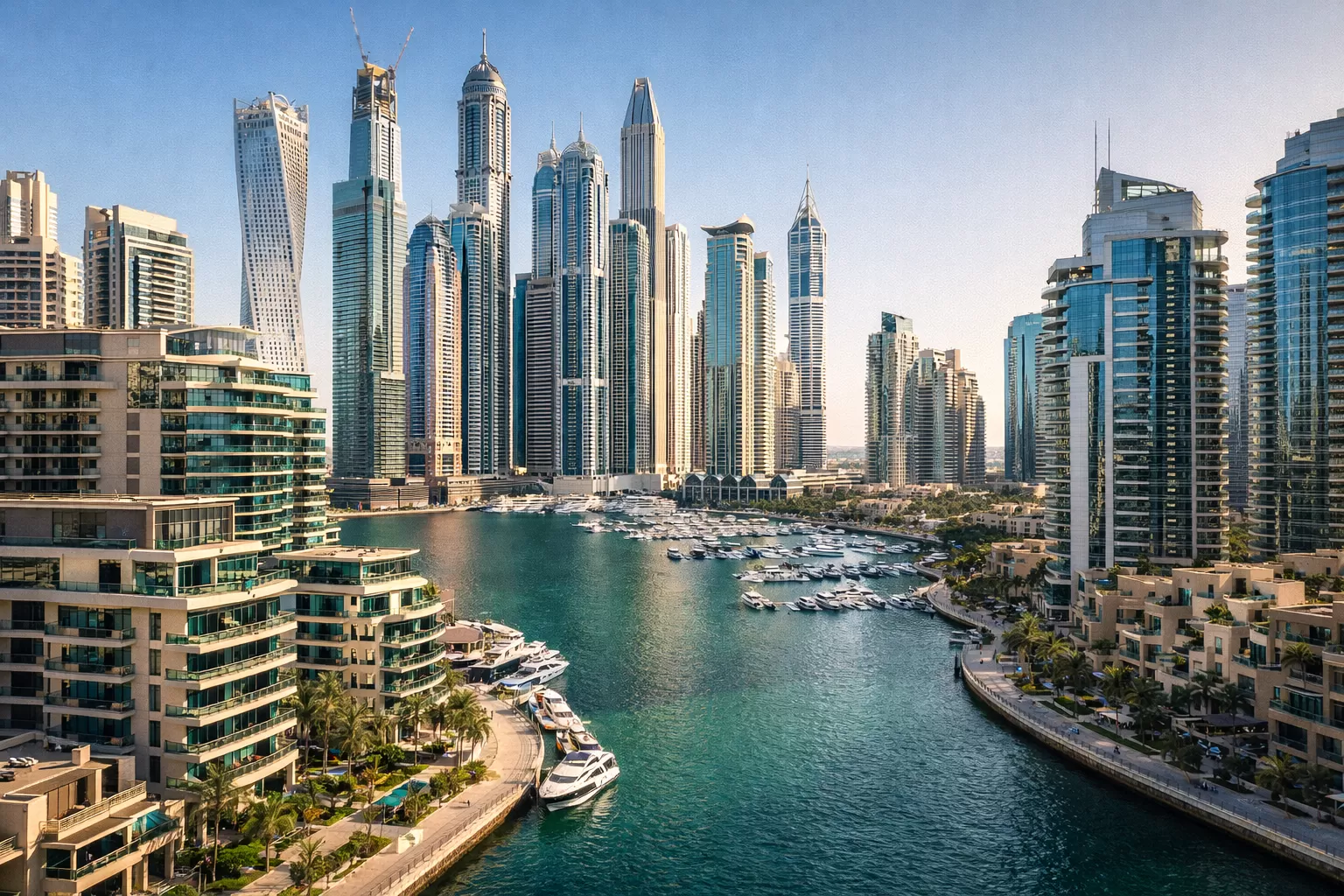
Dubai Marina is another major investment hub. Its waterfront setting, dense residential towers, and proximity to beaches make it popular with expatriate professionals and young tenants. Rental demand in this district tends to remain relatively stable due to its established infrastructure and lifestyle appeal.
Jumeirah Village Circle has become a popular mid-market investment location. Property prices are generally lower compared with prime districts, which can result in stronger rental yield percentages. The community continues to develop with schools, retail centres, and parks that attract long-term residents.
Business Bay offers a mix of residential and commercial real estate close to the city’s financial district. Apartments in this area often attract professionals working in nearby office towers, supporting consistent rental demand.
Palm Jumeirah represents a high-end luxury market segment. Waterfront villas and apartments in this area command premium purchase prices but can attract high-income tenants and luxury tourism demand.
Selecting the right investment location requires analysing rental demand, infrastructure development, supply pipelines, and long-term urban planning initiatives. Investors should study these factors carefully before committing to a specific district.
Off-Plan vs Ready Property: Which Is Better for Investors?
Foreign investors in Dubai can choose between off-plan properties that are still under construction and ready properties that are already completed. Each option presents different advantages and risks depending on the investor’s financial strategy and timeline.
Off-plan properties are sold directly by developers before construction is finished. These projects often offer lower entry prices and flexible payment plans that allow investors to spread payments over several years during the construction period.
Developers may also provide incentives such as reduced payment schedules, post-handover payment plans, or promotional pricing during early sales phases. These factors can make off-plan purchases attractive for investors seeking lower initial capital requirements.
However, off-plan investments involve completion risk. Construction delays, design changes, or market fluctuations during the building period may affect final property value or rental demand. Investors should verify that developers are registered with the Dubai Land Department and that project funds are held in regulated escrow accounts.
Ready properties provide immediate ownership and rental income potential. Investors can evaluate the actual condition of the property, the surrounding infrastructure, and the current rental market performance before making a purchase.
Although ready properties often require higher upfront capital compared with off-plan units, they eliminate construction uncertainty and allow investors to begin generating rental income immediately after purchase.
The decision between off-plan and ready property depends on an investor’s risk tolerance, financial flexibility, and long-term investment objectives.
Common Mistakes Foreign Investors Make
Many international buyers enter the Dubai real estate market without fully understanding the financial and operational aspects of property ownership. Avoiding common mistakes can significantly improve investment outcomes.
One frequent mistake is focusing solely on purchase price without considering long-term expenses. Service charges, property management fees, maintenance costs, and vacancy periods all affect net rental returns.
Another mistake involves purchasing property without researching future supply in the area. Large construction pipelines can increase housing inventory and influence rental rates or resale values over time.
Some investors also underestimate the importance of property management. Managing tenants, maintenance issues, and rental contracts from overseas can be challenging without a reliable management service.
Failing to conduct proper due diligence is another risk. Buyers should verify developer credentials, building quality, community infrastructure, and legal ownership records before signing purchase agreements.
Overestimating rental income projections can also lead to unrealistic return expectations. Investors should analyse actual rental data rather than relying solely on marketing estimates provided by sellers or developers.
Careful research, conservative financial planning, and professional guidance can help investors avoid these pitfalls.
Property Investment Strategies in Dubai
Different investment strategies can produce different financial outcomes depending on the investor’s timeline and objectives. Some investors focus primarily on long-term rental income, while others target capital appreciation through property resale.
Long-term rental investment is one of the most common strategies. Investors purchase residential properties and lease them to tenants under annual rental contracts. This approach provides predictable income and relatively stable occupancy rates.
Short-term rental investment targets tourists and business travellers through licensed holiday home operations. This strategy can generate higher gross income but requires active management, licensing compliance, and professional cleaning services.
Capital appreciation strategies involve purchasing property in developing districts expected to grow significantly over time. Investors aim to benefit from rising property values as infrastructure and population growth increase demand in these areas.
Portfolio diversification is another strategy used by experienced investors. Rather than purchasing a single high-value property, investors spread capital across multiple units in different districts to reduce exposure to local market fluctuations.
Each strategy involves different operational requirements and financial risks, so investors should align property purchases with their long-term investment goals and risk tolerance.
Professional Services Foreign Buyers Should Use
Successful property investment in Dubai often involves collaboration with several professional service providers. These professionals help ensure legal compliance, accurate valuation, and smooth transaction execution.
Licensed real estate brokers typically assist investors with property selection, market analysis, and negotiation with sellers or developers. Working with a regulated broker helps buyers access verified listings and reduces the risk of fraudulent transactions.
Real estate lawyers can review purchase contracts, verify title documentation, and ensure that transaction terms comply with UAE property law. Legal oversight is particularly important when purchasing off-plan developments or entering complex payment agreements.
Property management companies provide services such as tenant screening, rent collection, maintenance coordination, and lease administration. These services are especially valuable for international investors who cannot manage properties directly from abroad.
Mortgage advisors may assist foreign buyers seeking financing by comparing loan options from different UAE banks and helping applicants prepare the documentation required for mortgage approval.
Engaging experienced professionals throughout the buying process helps reduce legal risk and ensures that the investment aligns with the buyer’s financial objectives.
Managing Your Dubai Investment Property
Once a foreign investor acquires property in Dubai, effective management becomes essential to maintaining rental income and protecting the long-term value of the asset. Property management responsibilities include tenant acquisition, lease administration, maintenance coordination, and regulatory compliance.
Many international investors choose to hire professional property management companies. These firms handle day-to-day operations such as marketing the property, screening tenants, preparing tenancy contracts, collecting rent, and arranging maintenance services when required.
Professional management is particularly valuable for investors living outside the UAE. Managing tenant communication, repairs, and lease renewals remotely can be difficult without local representation. A licensed management firm ensures that the property remains occupied and properly maintained.
Rental agreements in Dubai are typically registered through the official tenancy registration system, which provides legal documentation of the lease terms between landlord and tenant. Proper registration protects both parties and helps ensure enforceable rental agreements.
Investors should also account for ongoing operational expenses such as maintenance costs, service charges, and periodic property upgrades. Maintaining the property in good condition helps preserve its rental competitiveness in areas where multiple units may be available for tenants to choose from.
Tax Considerations for Foreign Investors
Dubai’s real estate market attracts international investors partly because of its tax structure. The emirate does not impose annual property taxes, capital gains taxes on property sales, or personal income tax on rental earnings for individuals.
This framework allows property owners to retain a larger share of rental income compared with many global property markets where multiple layers of taxation may apply.
However, foreign investors must consider tax obligations in their home country. Many jurisdictions require residents to report overseas property income or capital gains when filing domestic tax returns.
Double taxation treaties between the United Arab Emirates and other countries may influence how rental income or property gains are taxed internationally. Investors should consult tax professionals familiar with cross-border property ownership to understand their reporting obligations.
Additionally, investors using corporate ownership structures or operating short-term rental businesses may face different regulatory and financial requirements compared with individual property owners.
Understanding these international tax implications helps investors structure their property purchases in a way that aligns with their broader financial planning strategy.
Long-Term Real Estate Market Outlook in Dubai
Dubai’s property market has experienced several development cycles over the past two decades, shaped by global economic conditions, infrastructure expansion, and population growth. Despite periodic fluctuations, the long-term outlook for residential real estate remains closely tied to the city’s economic diversification and international investment flows.
Government policies aimed at attracting skilled professionals, entrepreneurs, and global businesses continue to influence housing demand. Long-term residency visa programs, business incentives, and economic diversification initiatives have contributed to sustained interest from international investors and expatriate residents.
Major infrastructure investments also play a role in shaping real estate demand. Expansions in public transportation networks, new commercial districts, and tourism development projects create emerging residential areas that may offer long-term growth opportunities.
However, investors should remain aware that real estate markets operate in cycles. Periods of rapid development can introduce additional housing supply that may temporarily influence rental yields or price growth in certain districts.
Careful analysis of demographic trends, infrastructure planning, and housing supply pipelines helps investors identify areas where demand is likely to remain strong over the long term.
Frequently Asked Questions
Can foreigners legally own property in Dubai?
Yes. Foreign nationals can purchase property with full ownership rights in designated freehold areas of Dubai. These properties can be sold, rented, or transferred to heirs according to UAE property law.
Do foreigners need residency to buy property in Dubai?
No. Residency is not required to purchase property in Dubai’s approved freehold zones. Non-resident investors can buy property using a valid passport and complete the ownership registration process with the Dubai Land Department.
What is the typical rental yield for Dubai investment properties?
Rental yields vary by location, property type, and market conditions. Some residential communities historically produce higher yields than many global cities, particularly for smaller apartment units with strong tenant demand.
Is buying off-plan property safe in Dubai?
Off-plan purchases can be safe when the project is registered with the Dubai Land Department, and funds are held in regulated escrow accounts. However, investors should evaluate developer reputation and construction timelines before committing to an off-plan purchase.
Can foreign property owners rent their property in Dubai?
Yes. Foreign property owners can rent their property to tenants under long-term rental agreements or operate licensed short-term rentals if they comply with relevant local regulations.
Key Takeaways
- Foreign Ownership: Non-residents can legally buy property in Dubai’s designated freehold areas with full ownership rights.
- Structured Legal Process: Property purchases involve a defined process including sale agreement signing, deposit payment, developer NOC, and title registration with the Dubai Land Department.
- Investment Potential: Rental demand from expatriates and professionals supports many residential investment opportunities.
- Financial Planning Matters: Buyers must consider transaction fees, service charges, maintenance costs, and vacancy periods when calculating net returns.
- Professional Support: Licensed brokers, legal advisors, and property managers help ensure compliant and efficient transactions for international investors.
Buying an investment property in Dubai as a foreigner is legally accessible and operationally straightforward when investors understand the regulatory framework and financial considerations involved. The city’s freehold ownership zones, international business environment, and strong rental demand continue to attract global property buyers. However, successful investment depends on careful location analysis, realistic return projections, and thorough due diligence throughout the purchase process.
References
- Dubai Land Department – Real Estate Ownership Regulations
- UAE Government Portal – Foreign Property Ownership Laws
- Dubai Real Estate Regulatory Authority – Property Registration Guidelines
- UAE Central Bank – Mortgage Lending Regulations
- Dubai Tourism and Commerce Marketing – Holiday Home Licensing Rules