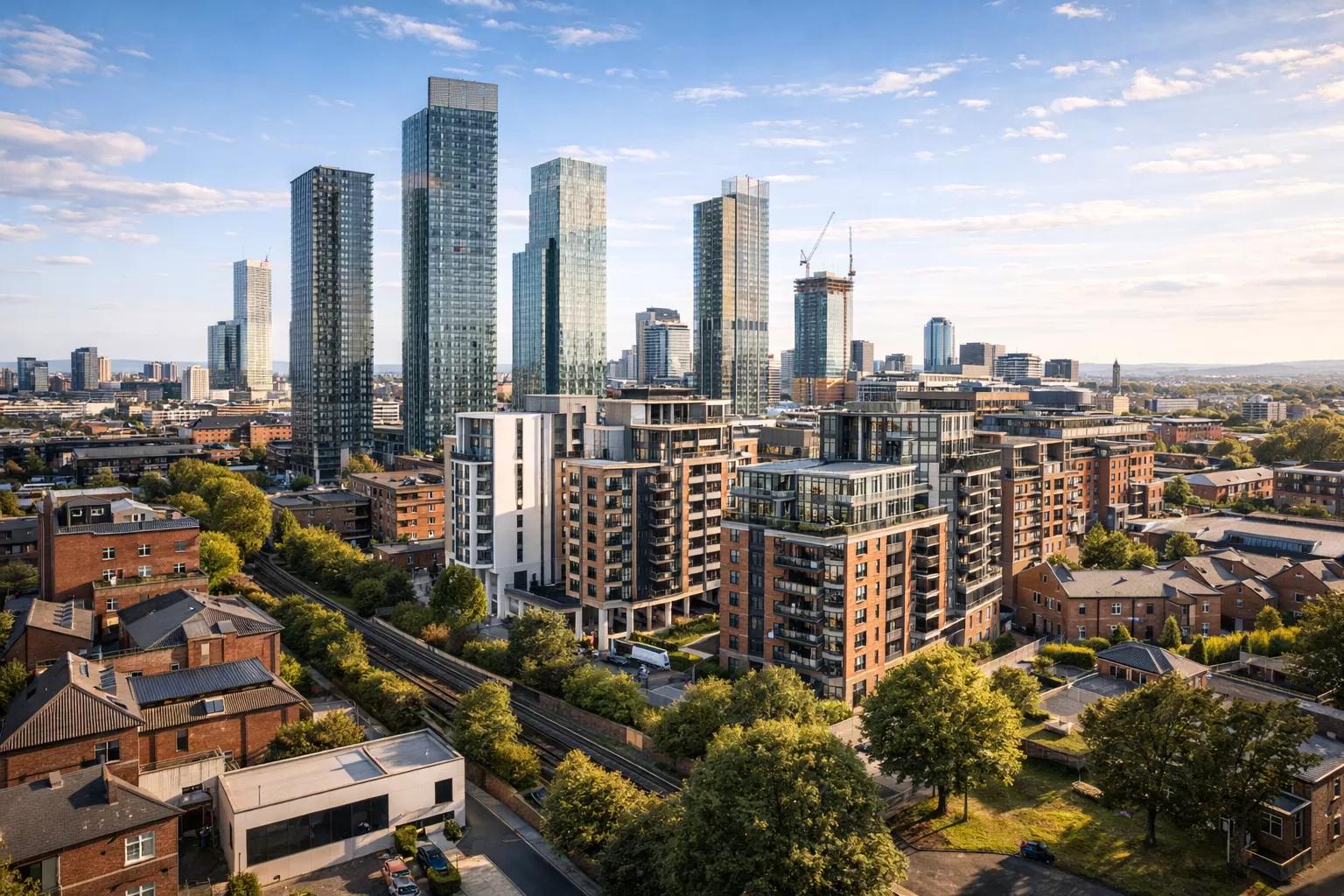
Several areas in Manchester are experiencing strong property growth due to regeneration projects, expanding employment sectors, and new transport infrastructure. Investors and buyers frequently focus on districts such as Ancoats, Salford Quays, New Islington, and Hulme because these locations combine ongoing redevelopment with proximity to Manchester’s commercial centre. Identifying up-and-coming areas requires evaluating regeneration plans, housing demand, transport links, and long-term economic activity rather than relying on short-term price movements.
What Makes An Area Up And Coming In Manchester?
An up-and-coming area in Manchester is typically defined by measurable changes in infrastructure, housing development, and economic activity that increase residential demand over time. These neighbourhoods often begin as underutilised industrial or residential districts that gradually attract redevelopment projects and new investment.
Urban regeneration initiatives play a significant role in shaping Manchester’s property market. Former industrial zones across the city are being transformed into residential communities, mixed-use developments, and commercial districts. These changes attract both residents and businesses, increasing demand for housing in surrounding neighbourhoods.
Another defining characteristic is improved connectivity. Areas located near tram lines, rail stations, or major road corridors tend to experience higher demand from commuters working in Manchester city centre or nearby business districts such as Spinningfields and MediaCityUK.
| Indicator | What It Signals | Why Buyers Monitor It |
|---|---|---|
| Urban Regeneration | Redevelopment of older industrial or residential areas | Potential property value growth |
| Transport Infrastructure | Expansion of tram lines or rail access | Improved commuting options |
| Residential Development | New apartment buildings or housing projects | Increasing investor confidence |
| Commercial Investment | New offices, retail districts, or business hubs | Employment growth |
| Population Growth | Rising number of residents | Higher housing demand |
Local amenities also influence how quickly an area develops. Restaurants, cultural venues, parks, and retail spaces contribute to the attractiveness of a neighbourhood, encouraging both homeowners and renters to relocate there.
Because regeneration can take several years, early-stage areas often present opportunities for buyers who are prepared to hold property long term while neighbourhood improvements unfold.
Why Property Investors Focus On Emerging Manchester Areas
Property investors frequently target emerging Manchester neighbourhoods because these locations may offer lower purchase prices compared with established districts while still benefiting from the city’s economic expansion. When redevelopment projects succeed, housing demand often rises alongside improvements in infrastructure and amenities.
Manchester has become one of the United Kingdom’s major regional economic centres. Growth in sectors such as digital technology, finance, media, and higher education has increased the city’s population and strengthened demand for both owner-occupied homes and rental properties.
Many buyers are also attracted by Manchester’s large student population. Universities such as the University of Manchester and Manchester Metropolitan University attract thousands of students annually, creating ongoing demand for rental accommodation in nearby neighbourhoods.
| Investor Objective | Explanation | Typical Buyer Profile |
|---|---|---|
| Lower Entry Prices | Properties may cost less than those in established central areas | First-time investors |
| Long-Term Growth Potential | Regeneration can increase property demand | Buy-to-let investors |
| Strong Rental Market | Students and professionals require rental housing | Landlords |
| Urban Redevelopment | Industrial areas transformed into residential communities | Property developers |
Manchester’s expanding workforce also contributes to housing demand. As businesses establish offices in areas such as Spinningfields, Deansgate, and MediaCityUK, many employees prefer living close to transport links or within walking distance of the city centre.
However, investors typically evaluate neighbourhood development timelines carefully. Regeneration projects often occur in phases, and property values may increase gradually as infrastructure and amenities improve.
Key Drivers Behind Manchester’s Property Growth
Manchester’s housing market growth is shaped by several structural factors, including economic expansion, infrastructure investment, and population increases. These forces influence which neighbourhoods attract property buyers and investors.
One of the most significant drivers is employment growth across multiple sectors. Manchester has developed a strong digital and technology industry, alongside financial services, media production, and healthcare. This economic diversity attracts professionals who require housing within commuting distance of employment hubs.
Transport infrastructure has also expanded considerably. The Metrolink tram network now connects many parts of Greater Manchester with the city centre, making suburban and formerly industrial districts more accessible to commuters.
| Growth Driver | Impact On Housing Market | Opportunity For Buyers |
|---|---|---|
| Economic Expansion | More jobs attract residents | Higher long-term housing demand |
| Transport Improvements | Expanded Metrolink and rail services | Better access to employment centres |
| Population Growth | Increased housing demand across the city | Strengthened rental markets |
| Urban Regeneration | Redevelopment of former industrial districts | New residential investment opportunities |
Large regeneration schemes such as the Northern Gateway development and expansion of MediaCityUK illustrate how coordinated planning can reshape neighbourhoods and stimulate property demand.
Understanding these market drivers helps buyers identify areas where housing demand is likely to increase as infrastructure projects and employment centres expand.
Ancoats: Regeneration And High-Density Urban Living
Ancoats has transformed from a historic industrial district into one of Manchester’s most recognised regeneration success stories. Located adjacent to the Northern Quarter and within walking distance of the city centre, the area has experienced extensive redevelopment that has attracted both residents and property investors.
Former textile mills and warehouses have been converted into residential apartments, offices, and retail spaces. These developments have preserved the neighbourhood’s industrial architecture while introducing modern housing options suited to professionals working in the city centre.
The presence of restaurants, cafés, and cultural venues has also contributed to Ancoats’ growing reputation as a desirable residential district. Public spaces such as Cutting Room Square have become central community hubs.
| Feature | Description | Buyer Advantage |
|---|---|---|
| Historic Conversions | Industrial mills converted into apartments | Unique residential properties |
| City Centre Proximity | Walking distance to Northern Quarter | Strong demand from professionals |
| Lifestyle Amenities | Restaurants, cafés, and public squares | High urban living appeal |
| Mixed-Use Development | Combination of residential and commercial spaces | Sustained neighbourhood activity |
For investors, Ancoats demonstrates how historic regeneration projects can transform previously underutilised districts into sought-after residential communities.
Salford Quays And MediaCityUK: Media And Technology Hub
Salford Quays has become one of the most prominent regeneration zones in Greater Manchester. The area’s transformation accelerated with the development of MediaCityUK, a large media and technology campus that houses major broadcasters, creative companies, and digital businesses.
Organisations such as the BBC and ITV relocated major operations to MediaCityUK, bringing thousands of employees into the area. This employment base has created strong housing demand for nearby apartments and rental properties.
Salford Quays also benefits from waterfront living along the Manchester Ship Canal. Residential developments overlooking the water offer modern housing with access to cultural attractions such as The Lowry theatre and museums.
| Driver | Description | Investor Benefit |
|---|---|---|
| MediaCityUK | Major media and technology campus | Employment-driven housing demand |
| Waterfront Development | Residential buildings along the canal | Attractive lifestyle location |
| Transport Connectivity | Metrolink tram network access | Easy commuting to city centre |
| Cultural Attractions | The Lowry theatre and galleries | Increased neighbourhood appeal |
The continued expansion of MediaCityUK and surrounding residential projects has positioned Salford Quays as one of the most important residential and commercial districts in the Manchester metropolitan region.
New Islington: Canal-Side Regeneration District
New Islington is a purpose-built regeneration neighbourhood located east of Manchester city centre. The district was developed as part of a large urban renewal initiative aimed at transforming former industrial land into a modern residential community.
The area features contemporary apartment buildings, townhouses, and landscaped public spaces built around canal-side walkways. These developments have introduced modern housing options within close proximity to the city centre.
Public infrastructure improvements, including the New Islington Metrolink stop, have enhanced connectivity between the neighbourhood and central Manchester. This accessibility has helped attract residents seeking city-centre living with quieter residential surroundings.
| Feature | Impact On Area | Buyer Opportunity |
|---|---|---|
| Planned Regeneration | Large-scale redevelopment project | Modern residential community |
| Canal-Side Living | Waterfront walkways and parks | Attractive lifestyle environment |
| Metrolink Station | Direct tram access to city centre | Convenient commuting |
| Mixed Housing Types | Apartments and townhouses | Options for different buyer budgets |
New Islington demonstrates how planned regeneration can reshape underused industrial areas into well-connected residential districts.
Hulme: Affordable Entry Near Manchester City Centre
Hulme is located immediately south of Manchester city centre and has gained attention among buyers and investors seeking relatively affordable property options close to central employment districts. Historically associated with large housing estates, the area has undergone gradual redevelopment over several decades.
Today Hulme contains a mix of residential housing types, including modern apartments, student accommodation, and traditional terraced homes. Its proximity to universities and the city centre has made it popular among students, young professionals, and renters.
The neighbourhood’s accessibility is enhanced by nearby transport routes and cycling infrastructure, allowing residents to reach Manchester city centre quickly.
| Indicator | Description | Buyer Advantage |
|---|---|---|
| City Centre Proximity | Located close to Manchester CBD | High rental demand |
| Student Population | Near major universities | Consistent tenant demand |
| Mixed Housing Stock | Terraced homes and apartments | Multiple investment options |
| Ongoing Redevelopment | Gradual improvements to housing and infrastructure | Long-term growth potential |
Hulme’s combination of accessibility and comparatively moderate housing prices makes it an area that many first-time investors consider when entering the Manchester property market.
How Buyers Can Identify Future Growth Areas In Manchester
Identifying future growth areas in Manchester requires evaluating infrastructure investment, urban regeneration plans, employment expansion, and housing development activity. Buyers who analyse these factors can better understand which neighbourhoods may experience rising property demand over time.
One of the strongest indicators of growth is proximity to major regeneration schemes. Large-scale redevelopment projects often introduce new residential communities, office space, and retail districts that attract residents and businesses to previously underused areas.
Transport connectivity is another important factor. The expansion of the Metrolink tram network and improvements to rail infrastructure have significantly increased accessibility across Greater Manchester. Areas located near tram stops or commuter rail stations typically experience higher demand from both homeowners and renters.
| Indicator | Why It Matters | Buyer Action |
|---|---|---|
| Urban Regeneration Projects | Redevelopment attracts new residents and businesses | Monitor city planning announcements |
| Transport Improvements | Better connectivity increases housing demand | Review Metrolink and rail expansion plans |
| Employment Growth | New jobs attract workers who require housing | Track major business investments |
| Residential Construction | New developments signal investor confidence | Assess planning approvals and building permits |
| Rental Market Strength | Low vacancy rates indicate strong demand | Analyse local rental data |
Monitoring planning applications and redevelopment proposals can provide early insights into neighbourhood transformation. When multiple residential projects receive approval within a district, it often signals developer confidence in long-term housing demand.
Buyers who combine market research with an understanding of infrastructure investment and demographic trends are more likely to identify areas where property demand may grow steadily over time.
Risks To Consider When Investing In Emerging Manchester Areas
Although emerging areas can offer opportunities for property appreciation, investors should evaluate potential risks before purchasing. Regeneration projects, infrastructure development, and economic conditions all influence how quickly neighbourhoods develop.
Infrastructure delays are one of the most common challenges. Large redevelopment projects may take many years to complete, and construction schedules can change depending on funding availability or planning approvals.
Housing supply is another important consideration. If several residential developments are completed within a short period, the temporary increase in available housing may slow rental growth or property price increases.
| Risk | Explanation | Investor Consideration |
|---|---|---|
| Development Delays | Regeneration projects may take longer than expected | Plan long-term ownership |
| Market Cycles | Property values fluctuate with economic conditions | Prepare for short-term volatility |
| Oversupply Of Apartments | Rapid construction may increase housing inventory | Evaluate local development pipelines |
| Changing Rental Demand | Tenant demand can shift due to economic trends | Monitor employment and population growth |
Investors should also evaluate the long-term sustainability of local employment markets. Areas closely tied to specific industries may experience stronger housing demand when those industries expand but may also face greater vulnerability if employment patterns change.
Conducting detailed due diligence—including reviewing planning documents, analysing rental market data, and assessing infrastructure timelines—helps buyers make more informed property investment decisions.
Frequently Asked Questions
What Are The Best Up And Coming Areas In Manchester?
Areas frequently highlighted for growth include Ancoats, Salford Quays, New Islington, and Hulme. These neighbourhoods benefit from regeneration projects, improved transport connections, and increasing residential development.
Why Is Manchester Attractive For Property Investment?
Manchester has a diversified economy, growing population, and strong rental demand driven by students and professionals. Regeneration projects across the city have also created new residential investment opportunities.
How Can Buyers Identify A Growing Area In Manchester?
Buyers can analyse regeneration plans, transport infrastructure projects, employment growth, and residential development activity to identify neighbourhoods likely to experience increasing housing demand.
Are Up-And-Coming Areas Risky For Property Investors?
Emerging neighbourhoods may involve higher uncertainty because property demand often depends on infrastructure development, regeneration success, and broader economic conditions.
Is Manchester A Good Location For Long-Term Property Investment?
Manchester remains one of the United Kingdom’s fastest-growing regional cities, supported by economic expansion, major universities, and ongoing urban redevelopment projects.
Key Takeaways
- Emerging Neighbourhoods: Ancoats, Salford Quays, New Islington, and Hulme are widely recognised for regeneration and residential growth.
- Growth Drivers: Infrastructure investment, employment expansion, and urban redevelopment continue to shape Manchester’s property market.
- Investor Opportunities: Up-and-coming areas may offer lower entry prices and potential for long-term property value growth.
- Risk Considerations: Development timelines, housing supply, and economic conditions can influence property investment outcomes.
- Research Importance: Reviewing planning data, rental demand, and infrastructure projects helps buyers identify sustainable growth areas.
References
- UK Office for National Statistics housing and population data.
- Greater Manchester Combined Authority regeneration reports.
- UK property market research publications.
- Manchester City Council urban planning and development plans.