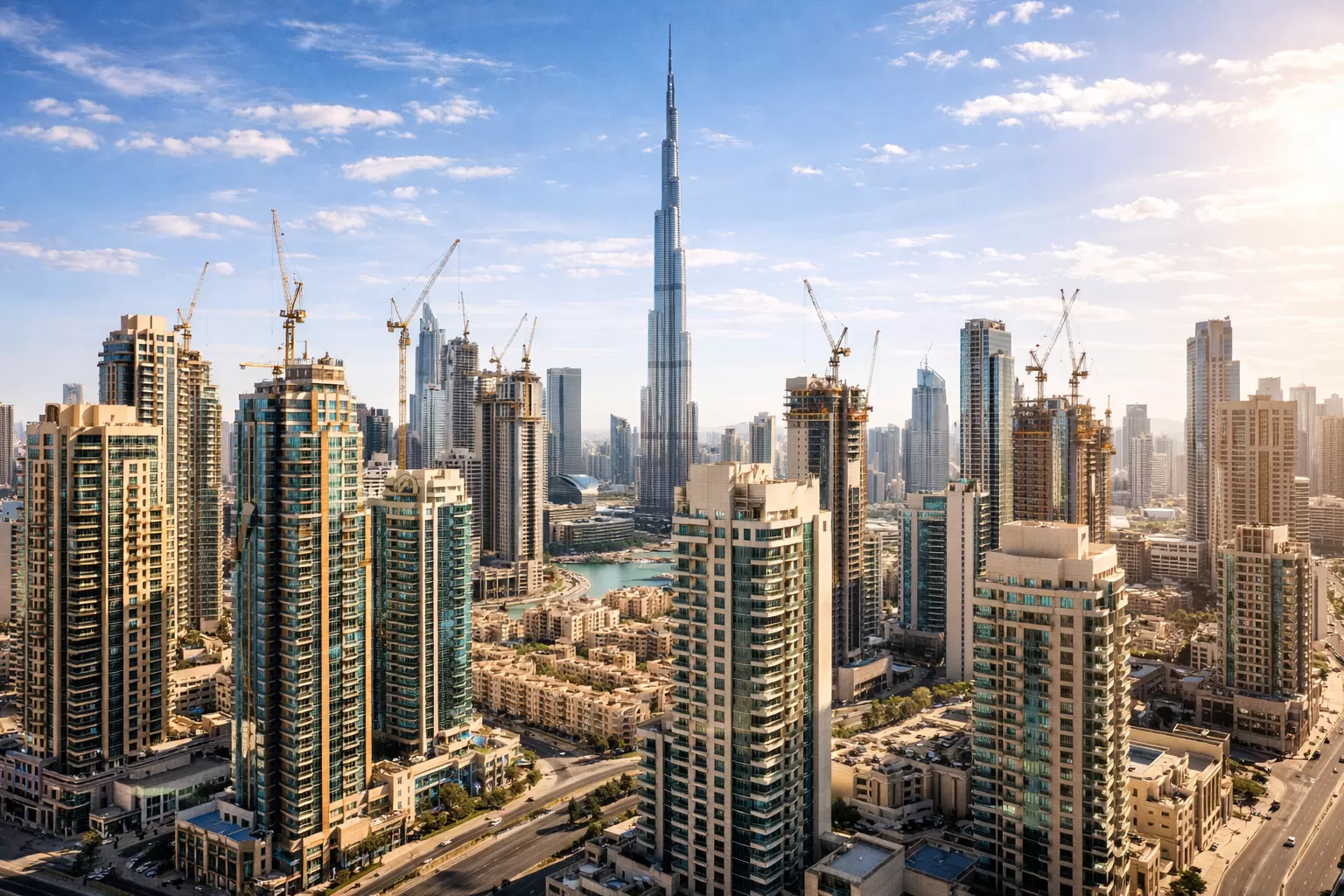
The best up-and-coming areas in Dubai for real estate investment currently include Dubai South, Jumeirah Village Circle (JVC), Dubai Creek Harbour, Arjan, and Al Furjan. These communities are attracting investors due to expanding infrastructure, competitive property prices compared with established districts, increasing rental demand, and proximity to major employment zones and transport networks. Investors evaluating Dubai’s property market often focus on these emerging areas because they combine ongoing development with strong long-term demand drivers such as population growth, tourism expansion, and government-led urban planning initiatives.
Why Emerging Areas In Dubai Matter For Real Estate Investors
Emerging areas in Dubai attract investors because they typically offer lower entry prices than established districts while benefiting from infrastructure development, population growth, and expanding economic activity. These factors often create favorable conditions for both rental income and long-term capital appreciation.
Dubai’s urban expansion follows a strategic development model driven by large-scale master-planned communities. Government authorities and major developers frequently launch new residential districts alongside transport infrastructure, commercial zones, and tourism projects. As these areas mature, property demand tends to increase as residents move in and services become fully operational.
For investors, entering a market during the early stages of development can provide advantages. Property prices are generally more accessible during early phases, and rental demand typically grows as the community develops.
| Growth Driver | Why It Matters | Impact On Property Investment |
|---|---|---|
| Infrastructure Development | New roads, metro stations, and airports improve accessibility | Increases attractiveness for residents and tenants |
| Population Growth | Dubai continues attracting expatriates and skilled workers | Supports strong housing demand |
| Master-Planned Communities | Large residential developments with integrated amenities | Enhances long-term livability and property value |
| Economic Diversification | Growth in tourism, logistics, finance, and technology | Expands employment opportunities near new districts |
Another important factor influencing emerging areas is Dubai’s infrastructure strategy. Projects such as Expo City Dubai, the expansion of Al Maktoum International Airport, and new metro lines have significantly increased the development potential of surrounding communities.
Investors evaluating Dubai property markets often monitor these development corridors because they frequently indicate where the city’s next residential hotspots may emerge.
How To Identify Up-And-Coming Areas In Dubai
Up-and-coming areas in Dubai are typically identified through measurable indicators such as infrastructure investment, large-scale residential development, improving rental yields, and growing population density. These factors often signal that a district is transitioning from early development to a fully established residential community.
Investors who analyze these indicators can identify potential investment opportunities before property prices reach the levels seen in mature districts such as Downtown Dubai, Dubai Marina, or Palm Jumeirah.
Infrastructure And Transport Connectivity
Infrastructure expansion is one of the most reliable signals of future growth in Dubai’s property market. Areas that benefit from new highways, metro stations, or proximity to major business districts often attract both residents and investors.
Examples of infrastructure elements that influence property demand include:
- Dubai Metro line expansions
- Major highway connections such as Sheikh Mohammed Bin Zayed Road
- Proximity to Al Maktoum International Airport
- Access to major business hubs like Dubai Internet City and DIFC
- Development of retail centers, schools, and healthcare facilities
Areas connected to these infrastructure networks generally experience stronger housing demand because commuting becomes easier for residents.
Rental Yields And Tenant Demand
Rental yield remains one of the most important indicators for property investors in Dubai. Because the city has a large expatriate population, demand for rental housing remains consistently strong in many districts.
| Metric | Meaning | Investor Importance |
|---|---|---|
| Gross Rental Yield | Annual rental income compared to property price | Indicates income potential |
| Occupancy Rate | Percentage of rental units currently occupied | Reflects tenant demand |
| Rental Growth | Annual increase in average rents | Signals strengthening market conditions |
Many emerging communities offer higher rental yields than established luxury districts because property purchase prices remain relatively lower while tenant demand continues to grow.
Master-Planned Community Development
Dubai’s real estate expansion often occurs through master-planned communities developed by major firms such as Emaar, Nakheel, and DAMAC. These projects are designed to include residential properties, retail centers, parks, schools, and recreational facilities within the same district.
Master-planned developments typically attract long-term residents because they provide a complete residential environment rather than isolated housing clusters. As amenities expand and population density increases, these communities often become stable rental markets.
Top Up-And-Coming Areas In Dubai For Property Investment
Several districts across Dubai are gaining attention from property buyers and investors due to ongoing development, strong rental demand, and strategic location advantages. These areas are widely monitored by market analysts as potential growth zones within Dubai’s evolving real estate landscape.
Dubai South
Dubai South is one of the largest urban development projects in the region and covers a massive area surrounding Al Maktoum International Airport and Expo City Dubai. The district is planned as a mixed-use city including residential neighborhoods, logistics zones, and commercial districts.
Dubai South is particularly attractive to investors because of its proximity to the airport expansion and its connection to international trade and logistics networks. The area is expected to accommodate hundreds of thousands of residents as development continues.
| Factor | Details |
|---|---|
| Primary Driver | Expo City Dubai and airport expansion |
| Development Type | Large-scale master-planned city |
| Investor Appeal | Early-stage pricing and future population growth |
Jumeirah Village Circle (JVC)
Jumeirah Village Circle has developed into one of Dubai’s most active residential investment districts. Located near major highways, the community offers apartments, townhouses, and villas designed for both residents and investors.
JVC attracts property investors primarily because of its relatively accessible price levels and consistent rental demand. The district’s location provides convenient access to Dubai Marina, Internet City, and Downtown Dubai.
The area also continues to see new retail centers, schools, and community facilities, which further support its long-term residential appeal.
Dubai Creek Harbour
Dubai Creek Harbour is a waterfront development led by Emaar that is positioned as a major future residential and tourism district. Located along Dubai Creek, the community includes residential towers, retail promenades, and large public waterfront spaces.
The development is designed to become a major urban center connected to central Dubai while offering modern waterfront living. Its long-term growth is linked to tourism, lifestyle amenities, and future infrastructure expansion.
More High-Potential Emerging Areas In Dubai
Beyond widely recognized districts such as Dubai South, Jumeirah Village Circle, and Dubai Creek Harbour, several other communities in Dubai are gaining attention from investors. These areas are expanding through master-planned developments, infrastructure investment, and growing residential demand.
Arjan
Arjan is a developing residential district located within Dubailand and positioned between Sheikh Mohammed Bin Zayed Road and Umm Suqeim Street. The area has gained popularity among investors because of its mid-market apartment developments and proximity to established districts such as Al Barsha and Motor City.
Arjan also hosts major attractions such as Dubai Miracle Garden and Dubai Butterfly Garden, which have helped increase visibility and foot traffic in the area. Over the past several years, the community has seen consistent development of residential towers, retail outlets, and healthcare facilities.
| Factor | Details |
|---|---|
| Location | Dubailand near Al Barsha South |
| Property Types | Mainly mid-rise apartment developments |
| Investor Appeal | Relatively accessible entry prices and rental demand |
| Nearby Attractions | Dubai Miracle Garden and Butterfly Garden |
Al Furjan
Al Furjan is a rapidly developing residential community located between Sheikh Zayed Road and Mohammed Bin Zayed Road. Developed primarily by Nakheel, the area includes villas, townhouses, and apartment complexes designed around family-oriented living.
The opening of the Dubai Metro Route 2020 line significantly improved connectivity to Al Furjan, providing residents with direct access to major commercial zones such as Dubai Marina and Jebel Ali.
Investors are drawn to Al Furjan due to its strong demand from families seeking suburban-style housing while remaining within commuting distance of Dubai’s key business districts.
Dubai Production City
Dubai Production City, formerly known as International Media Production Zone (IMPZ), is evolving into a mixed-use community combining residential buildings with commercial media and publishing facilities.
The area has become attractive to investors because apartment prices tend to remain lower than in nearby communities while rental demand from professionals working in surrounding business zones remains steady.
Proximity to major road networks such as Sheikh Mohammed Bin Zayed Road also improves accessibility for residents commuting to other parts of the city.
Comparison Of Dubai’s Key Investment Growth Areas
Investors evaluating Dubai’s emerging real estate districts often compare locations based on factors such as price range, rental yield potential, infrastructure access, and long-term development plans. Each area offers different advantages depending on investment strategy.
| Area | Primary Property Types | Key Growth Driver | Typical Investor Profile |
|---|---|---|---|
| Dubai South | Apartments, townhouses, villas | Airport expansion and Expo City development | Long-term investors targeting early-stage growth |
| Jumeirah Village Circle | Apartments and townhouses | Central location and strong rental demand | Income-focused investors |
| Dubai Creek Harbour | Luxury waterfront apartments | Waterfront development and tourism growth | Lifestyle and long-term investors |
| Arjan | Mid-rise apartments | Dubailand residential expansion | Mid-market investors |
| Al Furjan | Villas, townhouses, apartments | Metro connectivity and family housing demand | Family-focused property investors |
Comparing these districts helps investors align their purchase decisions with financial goals. For example, rental-income-focused investors may prioritize areas with stable tenant demand, while long-term investors may prefer early-stage communities with extensive future infrastructure development.
Financial Considerations For Real Estate Investors In Dubai
Real estate investors in Dubai must evaluate several financial factors before purchasing property. These include upfront acquisition costs, expected rental returns, long-term maintenance expenses, and potential financing structures.
Typical Property Purchase Costs In Dubai
| Cost Type | Description |
|---|---|
| Dubai Land Department Fee | Approximately 4% of property purchase price |
| Registration Fees | Administrative costs for property registration |
| Real Estate Agency Commission | Usually around 2% of property price |
| Mortgage Fees | Bank charges if financing is used |
| Service Charges | Annual maintenance fees for community facilities |
Understanding these costs is essential because they influence the overall investment return and affordability of a property purchase.
Rental Yield Expectations
Dubai has historically offered relatively attractive rental yields compared with many global property markets. Emerging communities often provide higher yields because property prices remain competitive while tenant demand continues to grow.
However, investors should evaluate rental performance using long-term data rather than relying solely on short-term market trends. Vacancy rates, property management costs, and tenant turnover can influence net income from rental properties.
Legal And Ownership Framework For Dubai Property Investors
Dubai operates under a regulated property ownership framework that allows foreign investors to purchase real estate within designated freehold areas. These zones include many of the city’s major residential developments.
Freehold ownership allows investors to own the property and the land it occupies indefinitely. Leasehold ownership, by contrast, provides property rights for a fixed term—typically between 30 and 99 years.
Property transactions are overseen by the Dubai Land Department (DLD), which manages property registration and maintains ownership records.
Many investors also utilize escrow accounts during off-plan property purchases. These accounts are regulated by the Real Estate Regulatory Agency (RERA) and are designed to protect buyer funds while construction is underway.
Common Mistakes Real Estate Investors Make In Emerging Dubai Areas
While Dubai offers attractive investment opportunities, buyers sometimes make decisions based on incomplete information or unrealistic expectations. Understanding common mistakes can help investors make more informed property purchases.
Focusing Only On Short-Term Price Growth
Some investors prioritize rapid capital appreciation without considering long-term fundamentals such as infrastructure, population growth, and tenant demand. Sustainable property value growth is typically supported by these broader economic factors.
Ignoring Service Charges
Many residential developments in Dubai charge annual service fees to maintain shared facilities such as pools, security systems, and landscaping. These costs vary widely between developments and can affect investment profitability.
Overlooking Developer Reputation
When purchasing off-plan properties, evaluating the developer’s track record is essential. Investors should review previous projects, construction timelines, and delivery performance to reduce potential risk.
Future Outlook For Dubai’s Emerging Real Estate Areas
Dubai’s emerging real estate districts are expected to continue expanding as the city grows through strategic infrastructure investment, population growth, and economic diversification. Government planning initiatives and large-scale master developments are shaping how residential communities evolve across the emirate.
Several long-term drivers are likely to influence the performance of up-and-coming investment areas. These include the continued expansion of Al Maktoum International Airport, development surrounding Expo City Dubai, and new transportation infrastructure that connects emerging communities to established commercial districts.
Dubai’s urban development model often involves launching large master-planned communities on the city’s outskirts and gradually transforming them into fully integrated residential districts. As infrastructure, schools, healthcare facilities, and retail centers are introduced, population density typically increases and demand for housing strengthens.
Emerging areas also benefit from Dubai’s position as a global business and tourism hub. The city continues to attract professionals, entrepreneurs, and international investors, which contributes to sustained demand for residential property.
However, long-term investment outcomes depend on multiple factors including economic conditions, housing supply levels, and the pace of infrastructure completion. Investors who monitor these trends are better positioned to evaluate opportunities in developing districts.
How Investors Can Choose The Right Area In Dubai
Selecting the right investment location in Dubai requires careful analysis of property market fundamentals rather than relying solely on marketing claims or short-term price movements. Investors typically evaluate infrastructure development, rental demand, developer reputation, and long-term urban planning.
Evaluate Infrastructure And Accessibility
Transport connectivity often determines whether a residential area becomes attractive to long-term residents. Investors frequently prioritize communities located near major highways, metro stations, and employment districts.
Areas connected to Sheikh Zayed Road, Sheikh Mohammed Bin Zayed Road, or major metro routes tend to maintain stronger demand because residents can commute more easily across the city.
Assess Rental Market Stability
Rental demand plays a critical role in property investment returns. Areas with a high concentration of working professionals, expatriate communities, and family-oriented housing tend to maintain consistent tenant demand.
Investors typically analyze historical rental yields, occupancy levels, and population growth within the surrounding district before purchasing property.
Review Developer Track Record
Dubai’s real estate market includes projects from numerous developers. Evaluating a developer’s history of delivering projects on time and maintaining construction quality helps reduce investment risk.
Large developers with established portfolios often provide more predictable development timelines and community management standards.
| Evaluation Factor | Importance For Investors | What To Examine |
|---|---|---|
| Infrastructure | Improves accessibility and property demand | Metro stations, highways, airport access |
| Rental Demand | Supports consistent investment income | Occupancy rates and tenant demographics |
| Developer Reputation | Reduces construction and delivery risk | Previous project performance |
| Community Amenities | Improves livability and tenant retention | Schools, parks, healthcare, retail |
| Future Planning | Indicates long-term growth potential | Government development plans |
By combining these evaluation criteria, investors can develop a balanced understanding of whether an emerging district aligns with their financial objectives and risk tolerance.
Frequently Asked Questions
Which Areas In Dubai Are Considered Up And Coming For Property Investment?
Several districts are widely recognized as emerging real estate investment areas in Dubai, including Dubai South, Jumeirah Village Circle, Dubai Creek Harbour, Arjan, and Al Furjan. These communities are expanding through infrastructure investment, residential development, and increasing rental demand.
Is Dubai South A Good Area For Property Investment?
Dubai South attracts investor interest due to its proximity to Expo City Dubai and Al Maktoum International Airport. The area is planned as a large mixed-use city that may accommodate significant population growth as development continues.
Why Do Investors Choose Jumeirah Village Circle?
Jumeirah Village Circle is popular among investors because it offers relatively accessible property prices while maintaining strong rental demand. Its central location near major highways also provides convenient access to business and leisure districts.
Can Foreign Investors Buy Property In Dubai?
Foreign investors can purchase property in designated freehold areas across Dubai. These zones allow full ownership rights and are regulated by the Dubai Land Department.
What Factors Influence Property Investment Returns In Dubai?
Property investment performance in Dubai is influenced by factors such as rental demand, infrastructure development, property management costs, population growth, and broader economic conditions.
Key Takeaways
- Emerging Districts Offer Early Opportunities: Areas such as Dubai South, Arjan, and Al Furjan provide investment opportunities during early stages of community development.
- Infrastructure Drives Demand: Transport expansion, airport development, and new commercial zones strongly influence property demand in Dubai.
- Rental Yields Remain Important: Investors frequently evaluate rental yields and tenant demand before purchasing property.
- Legal Framework Supports Foreign Ownership: Dubai allows international investors to buy property in designated freehold areas.
- Research Reduces Risk: Evaluating developer reputation, service charges, and infrastructure plans helps investors make more informed decisions.
References
- Dubai Land Department – Property ownership regulations and registration framework
- Real Estate Regulatory Agency (RERA) – Escrow and property development regulations
- Dubai Statistics Center – Population and economic development data
- Dubai Urban Master Plan 2040 – Government planning strategy
- Major developer publications from Emaar, Nakheel, and DAMAC