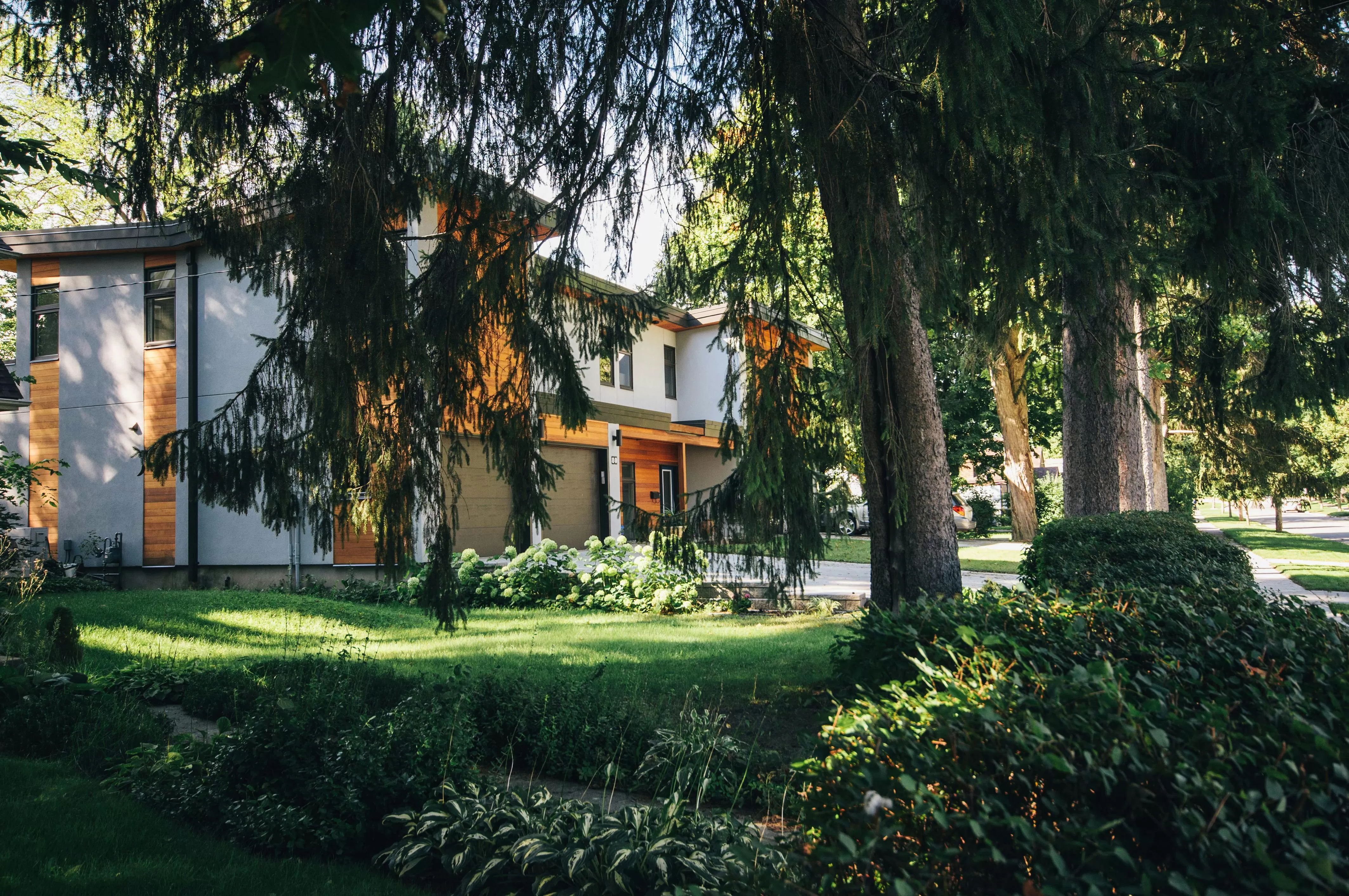
A house with a private garden and dedicated parking typically commands a 10%–35% price premium over comparable apartments, depending on city, plot size, and access to transport. Buyers prioritize these homes for long-term livability, resale resilience, and rental appeal. The best locations balance suburban space with urban connectivity, while total ownership costs must account for land value, maintenance, utilities, insurance, and local regulations.
What Qualifies as a House with Garden and Parking?
A house with garden and parking is a freehold or long-lease residential property that includes private outdoor land (front, rear, or both) and at least one dedicated vehicle space such as a driveway, carport, or garage. The defining feature is exclusive use — not shared amenities.
Key Structural Characteristics
Most properties in this category are detached, semi-detached, or terraced houses located in suburban or peri-urban neighborhoods. Core features include:
- Private garden (usable land area, not decorative landscaping only)
- On-plot parking or enclosed garage
- Separate entrance
- Land ownership or long-term leasehold rights
Why Buyers Specifically Seek These Homes
Demand is driven by three measurable factors:
- Space efficiency: Additional square footage outdoors improves livability without the cost per sq ft of internal expansion.
- Parking certainty: Off-street parking reduces congestion risks and can lower vehicle insurance in some regions.
- Capital resilience: Land value historically appreciates more consistently than high-density apartment stock in oversupplied markets.
For investors and landlords, these properties typically attract longer tenancy periods, particularly from families and professionals working hybrid schedules.
Freehold vs Leasehold Considerations
Ownership structure directly affects control and long-term value:
- Freehold: Full ownership of land and structure; fewer restrictions; stronger resale appeal.
- Leasehold: Long-term right to occupy; may involve ground rent or service charges.
Buyers should verify land boundaries, easements, right-of-way access to parking, and local planning permissions before committing.
Where Are the Best Locations to Buy a House with Garden and Parking?
The best locations combine affordable land values, strong transport connectivity, reputable schools, and low-density zoning. Suburban belts of major cities and emerging commuter towns typically offer the strongest balance of price and growth potential.
Urban Fringe vs Suburban vs Rural
Location choice affects both price and lifestyle outcome.
| Location Type | Price Level | Plot Size | Rental Demand | Capital Growth Potential |
|---|---|---|---|---|
| Urban Fringe | High | Moderate | Strong | Stable to High |
| Suburban | Moderate | Large | Very Strong (Family Market) | High (Long-Term) |
| Rural/Peri-Urban | Lower Entry Cost | Largest | Moderate | Variable |
What Makes a Location “Best”?
The following criteria consistently influence buyer satisfaction and resale value:
- Access to highways or mass transit within 10–20 minutes
- Low crime rates and stable municipal governance
- Quality public and private schools
- Flood zone classification and drainage infrastructure
- Future development plans (commercial hubs, infrastructure projects)
Properties near planned infrastructure corridors often see incremental land appreciation before completion. However, buyers should verify zoning to avoid unexpected high-density construction nearby.
Micro-Location Factors Buyers Overlook
Even within a strong suburb, value differs street by street. Key micro factors include:
- South-facing or north-facing garden orientation (climate dependent)
- Corner plots versus mid-row lots
- Driveway width and vehicle turning radius
- Proximity to green belts versus commercial strips
Parking convenience — especially whether two vehicles can exit independently — materially affects resale appeal.
How Much Does a House with Garden and Parking Cost?
Pricing depends primarily on land value per square foot, build quality, and parking configuration. Detached homes with garages command the highest premiums, while terraced houses with single driveways sit at mid-range levels.
Price Drivers
- Land-to-build ratio: Larger plots increase total price but may reduce per-sq-ft build cost.
- Garage vs driveway: Enclosed garages add structural cost but improve resale strength.
- Garden usability: Flat, landscaped gardens add more value than steep or irregular plots.
- Local supply constraints: Cities with limited new land release show stronger pricing power.
Typical Price Ranges (Illustrative Market Bands)
| Property Type | Entry-Level Suburb | Mid-Range Suburb | Prime Urban Fringe |
|---|---|---|---|
| Terraced House + Driveway | Base Market Rate | +10–15% | +20%+ |
| Semi-Detached + Garage | +15% | +20–25% | +30%+ |
| Detached + Large Garden + Double Garage | +25% | +35% | Premium Tier |
Compared to apartments, houses with private gardens and parking often maintain stronger long-term value during market corrections due to land scarcity and family demand.
Hidden Cost Considerations
Beyond purchase price, buyers must account for:
- Garden maintenance (landscaping, irrigation, fencing)
- Driveway resurfacing every 8–15 years
- Higher property insurance (larger footprint)
- Property taxes based on total land area
Investors should calculate gross yield against maintenance-adjusted net yield rather than relying solely on rental income projections.
What Is the Buying Process for a House with Garden and Parking?
The buying process follows the standard residential acquisition pathway, but additional due diligence is required for land boundaries, parking rights, drainage, and structural compliance. Buyers should treat outdoor space and parking infrastructure as core value components — not secondary features.
Step-by-Step Acquisition Framework
| Stage | Buyer Action | Key Risk to Check |
|---|---|---|
| Pre-Approval | Secure mortgage approval in principle | Affordability vs full ownership costs |
| Property Viewing | Inspect garden drainage, parking access | Boundary disputes, shared access issues |
| Offer & Negotiation | Base offer on land value comparables | Overpaying for cosmetic landscaping |
| Survey & Inspection | Commission structural and land survey | Subsidence, garage roof defects |
| Legal Review | Verify title, easements, planning history | Unauthorized extensions |
| Exchange & Completion | Finalize financing and transfer | Unresolved legal conditions |
Why Garden and Parking Require Extra Scrutiny
- Drainage systems: Poor grading leads to long-term foundation damage.
- Boundary clarity: Fences do not always match legal title lines.
- Right of access: Some driveways cross neighboring land.
- Garage compliance: Conversions may lack permits.
A land survey and municipal search are essential before exchange. Buyers relying solely on seller disclosure assume unnecessary risk.
How Should Buyers Plan Finances and Total Costs?
Financial planning must extend beyond mortgage qualification to include recurring land-related costs, capital expenditure cycles, and resale liquidity. Garden and parking assets increase long-term value but require consistent maintenance investment.
Total Cost of Ownership Breakdown
| Expense Category | Frequency | Impact Level |
|---|---|---|
| Landscaping & Garden Care | Ongoing / Seasonal | Moderate |
| Driveway Maintenance | 8–15 years | Moderate to High |
| Garage Roof / Door Repairs | 10–20 years | Moderate |
| Property Tax (Land Component) | Annual | High (Location Dependent) |
| Insurance Premium | Annual | Moderate |
Mortgage Considerations
Lenders evaluate loan-to-value ratios based on full property valuation, including land. Properties with substantial plots may appraise higher but also require larger deposits in high-demand areas.
Buyers should model:
- Interest rate stress scenarios
- Maintenance reserves (1–2% of property value annually)
- Emergency repair buffer for structural or drainage issues
Investor Perspective
Rental yields on houses with gardens and parking are often slightly lower than small apartments in dense city cores, but tenant retention is stronger. Lower turnover reduces vacancy and remarketing costs, improving net returns.
What Legal Checks Are Essential Before Purchase?
Legal verification must confirm land ownership, parking rights, and compliance with local planning regulations. Outdoor space introduces additional legal complexity compared to apartments.
Critical Legal Documents
- Title deed confirming plot boundaries
- Easement documentation (shared driveway or drainage rights)
- Planning permissions for extensions, garages, or garden rooms
- Environmental or flood zone classification
Boundary and Access Risks
Disputes frequently arise over:
- Encroaching fences
- Shared driveways without formal agreements
- Unregistered land strips adjacent to gardens
Professional conveyancing review and local authority searches mitigate these risks. Buyers should avoid informal “handshake” assurances regarding access or parking allocation.
What Mistakes Should Buyers Avoid?
The most common mistake is overvaluing aesthetic landscaping while underestimating structural or drainage issues. Buyers should prioritize land quality and infrastructure over surface presentation.
Frequent Buyer Errors
- Ignoring soil stability or flood history
- Failing to measure actual usable garden area
- Assuming driveway legality without documentation
- Underbudgeting for long-term exterior maintenance
- Buying in locations with pending high-density rezoning
Professional surveys, realistic maintenance forecasting, and location-level due diligence significantly reduce financial exposure.
How Do Garden and Parking Features Affect Resale Value?
Houses with private gardens and off-street parking consistently outperform comparable properties without these features during resale, particularly in family-oriented and commuter markets. The primary driver is land scarcity and daily convenience.
Resale Value Drivers
- Usable garden area: Flat, functional outdoor space adds measurable buyer appeal.
- Secure parking: Garages and double-width driveways increase liquidity in urban-fringe markets.
- Privacy: Detached layouts command stronger premiums than mid-terrace homes.
- Extension potential: Plots allowing rear or loft expansion attract long-term buyers.
In slower markets, properties lacking parking are often discounted first. Conversely, homes with well-maintained outdoor areas maintain negotiation leverage.
What Reduces Resale Appeal?
- Poor drainage or visible water pooling
- Shared or legally ambiguous driveways
- High-maintenance landscaping without irrigation systems
- Loss of parking due to garage conversions
Buyers planning future resale should prioritize functional improvements over decorative upgrades.
How Can Buyers Future-Proof This Type of Property?
Future-proofing focuses on adaptability, infrastructure upgrades, and compliance with evolving environmental and transport trends. Outdoor space provides strategic flexibility if managed correctly.
Strategic Upgrades That Add Long-Term Value
- Electric vehicle (EV) charging installation
- Permeable driveway materials to improve drainage
- Energy-efficient garden lighting and water systems
- Planning-compliant garden office or annex structures
Environmental Risk Management
Climate considerations increasingly influence buyer decisions. Key evaluations include:
- Flood zone classification and historical data
- Tree root proximity to foundations
- Soil stability and subsidence risk
- Stormwater runoff pathways
Investing in drainage improvements and sustainable landscaping strengthens long-term asset resilience.
What Should Sellers Know Before Listing?
Sellers should present garden and parking assets as functional value drivers, supported by documentation and maintenance records. Transparent disclosure accelerates buyer confidence and reduces renegotiation risk.
Pre-Listing Preparation Checklist
- Obtain updated land survey if boundaries are unclear
- Repair driveway cracks and repaint garage doors
- Trim overgrown landscaping to showcase usable space
- Compile permits for any structural changes
- Provide evidence of drainage or foundation improvements
Accurate pricing should reflect both indoor square footage and land utility. Overpricing based solely on aesthetic landscaping typically leads to longer time on market.
Frequently Asked Questions
Is a house with a garden and parking a good investment?
Yes. Properties with private land and dedicated parking tend to demonstrate stronger resale stability and tenant retention compared to units without these features, particularly in suburban markets.
Does a garage add more value than a driveway?
An enclosed garage generally adds more resale value due to security and weather protection, but a wide, easily accessible driveway can be equally desirable in mild climates.
How much maintenance does a garden require annually?
Maintenance varies by size and landscaping type. Basic upkeep may require seasonal lawn care and irrigation management, while landscaped gardens require higher recurring investment.
Should I avoid homes with shared driveways?
Not necessarily, but buyers should verify legal access rights and maintenance agreements to avoid disputes.
Are houses with gardens harder to insure?
Insurance premiums may be slightly higher due to larger property footprints and outdoor structures, but coverage depends on local risk factors such as flooding or storm exposure.
Key Takeaways
- Land Drives Value: Usable garden space significantly influences long-term appreciation.
- Parking Adds Liquidity: Off-street parking improves resale speed and buyer demand.
- Due Diligence Is Critical: Boundary clarity and drainage checks reduce risk.
- Total Cost Matters: Maintenance and land-related expenses must be budgeted accurately.
- Future-Proofing Enhances Returns: EV charging and sustainable upgrades strengthen asset resilience.
References
- Local municipal planning authority guidelines on residential zoning and parking regulations.
- Residential property valuation standards and appraisal methodologies.
- National property transaction and housing market data reports.