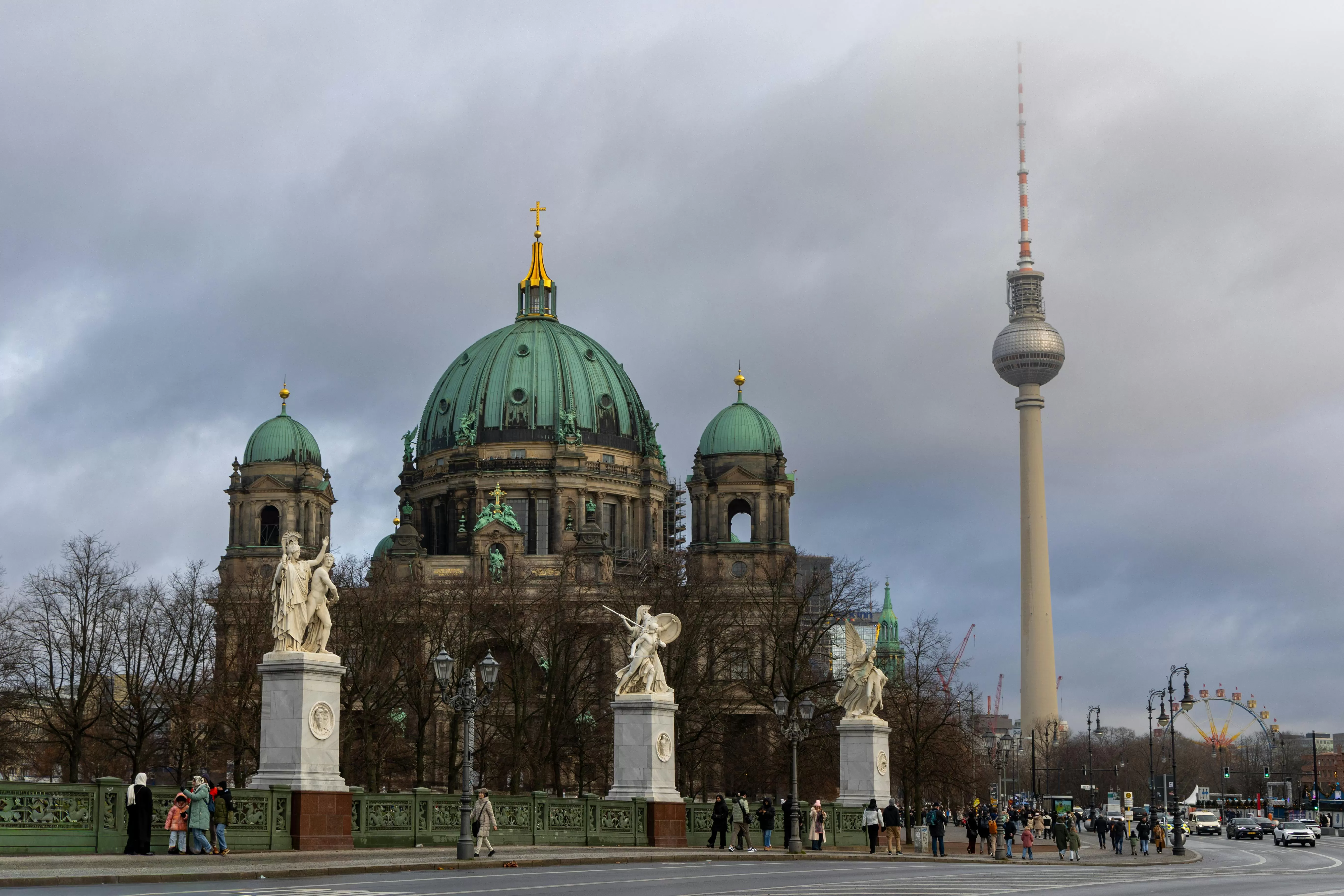
Buying a house in Berlin involves significantly more than the advertised purchase price. Buyers should expect to pay an additional 10% to 15% of the property value in transaction costs, including property transfer tax (Grunderwerbsteuer), notary and land registry fees, and agent commissions. These costs are mandatory, legally structured, and largely non-negotiable, making them a critical factor in financial planning before entering the Berlin property market.
What Is the Total Cost of Buying a House in Berlin?
The total cost of buying a house in Berlin typically exceeds the purchase price by 10% to 15%, depending on the transaction structure and whether a real estate agent is involved. This additional cost includes statutory taxes, legal registration fees, and service charges required to legally transfer ownership.
For example, if a property is priced at €500,000, buyers should realistically budget an additional €50,000 to €75,000 in acquisition costs. These expenses must usually be paid upfront or shortly after signing the purchase agreement, and they are not typically covered by standard mortgage financing.
The main components of total purchase costs include:
- Property transfer tax (Grunderwerbsteuer): A state-imposed tax payable upon purchase
- Notary fees: Mandatory legal authentication of the transaction
- Land registry fees (Grundbuch): Costs for recording ownership
- Real estate agent commission (Maklerprovision): Often shared between buyer and seller
Berlin’s regulatory framework ensures transparency but leaves limited room for cost negotiation. Buyers must factor in these charges early to avoid financing shortfalls or delays during closing.
Importantly, these additional costs are considered part of the buyer’s equity contribution by German lenders. This means banks generally do not finance these expenses, requiring buyers to have sufficient liquidity before proceeding.
How Much Is Property Transfer Tax in Berlin?
The property transfer tax in Berlin is currently set at 6% of the property’s purchase price. This tax is one of the largest upfront costs and is mandatory for all real estate transactions, regardless of whether the buyer is a resident or a foreign investor.
The tax becomes payable shortly after the purchase agreement is notarized. The tax authority issues a formal assessment notice, and payment must typically be made within four weeks. Ownership cannot be officially registered in the land registry until this tax is fully paid.
Key characteristics of the property transfer tax in Berlin include:
- Flat rate: Fixed at 6% across all property types
- Applies to full purchase price: Includes land and building value
- Non-negotiable: Determined by Berlin state law
- Required for registration: Proof of payment is mandatory before ownership transfer
For a €500,000 property, the transfer tax alone would amount to €30,000. This makes it one of the most significant cost drivers in Berlin’s real estate transactions.
Buyers should also be aware that attempts to artificially reduce the declared purchase price to lower tax liability are closely monitored and can result in penalties. German tax authorities apply strict valuation checks to ensure compliance.
In certain rare cases, such as property transfers within families or corporate share deals, different rules may apply. However, these scenarios involve complex legal structuring and are not typical for standard residential purchases.
What Are Notary and Land Registry Fees?
Notary and land registry fees in Berlin typically amount to 1.5% to 2% of the property purchase price. These costs are legally mandated and ensure that the transaction is properly executed, documented, and recorded in Germany’s highly regulated property system.
In Germany, property transactions must be notarized to be legally valid. The notary acts as an impartial legal authority responsible for drafting the purchase agreement, verifying identities, explaining contractual obligations, and overseeing the signing process.
The key components of these fees include:
- Notary fees (~1%): Drafting and certifying the purchase contract
- Land registry fees (~0.5%): Recording the new ownership in the Grundbuch
For a €500,000 property, buyers can expect to pay approximately €7,500 to €10,000 in combined notary and registration costs.
These fees are calculated based on a standardized fee schedule (Gebührenordnung), meaning they are consistent across all notaries and cannot be negotiated. This ensures uniformity but removes price competition.
The notary also plays a critical role in protecting both parties. They ensure that:
- The property is free of undisclosed encumbrances
- The payment process follows a secure legal structure
- Ownership transfer only occurs after all conditions are met
Additionally, the land registry (Grundbuch) serves as the official record of ownership and rights associated with the property. Without proper registration, ownership is not legally recognized, making this step indispensable.
Delays in payment of notary or registry fees can slow down the transaction process, particularly the final transfer of ownership. Buyers should therefore treat these costs as immediate obligations rather than deferred expenses.
Do Buyers Pay Real Estate Agent Fees in Berlin?
Yes, in Berlin, buyers typically share the real estate agent commission (Maklerprovision) with the seller. Since regulatory changes introduced in 2020, the standard structure requires both parties to split the commission equally when the agent is working for both sides.
The total commission usually ranges from 6% to 7.14% (including VAT), meaning buyers commonly pay around 3% to 3.57% of the property price.
For a €500,000 property, this translates to approximately €15,000 to €17,850 in agent fees for the buyer alone.
Key considerations include:
- Mandatory cost in most listings: Especially in competitive urban markets
- Shared commission rule: Applies to residential property sales involving private buyers
- Contractual clarity: Commission terms are defined before signing
In some cases, particularly with new developments or direct-from-owner sales, buyers may avoid agent fees entirely. However, this is less common in Berlin’s resale market, where agents play a central role in marketing and transaction management.
What Is a Realistic Full Cost Breakdown Example?
A realistic cost breakdown helps buyers understand the full financial commitment required when purchasing property in Berlin. The following scenario illustrates a typical acquisition structure without relying on optimistic assumptions.
For a property priced at €500,000, the approximate additional costs would include:
- Property transfer tax (6%): €30,000
- Notary and land registry (1.5–2%): €7,500–€10,000
- Agent commission (~3.57%): €17,850
This results in total additional costs of approximately €55,000 to €58,000, bringing the total acquisition cost to around €555,000 to €558,000.
This example does not include hidden costs such as renovations or financing-related expenses, which can further increase the total investment depending on the buyer’s situation.
Understanding this full picture is essential for accurate budgeting and avoiding liquidity constraints during the transaction process.
What Financing and Mortgage Costs Apply?
Financing a property in Berlin introduces additional costs that are often underestimated. While interest payments are the most visible expense, several upfront and ongoing charges must also be considered.
Key financing-related costs include:
- Loan arrangement fees: Some lenders charge setup or processing fees
- Property valuation (bank appraisal): Required for mortgage approval
- Land charge registration (Grundschuld): Additional notary and registry cost for securing the loan
- Early repayment penalties: Applicable if the loan is settled ahead of schedule
The land charge (Grundschuld) is particularly important. It is registered in the land registry and gives the lender legal security over the property. This process incurs additional notary and registry fees beyond the basic ownership transfer costs.
German lenders typically require buyers to cover all acquisition costs from their own funds, financing only the property value or a portion of it. Buyers with higher equity contributions generally receive more favorable interest rates.
Interest rates, loan terms, and repayment structures vary significantly depending on the borrower’s profile, making it essential to compare offers across multiple institutions.
When Are These Costs Paid During the Process?
Costs associated with buying a house in Berlin are paid at different stages of the transaction process, not all at once. Understanding this timeline helps buyers manage cash flow and avoid delays.
The typical payment sequence is as follows:
- After signing the purchase agreement: Notary issues the contract and initiates the process
- Within a few weeks: Property transfer tax notice is issued and must be paid
- After tax payment confirmation: Clearance certificate (Unbedenklichkeitsbescheinigung) is issued
- Final stage: Ownership is registered in the land registry
Notary and land registry fees are usually invoiced shortly after notarization, while agent fees are typically due upon successful conclusion of the transaction.
The purchase price itself is paid only after specific legal safeguards are in place, such as confirmation that no prior claims exist on the property. This structured process reduces risk but requires careful coordination between all parties.
Delays in paying any of these costs can postpone ownership transfer, making timely financial preparation essential.
Can Buyers Reduce Property Purchase Costs in Berlin?
Most property acquisition costs in Berlin are fixed by law and cannot be negotiated, but buyers can reduce overall expenditure through strategic decisions. The key is to focus on controllable elements such as transaction structure, financing terms, and property selection.
Practical ways to reduce costs include:
- Avoiding agent commissions: Purchasing directly from developers or private sellers can eliminate 3%–3.57% in fees
- Separating movable assets: Items such as kitchens or furniture can sometimes be priced separately, potentially reducing the taxable base
- Negotiating purchase price: Even small reductions lower all percentage-based costs
- Optimizing financing: Higher equity reduces interest costs and improves loan conditions
However, buyers should approach cost-saving strategies carefully. Artificially lowering the declared purchase price or misallocating value to avoid taxes can trigger legal scrutiny. All structuring must comply with German tax regulations.
In practice, the most reliable way to control costs is through disciplined budgeting and careful property selection rather than attempting to bypass statutory charges.
What Common Mistakes Increase Buying Costs?
Several common mistakes can significantly increase the total cost of buying property in Berlin. These errors often arise from incomplete financial planning or misunderstanding of the German transaction system.
The most frequent cost-related mistakes include:
- Underestimating total acquisition costs: Focusing only on the purchase price without budgeting for taxes and fees
- Insufficient liquidity: Not having enough cash to cover non-financeable costs
- Ignoring property condition: Overlooking renovation requirements, especially in older buildings
- Relying on a single financing offer: Missing better terms available from other lenders
- Delaying payments: Causing administrative delays and potential penalties
Another critical mistake is failing to review legal documents thoroughly. While the notary ensures formal compliance, buyers remain responsible for understanding contractual obligations, building conditions, and shared ownership rules in multi-unit properties.
Experienced buyers treat the transaction as a structured financial process rather than a simple purchase. This approach reduces unexpected costs and improves long-term investment outcomes.
Frequently Asked Questions
How much extra should I budget when buying a house in Berlin?
Buyers should budget an additional 10% to 15% of the purchase price to cover taxes, notary fees, land registry costs, and agent commissions.
Can I include purchase costs in my mortgage in Germany?
In most cases, German lenders require buyers to cover acquisition costs from their own funds. Mortgages typically finance only the property value.
Is property transfer tax refundable?
No, property transfer tax is generally non-refundable once the transaction is legally executed, except in rare cases where the sale is reversed under specific legal conditions.
Are notary fees negotiable in Berlin?
No, notary fees are regulated by law and follow a fixed fee schedule, ensuring uniform pricing across all transactions.
Do foreign buyers face higher costs in Berlin?
No, foreign buyers are subject to the same tax rates and transaction costs as German residents, although they may incur additional advisory or legal expenses.
Key Takeaways
- Total Cost Impact: Expect to pay 10%–15% above the purchase price in Berlin.
- Largest Expense: Property transfer tax at 6% is the most significant additional cost.
- Fixed Fees: Notary and land registry costs are legally regulated and non-negotiable.
- Agent Fees: Buyers typically pay around 3%–3.57% commission when applicable.
- Financial Readiness: Most additional costs must be paid upfront and are not financed by banks.
- Risk Management: Proper planning and document review prevent costly mistakes.
References
- German Federal Ministry of Finance – Property Transfer Tax Guidelines
- Berlin Senate Department for Finance – Real Estate Taxation Policies
- German Civil Code (BGB) – Property Transaction Regulations
- German Notary Fee Schedule (GNotKG)
- Federal Chamber of Notaries (Bundesnotarkammer)