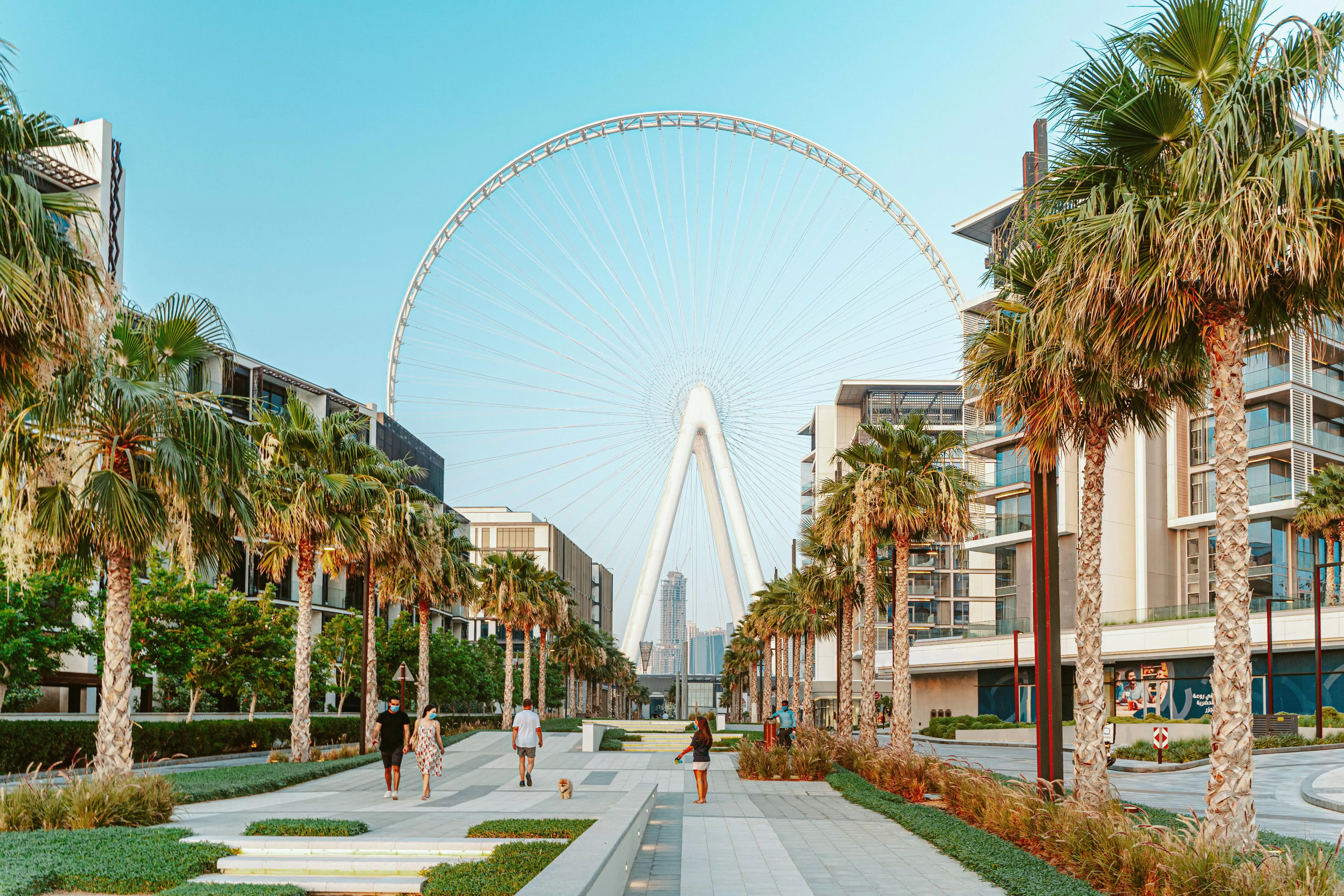
The best time to buy a house in Dubai depends on where the property market sits within its cycle, specifically, whether prices are rising, stabilising, or correcting. Buyers typically find the strongest negotiating power during market slowdowns or early recovery phases, when supply exceeds demand, and sellers are more flexible. Understanding these cycles, rather than relying on calendar timing alone, allows buyers to secure better pricing, favourable payment terms, and long-term value.
How the Dubai Property Market Cycle Works
Dubai’s real estate market operates in repeating cycles influenced by supply, demand, global capital flows, and government policy. These cycles are not fixed in duration, but they typically move through four identifiable phases: recovery, expansion, peak, and correction. Each phase presents different risks and opportunities for buyers.
Recovery phase: This occurs after a market downturn. Prices stabilise at lower levels, transaction volumes gradually increase, and investor confidence begins to return. Developers may offer incentives such as post-handover payment plans or reduced booking fees to stimulate demand.
Expansion phase: Demand increases, prices begin to rise, and off-plan launches accelerate. Buyer sentiment becomes more optimistic, and financing becomes more accessible. During this phase, early buyers benefit from capital appreciation as prices trend upward.
Peak phase: Prices reach their highest levels, and demand may begin to slow as affordability tightens. Speculative activity can increase, and properties may sell quickly with limited negotiation. This phase carries a higher risk for buyers entering late, as price corrections often follow.
Correction phase: Prices decline or stagnate due to oversupply, reduced demand, or external economic pressures. Sellers may lower prices, and buyers regain negotiating leverage. This phase often creates opportunities for value-driven purchases.
Dubai has historically experienced multiple cycles, shaped by events such as global financial conditions, regulatory reforms, and large-scale infrastructure development. Buyers who understand where the market sits within this cycle are better positioned to make timing decisions based on data rather than sentiment.
Which Market Phase Is Best for Buying?
The most favourable time to buy property in Dubai is typically during the late correction phase or early recovery phase. These periods combine relatively lower prices with improving market fundamentals, allowing buyers to secure assets before upward price momentum strengthens.
Buying during correction: This phase offers reduced prices and increased negotiation flexibility. Sellers—particularly investors or developers holding unsold inventory—may accept lower offers or provide incentives. However, buyers should evaluate whether prices have stabilised or are still declining.
Buying during early recovery: This is often considered the optimal entry point. Prices have bottomed out or begun stabilising, transaction volumes increase, and confidence returns gradually. Buyers entering at this stage can benefit from future appreciation while avoiding peak pricing risks.
Buying during expansion: While prices are rising, this phase still offers opportunities—especially for long-term investors. However, competition increases, and negotiation power decreases. Buyers must act decisively and rely on accurate valuation data.
Buying at peak: This is generally the least favourable time unless the purchase is driven by end-use needs rather than investment returns. Limited price growth potential and increased correction risk make this phase less attractive for value-focused buyers.
For end-users, timing is also influenced by personal factors such as job stability, financing readiness, and long-term residency plans. For investors, entry timing should align with expected rental yields, capital appreciation cycles, and holding periods.
In practical terms, the “best time” is when three conditions align: realistic pricing, manageable financing, and a clear understanding of the market’s directional trend.
What Drives Property Price Changes in Dubai?
Dubai’s property market is influenced by a combination of local and global factors. Understanding these drivers helps buyers anticipate shifts in market cycles and identify timing opportunities.
Supply pipeline: New project launches and construction completions significantly impact pricing. When supply outpaces demand, prices tend to soften. Conversely, limited new inventory in high-demand areas can support price growth.
Population growth and migration: Dubai’s population growth, driven by expatriate inflows, business expansion, and long-term visa programs, directly increases housing demand. Strong population growth often leads to higher rents and property prices.
Government policies: Regulatory measures such as visa reforms, foreign ownership laws, and property transaction fees influence buyer confidence. Initiatives like long-term residency visas and retirement visas have strengthened demand from international buyers.
Global economic conditions: Interest rates, currency fluctuations, and geopolitical stability affect investor behaviour. For example, lower global interest rates can increase mortgage affordability, while economic uncertainty may slow investment activity.
Rental yields: Dubai is known for relatively high rental yields compared to many global cities. When rental returns remain strong, investor demand typically increases, supporting property prices.
Infrastructure and mega-projects: Large-scale developments, transport expansions, and economic zones can reshape demand patterns. Areas benefiting from new infrastructure often experience increased buyer interest and price appreciation.
Market sentiment: Buyer and investor confidence plays a critical role. Positive sentiment can accelerate price growth, while uncertainty can slow transactions and create price corrections.
Buyers who monitor these drivers, particularly supply trends and policy changes, can better anticipate shifts in market phases and identify windows where pricing and conditions are most favourable.
Does Seasonality Affect Property Prices in Dubai?
Seasonality in Dubai’s property market exists, but it is less influential than broader market cycles. While certain times of the year see increased activity, price movements are primarily driven by supply-demand dynamics rather than seasonal trends alone.
High activity periods: The fourth quarter (October to December) and early months of the year (January to March) typically experience higher transaction volumes. This is due to returning expatriates, new business cycles, and investor planning aligned with financial calendars.
Slower periods: Summer months, particularly June through August, often see reduced transaction activity due to holidays and temporary outmigration. However, reduced competition during this period can create negotiation opportunities for serious buyers.
Ramadan effect: During Ramadan, transaction volumes may slow slightly, but serious buyers and sellers continue to transact. Developers may introduce limited-time offers or incentives to maintain momentum.
End-of-year incentives: Developers and sellers sometimes offer discounts, fee waivers, or flexible payment plans toward year-end to meet sales targets. Buyers prepared to act during this period may secure better terms.
While timing purchases around quieter periods can improve negotiation leverage, relying solely on seasonality is not sufficient. Buyers should prioritise market phase indicators and pricing trends over calendar timing.
Off-Plan vs Ready Properties: When Is the Right Time?
The decision between off-plan and ready properties significantly affects the buying timing strategy. Each segment responds differently to market cycles and presents distinct advantages depending on when you enter the market.
Off-plan properties: These are typically launched during expansion phases when developer confidence is strong. Early investors benefit from lower launch prices, flexible payment plans, and potential capital appreciation before completion. However, buying late in an expansion phase can expose buyers to pricing risks if the market corrects before handover.
Best timing for off-plan: Early in the expansion cycle or during recovery phases when developers re-enter the market cautiously. At this stage, pricing is more competitive, and incentives are more attractive.
Ready properties: These provide immediate usability and rental income potential. They are often more attractive during correction phases when prices soften, allowing buyers to acquire completed assets at reduced valuations.
Best timing for ready properties: During correction or early recovery phases, when sellers are more negotiable, and prices reflect current market conditions rather than future projections.
Risk considerations: Off-plan purchases carry construction and delivery risks, while ready properties carry less uncertainty but may require higher upfront capital. Timing decisions should account for risk tolerance, liquidity, and investment horizon.
Buyers often combine both strategies—acquiring ready properties for income stability and off-plan units for long-term appreciation—to balance risk and returns.
How Interest Rates and Financing Impact Buying Timing
Mortgage interest rates play a critical role in determining the true cost of property ownership in Dubai. Even small changes in rates can significantly affect affordability and long-term financial commitments.
Rising interest rates: When rates increase, borrowing becomes more expensive, reducing purchasing power. This can slow demand and create downward pressure on property prices, potentially creating opportunities for buyers with strong liquidity.
Falling interest rates: Lower rates improve affordability and often stimulate demand. As more buyers enter the market, property prices may rise, reducing negotiation flexibility.
Fixed vs variable mortgages: Buyers must decide between locking in a fixed rate for stability or choosing a variable rate that may fluctuate with market conditions. Timing the purchase during a low-rate environment can provide long-term cost advantages.
Loan eligibility and approval: Financing readiness influences timing as much as market conditions. Buyers with pre-approved mortgages can act quickly during favourable market windows, while others may miss opportunities due to delays.
Total cost perspective: The best time to buy is not only about property price but also financing cost. A slightly higher purchase price in a low-interest environment may result in lower overall cost compared to buying at a lower price with higher borrowing rates.
Understanding the relationship between interest rates and property cycles helps buyers evaluate timing decisions from a full financial perspective rather than focusing solely on listing prices.
Common Timing Mistakes Buyers Make
Many buyers misjudge the Dubai property market by focusing on short-term signals or emotional triggers rather than structural indicators. Avoiding these common mistakes can significantly improve purchase outcomes.
Trying to perfectly time the market: Waiting for the absolute lowest price often leads to missed opportunities. Market bottoms are only identifiable in hindsight, and delays can result in entering during price recovery phases.
Following crowd sentiment: Buying during periods of high demand and media optimism often means entering near peak pricing. Conversely, avoiding the market during downturns can mean missing value opportunities.
Ignoring supply data: Buyers who do not assess upcoming project completions or inventory levels risk purchasing in oversupplied areas where prices may stagnate.
Overlooking total ownership costs: Focusing only on purchase price without considering service charges, financing costs, and maintenance expenses can distort timing decisions.
Delaying due diligence: Hesitation in verifying legal documents, developer credibility, or financing approvals can result in lost deals, especially during recovery phases when good inventory moves quickly.
Short-term mindset: Real estate in Dubai should be approached with a medium- to long-term perspective. Timing decisions based solely on short-term price movements may not align with long-term value creation.
Effective buyers combine market awareness with financial preparedness and clear objectives, allowing them to act decisively when conditions align.
How to Identify the Current Market Cycle in Dubai
Buyers can determine the current phase of Dubai’s property cycle by analysing a combination of transaction data, price trends, supply indicators, and financing conditions. No single metric defines the cycle; instead, patterns across multiple indicators provide a reliable signal.
Transaction volumes: Rising transaction volumes alongside stable or slightly increasing prices typically indicate early recovery. Sharp increases in both volume and price suggest expansion, while declining volumes with stable prices may signal an approaching peak.
Price movement trends: Sustained price declines point to a correction phase, whereas gradual stabilisation after a downturn often signals the beginning of recovery. Rapid price increases across multiple communities can indicate late expansion or early peak conditions.
Inventory levels: High levels of unsold inventory or multiple project completions in a short period usually lead to price pressure, indicating correction. Tight inventory in prime areas often supports price growth.
Developer activity: An increase in new project launches reflects confidence and typically aligns with expansion phases. Reduced launches or delayed projects often indicate caution during downturns.
Mortgage trends: Easier access to financing and increased loan approvals support expansion. Stricter lending conditions or higher borrowing costs can slow demand and contribute to corrections.
Rental performance: Rising rents often precede price increases, as investors respond to improved yields. Weak rental growth may signal reduced demand or oversupply.
By combining these indicators, buyers can form a practical view of the market’s position and avoid relying on isolated data points or anecdotal sentiment.
When Should Different Types of Buyers Enter the Market?
The optimal timing varies depending on the buyer’s objectives, financial position, and risk tolerance. A timing strategy that works for an investor may not suit an end-user or first-time buyer.
First-time buyers: The best entry point is typically during early recovery phases, when prices are relatively low, and financing conditions are improving. This allows buyers to enter at manageable price levels while benefiting from future market growth.
End-users: Buyers purchasing for personal use should prioritise affordability and long-term stability over precise market timing. Correction and recovery phases offer better pricing, but the decision should align with personal financial readiness and housing needs.
Investors seeking capital appreciation: Early recovery and early expansion phases provide the strongest potential for price growth. Entering before widespread market optimism allows investors to capture the upward cycle.
Income-focused investors: These buyers should focus on periods where rental yields are strong relative to property prices—often during or shortly after correction phases when acquisition costs are lower.
Short-term investors: Timing becomes more critical for buyers with shorter holding periods. Entering during late expansion or peak phases increases risk, as price corrections may occur before exit opportunities.
Cash buyers: Buyers with liquidity have the advantage of acting quickly during downturns, securing discounts, and negotiating favourable terms without financing delays.
Matching buying timing with investment strategy ensures that market conditions support, rather than undermine, the intended outcome.
Final Perspective on Timing the Dubai Property Market
There is no universally perfect moment to buy property in Dubai. The most effective approach is to align market conditions with financial readiness and long-term objectives. Buyers who wait for certainty often enter too late, while those who rely solely on speculation risk misjudging market direction.
The strongest buying opportunities typically emerge when market sentiment is cautious, supply is elevated, and pricing stabilises after a decline. These conditions require confidence, preparation, and access to reliable data.
Rather than attempting to predict exact market turning points, buyers should focus on identifying favourable conditions—reasonable pricing, sustainable financing, and clear demand fundamentals. Acting within these parameters reduces risk and improves the likelihood of long-term value.
Dubai’s property market remains dynamic, shaped by global capital flows, regulatory evolution, and infrastructure development. Buyers who understand its cyclical nature—and make decisions based on evidence rather than timing myths—are better positioned to achieve stable and predictable outcomes.
Frequently Asked Questions
Is there a specific month that is best to buy property in Dubai?
No single month consistently offers the best deals. Market cycles and economic conditions have a greater impact than calendar timing, although quieter periods may offer negotiation advantages.
Are property prices in Dubai expected to fall?
Prices fluctuate based on supply, demand, and global conditions. Periodic corrections are part of the market cycle, but long-term trends depend on economic growth and population demand.
Should I wait for a market crash before buying?
Waiting for a significant crash can lead to missed opportunities. Buyers should focus on value and affordability rather than attempting to predict extreme downturns.
Is buying off-plan better than buying ready property?
Off-plan properties offer lower entry prices and potential appreciation, while ready properties provide immediate use and income. The better option depends on timing, risk tolerance, and investment goals.
How important are interest rates when buying property in Dubai?
Interest rates significantly affect affordability and total ownership cost. Lower rates can offset higher property prices, while higher rates can reduce purchasing power.
Can foreigners buy property in Dubai at any time?
Yes, foreign buyers can purchase property in designated freehold areas without restrictions on timing, provided they meet legal and financial requirements.
Key Takeaways
- Market cycles matter most: Buying decisions should align with recovery or correction phases rather than calendar timing.
- Early recovery is optimal: This phase offers a balance of lower prices and improving market conditions.
- Financing impacts timing: Interest rates and loan access influence the true cost of buying.
- Different buyers need different timing: Investors, end-users, and first-time buyers should adopt tailored strategies.
- Data-driven decisions win: Monitoring supply, demand, and transaction trends leads to better outcomes than relying on sentiment.
References
- Dubai Land Department Market Reports
- UAE Central Bank Mortgage Statistics
- International Monetary Fund Economic Outlook Reports
- Global Property Market Research Publications